It would be so helpful if there was an app to track stress like there is to track spending.

Wouldn’t it be marvelous to get an alert that said, “Low Balance”, for mental, physical and psychological reserves like the one you can get for your bank account right before you are heading to overdraft territory?

But there isn’t.

And few of us are very good at gauging just how much is left in our mental wellness accounts which means we often keep giving when the well is more than dry.

I’d be lying if I said I spend the same amount of time crying, lamenting and bent over in agonizing pain that I did in the early days of mourning Dominic. I’ve found a way to keep him close, to trust his soul to Jesus and to (largely) live in the present instead of always longing for the past.

There are days, though…

Some days are easy to anticipate-birthdays, holidays, the awful anniversary of his leaving-and some sneak up on me. I can often trace my overwhelming sadness to a specific trigger or memory dug up in a drawer or found in a pile of photos.

Occasionally, I have a horrible weepy day for no discernable reason.

That’s when I walk my heart back through recent events and always come to the same conclusion-I’ve let myself run dry:

  • I’ve overcommitted.
  • I’ve not planned rest.
  • I’ve had hard pain days.
  • There’s been family drama.
  • Someone I love is sick.
  • I’m sick.
  • A deadline looms large.
  • There’s some major unpredictability going on.
  • I’ve counseled too many people without enough time to regain my own emotional stores.
  • I’m not sleeping well.
  • I’m doing too much and not listening to my body.

What I’ve come to understand is that stress is a HUGE impact on my grief and how I experience it.

I won’t patronize folks reading this with a simplistic (but wholly unhelpful!) suggestion to “reduce or avoid stress”.

For heaven’s sake! If we could do that with a snap of our fingers we would hardly need someone to tell us to take advantage of that solution.

Truth is, stress is often largely outside our control.

But there ARE some things I can make choices about. So I do. I look ahead at the calendar and note upcoming milestone days. I plug in doctor’s appointments, birthdays and holidays. I review every invitation to celebrations or lunch in light of what is already inked in.

I’ve learned to be honest with folks about my limitations and send a card or gift through the mail if I can’t be there in person. I sometimes suggest an alternative date and time if the one a friend offers just doesn’t work for me. I stand firm in my opinion that “no” is a complete sentence and as long as I’m kind and gracious it is not incumbent upon me to offer an explanation for why I’m turning down an invitation.

And if I have an unexpectedly hard day-from grief or activity or because of my RA-I drop back the next day to allow time to recuperate and rest (if at all possible).
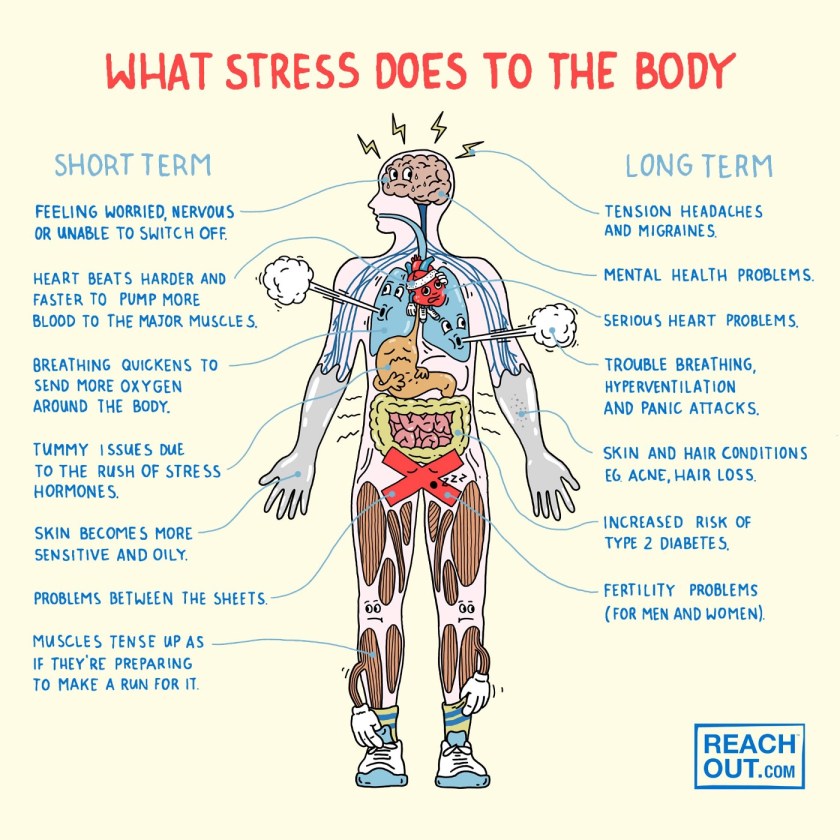
The reality is that child loss means there is ALWAYS a certain low-level hum of stress in my life.

Adding to that already higher-than-average stress means it’s easy for me to be tipped into unhealthy territory.

Crying is only the tip of the iceberg.

Health problems, heart problems, relationship issues and other long-term consequences often result.

It’s not only OK for me to set boundaries to protect my health and my heart,

It’s absolutely, positively the right thing to do.

❤

Grief In Real Life: You Don’t Have to Pretend

There is SO much pressure on grievers to pretend they are “OK” once the socially acceptable amount of time has passed since their loss.

And that is more than unfortunate because not only does it place an undue burden on broken hearts, it inhibits the very necessary work grief requires.

Sharing honestly and openly with safe people, giving voice to our feelings, letting the tears and words flow freely is the only way forward on this treacherous journey.

❤

It’s OK to not be OK.

If you are grieving, you are not responsible for making others feel better about YOUR pain.

You have suffered a great wound and you carry a heavy load.

heal and acknowledge

You are allowed to express sorrow and longing.  It’s what people do.

It’s what we have to do if we are going to make it through this dark valley.

Find a safe person and let. it. out.

Bottling it up inside only drags me deeper under the waves.  Hiding my tears doesn’t save me from sorrow, it only makes me ashamed and anxious.

ann voskamp love will always cost you grief

And there is nothing shameful in grieving my missing child.

Great grief is the price I pay for great love.

I’m not advocating pitching a fit in public.

It’s good to be sensitive to other people, and I want to extend the same courtesy and kindness to others I would like to have extended to me.

BUT–when sorrow rolls over me like a tidal wave, I do not have to hide to preserve the comfort of others.

And I won’t.

mourning

Choosing Helpful Habits: Ten Ways to Survive Hard Grief Days

One of the most devastating aspects of child loss is the overwhelming feeling that NOTHING makes sense anymore and that I have absolutely NO control.

Choosing helpful habits and actions gives me a way to regain dominion over a tiny corner of my world.

And that little bit of action strengthens my spirit and helps my heart hold on.

❤ Melanie

My hardest grief season begins in November and runs to the end of May.  Thanksgiving through Dominic’s birthday on (or near) Memorial Day are days full of triggers, memories and stark reminders that one of us is missing.

If I could fall asleep November first and wake up in June I’d do it.

But I can’t so I have to employ all the tricks I’ve learned in the over eight years since Dominic ran ahead to heaven to survive those particularly challenging months.

Here are ten ways I survive hard grief days…

Read the rest here: Taking Care: Ten Ways to Survive Hard Grief Days

Dear Friend, Have a Day. It Doesn’t Have to Be a Good One.

I don’t know about you, but I think of every day as a blank canvas and it’s my responsibility to paint something useful or beautiful or helpful on it.

I’m a list maker so each night before I drift off, I usually jot down 3 or 300 things I would like to do the next day.

I get up, get started and then (more often than I’d like to confess!) hit a wall.

Read the rest here: Have A Day. It Doesn’t Have to Be a Good One.

Surviving the Unthinkable: Grief and Self-Care

My first instinct as a mother and a shepherd is always, “How can I help?”

I routinely set aside my own needs for the needs of others.  Not because I’m so selfless but because that’s how I’m made-I’ve always had the heart of a caretaker.

That’s not a bad thing, most of the time.

But if taking care of others means NOT taking care of myself, then in the end, I’m of no use to anyone.  When I allow every bit of energy-emotional, physical, psychological and spiritual-to drain away until there’s nothing left, I am unable to meet my most basic needs, much less the needs of others.

Read the rest here: Grief and Self-Care: Surviving the Unthinkable

Here are Some Ways to Create Space For Grief During the Holidays

We are days away from plunging headfirst into the rough and tumble holiday season.  

Thanksgiving is coming fast and I don’t know about you, but it seems that once I eat the turkey and dressing, the clock moves faster and the days crowd one another in a race to Christmas and the end of the year.

So I want to take a minute to think about how important it is to make and maintain space for grief during this busy season.

Read the rest here: The Importance of Making Space for Grief During Holidays

Selfcare is SO Important for Grieving Hearts

Every family is different. Every loss experience is unique.

Some of us have busy households when one of our children leave for Heaven and some of us are long past full tables and messy teen bedrooms.

Wherever we find ourselves when the unthinkable overtakes us, it’s always hard to continue doing daily tasks bearing a burden of sorrow. So often we settle into a pattern of striving and straining through the deep mire of grief without making time for rest.

I know I did.

Goodness! I still experience seasons when grief waves steal what little breath is left from a breathless and busy life and I can barely function.

It’s then I remind my heart that self care isn’t selfish. It’s necessary.

Absolutely, positively necessary.

❤ Melanie

Looking back I’m shocked at how much I allowed societal norms and expectations to determine how I grieved Dominic’s death.

I withheld grace from myself that I would have gladly and freely given to another heart who just buried a child. Somehow I thought I had to soldier on in spite of the unbearable sorrow, pain, horror and worldview shattering loss I was enduring.

And the further I got from the date of his accident, the more I expected from myself.

Read the rest here: Self Care in Grief

Grief Work 2024: Self-Care Is Necessary

My first instinct as a mother and a shepherd is always, “How can I help?”

I routinely set aside my own needs for the needs of others.  Not because I’m so selfless but because that’s how I’m made-I’ve always had the heart of a caretaker.

That’s not a bad thing, most of the time.

But if taking care of others means NOT taking care of myself, then in the end, I’m of no use to anyone.  When I allow every bit of energy-emotional, physical, psychological and spiritual-to drain away until there’s nothing left, I am unable to meet my most basic needs, much less the needs of others.

I’ve written before that grief puts a hole in my bucket.  It guarantees that no matter how much is poured in, I’m never truly full.

Read the rest here: Grief and Self-Care: Surviving the Unthinkable

Grief Work 2024: How Stress Impacts Grief

It would be so helpful if there was an app to track stress like there is to track spending.

Wouldn’t it be marvelous to get an alert that said, “Low Balance”, for mental, physical and psychological reserves like the one you can get for your bank account right before you are heading to overdraft territory?

But there isn’t.

And few of us are very good at gauging just how much is left in our mental wellness accounts which means we often keep giving when the well is more than dry.

Read the rest here: How Stress Impacts Grief

Christmas 2023: If You Think You Can’t Hold On, Let Go

This has been an odd (to put it mildly) Christmas season. I haven’t done half of what I normally do and now there’s no time to catch up and do it.

I’ve been off balance since the first of November, hanging on by the seat of my pants and just barely managing the necessities.

So I really, really, really needed to read what I wrote several years ago.

Back then there was no chance I’d produce a full-fledged, decked out spread for Christmas. But I’ve gotten better at it since.

Just not this year. So if you are falling behind or falling down, you’re not alone! 

❤ Melanie

So many ways to be reminded of how hard it is to hold on in these days and weeks around Christmas.

If your heart is barely able to beat, the pressure to be “hap-hap-happy” can send you over the edge.

If your home is empty of cheerful voices, the constant barrage of commercials touting family togetherness can leave you feeling oh, so lonely.

Early sunsets and darker nights send feel-good hormones flying and leave a body aching for just a little relief from anxious and depressing thoughts.

SadGirlBeach

When you think you can’t hold on, let go.  

Read the rest here: When You Think You Can’t Hold On