Grief In Real Life: Why Is the Second Year SO Hard?

It’s not true for everyone but it is true for enough of us. The second year after child loss can be especially hard.

Numbness and the rhythm of all the “firsts” in the twelve months following Dominic’s death kept me both anticipating the shock and protecting me from its full impact.

The second year was when it dawned on me that I was doomed to repeat this cycle as long as I lived.

I was absolutely overwhelmed.

❤ Melanie

I remember very well the morning I woke on April 12, 2015-it was one year since I’d gotten the awful news; one year since the life I thought I was going to have turned into the life I didn’t choose.

I was horrified that my heart had continued to beat for 365 days when I was sure it wouldn’t make it through the first 24 hours. 

And I was terrified.

During that first year there were multiple punctuated stops along the way-the first major and minor holidays scattered throughout the year, a family wedding, two graduations, Dominic’s birthday and on and on.  I’d muddle through and then turn my face forward towards the next one looming in the future.

There was so much emotional upheaval, so many things to process that I was unbalanced, focused only on survival without a thought to anything beyond the next hill.

But when I realized that I’d made it through one year, was still standing, was still breathing and was (apparently) going to survive this horrible blow, I began to think about living this way for the rest of my days.

And it was overwhelming.

Facing something for a defined period of time-even an awful something-is doable.  There’s an end in sight, relief on the way, endurance will be rewarded-just hang on.

But when a heart can’t lay hold of the finish line-well, that’s enough to undo even the bravest among us.
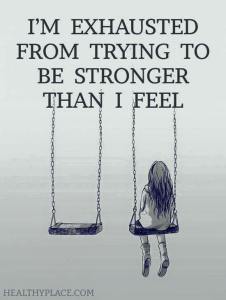
exhausted-over-trying-to-be-stronger-than-i-feel

All the things I muddled through the first year were just going to circle back around over and over and over for decades!

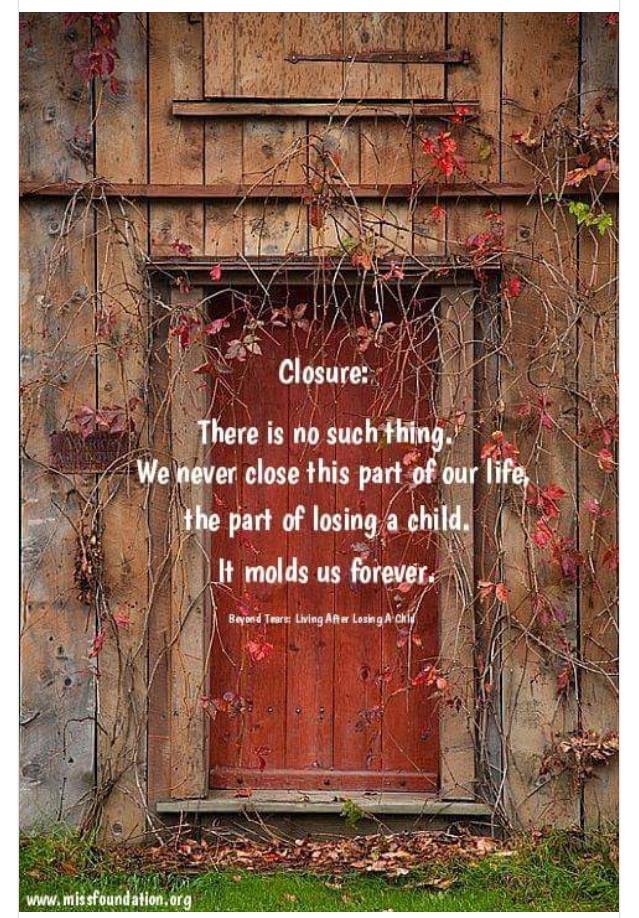
My grief took on a new dimension-it wasn’t something that was going away-it was life long.  

I spent the entire second year and most of the third just wrapping my mind and heart around that FACT and trying to develop tools to carry this burden for the long haul.

Every heart is different, every family unique.  

The second year is NOT harder for everyone. I’m not even sure it was HARDER for me.  But it was definitely different and full of new challenges.

It forced me to dig deeper than the first year when I was mainly in survival mode.  

The crying tapered off but the reality of my son’s absence loomed larger.  The breathless agony of his death really did grow more manageable but the prospect of this being a life sentence weighed more heavily on my heart.

But God’s grace has been sufficient in every season of my grief.  He has sustained me, strengthened me and carried me.  

i made you and i will carry you

Here I am-six weeks into year [eleven]-still standing, still fighting and still holding on to hope.

God is faithful.  

What He did for me,

He will do for you.  
Grief In Real Life: Why Still Write After All These Years?

I first shared this years ago when I was reflecting on half a decade of living without one of my children beside me. I’ve now had more than another half decade to think about why or IF I’ll continue to write.

Every so often I take a day or two to consider whether I want to keep posting. I have to admit sometimes that I wonder if I bang the same drum for too long it will sound loud and obnoxious to some people’s ears.

But then I get a message or a comment from someone fresh on this journey and they feel seen, heard, validated and safe.

So I write on.

And I find that writing brings clarity and comfort to my soul. I still have things to say and I hope what I say still brings some small measure of light, love, life and hope to other hearts.

❤ Melanie

I was one of those people years ago who set her sights on starting and maintaining a blog.  

I thought I would post a few times a week and share anecdotes about my family and critters, insight into daily living and inspiration from Scripture and interesting quotes. 

No, not THIS blog-the other two I started and quickly abandoned to who-knows-where in cyberspace.

Trouble was that the subject matter, while near and dear to my heart, wasn’t personally compelling enough to keep me disciplined and actively writing. 

If someone had said, “Pick any topic to write about”, child loss wouldn’t have been in the first million choices.

No one CHOOSES child loss (Thus the name of the blog:  The Life I Didn’t Choose).

But untold numbers of parents EXPERIENCE it every year.  This very day,  parents somewhere got a knock on the door or a phone call or sat next to a hospital bed as life slipped slowly from their child’s tired body.

Since I was already journaling and had walked this Valley for nearly a year and a half, it dawned on me that the ramblings I’d put down might be helpful to another heart.  So I started THIS blog in September, 2015.

And I’ve been here ever since.  

I’m not in the raw, breathless place I once was.  But grief and loss are part of every breath I take, part of every moment I experience.

whole in my heart mama

I miss Dominic.  I still consider death an enemy.  Every day I hate what was stolen and long for what was.  I mourn the changes grief has wrought in my family.  I wish things were different.  I discover new ways loss impacts my life and new ways of coping with it.

So I keep writing.  

I don’t want anyone to feel alone in this journey.  I don’t want anyone to think there’s no way to survive.   I don’t want a single broken heart to doubt that God is here and that He will help you hold onto hope. 

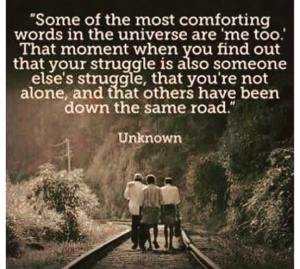
me too sharing the path

I’ll spill my heart out in words until the words are exhausted. 

It helps me.

I pray it helps others too. 

hope holds a breaking heart together

Grief In Real Life: Nothing New Between Us

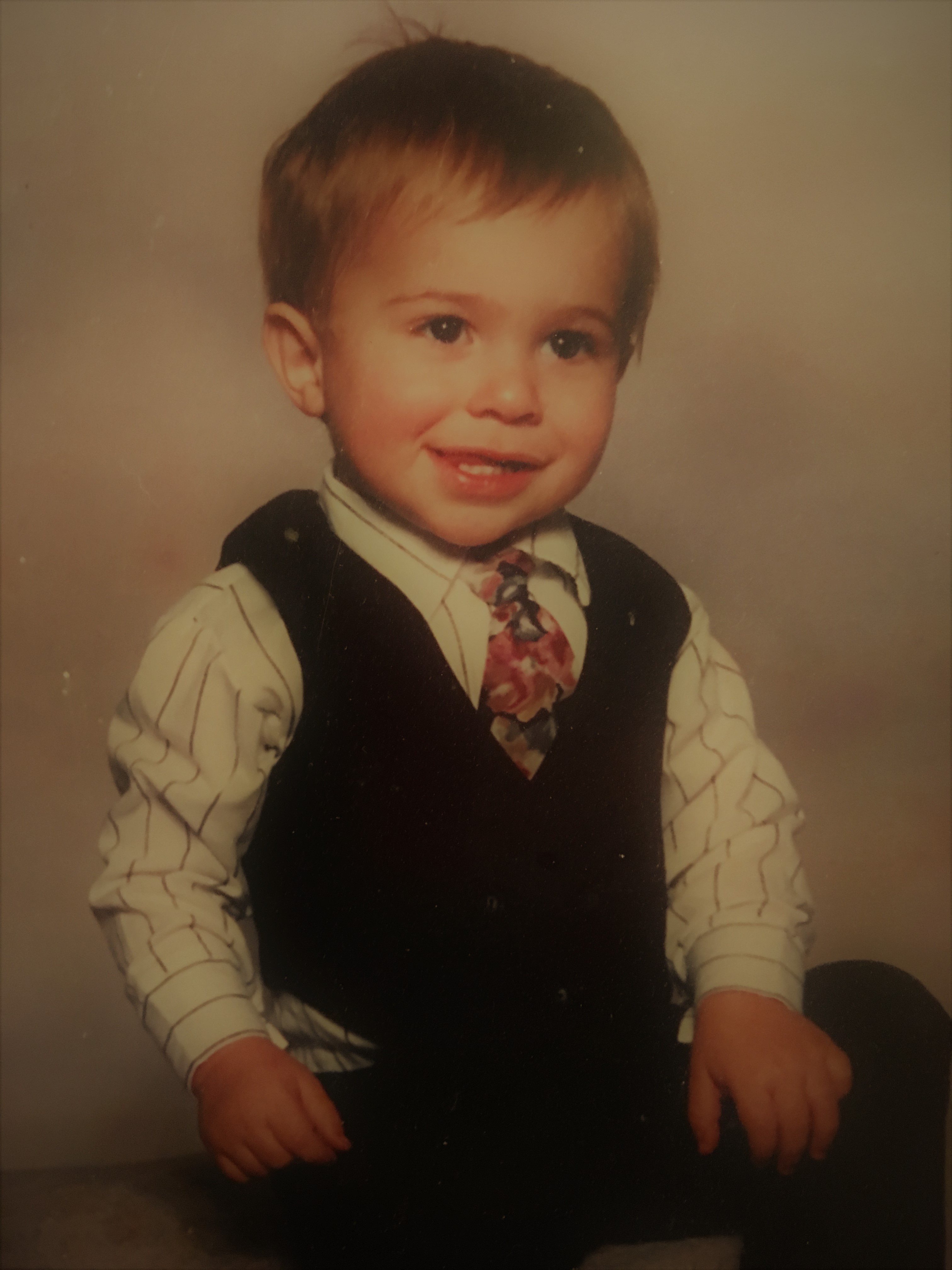
Why are the photographs of him as a little boy so incredibly hard to look at? Something is over. Now instead of those shiny moments being things we can share together in delighted memories, I, the survivor, have to bear them alone. So it is with all the memories of him. They all lead into blackness. All I can do is remember him, I cannot experience him. Nothing new can happen between us.

~Nicholas Wolterstorff, Lament for a Son

dominic and siblings little children at nannys

Death is never welcome.  

It is always a reminder that I live in a broken world where sickness and time, accidents and sinful choices press the life out of bodies and I am left behind to mourn.

But when people die at a ripe old age, I look back fondly on what they’ve done, where they’ve been, the legacy of work and love and family they leave behind.

No one lives forever.

In the back of my mind I can make room for that fact, even though I don’t like to bring it out and consider it very often.  Those that are much older than me will (all things being equal) leave this world before us.

I joined them. 

There is part of their lives I know nothing about.  And there will be part of mine they will not share.

But my child?

I have known my child since before he entered the light of this world!  I felt him in my womb.  I experienced who he was before anyone else met him.

I never, ever expected for my life to outlast his!

I always thought there would be new experiences between us, new memories to tuck away, new adventures to look forward to.  

Out of order death is unexpected, unnatural, unbelievable.  

“Nothing new between us.”  

Breaks my heart every time. 

handprint on my heart

Grief In Real Life: Choosing to Stay

Today is forty-one years since we said, “I do” and had absolutely NO idea what that would look like.

I first shared this years ago on our anniversary because I wanted other bereaved parents to know that while it is hard (and isn’t marriage always hard?), it is not impossible for a marriage to survive child loss.

We are definitely not the perfect couple. We fuss and we struggle. We sometimes retreat into our own separate worlds as we process some new aspect of living this earthly life without one of our children.

But we have learned that we are stronger together and that we are willing to do the work necessary to stay that way.❤

Today my husband and I celebrate 41 years of marriage.  

Our thirtieth anniversary was a mere two months after we buried our son.

Here’s the last “before” anniversary photo (2013)-unfeigned smiles, genuine joy, excitement to have made it that far:

hector and me 29 anniversary

This is us on our thirtieth anniversary, at our oldest son’s wedding -holding one another up as best we could:

IMG_2151

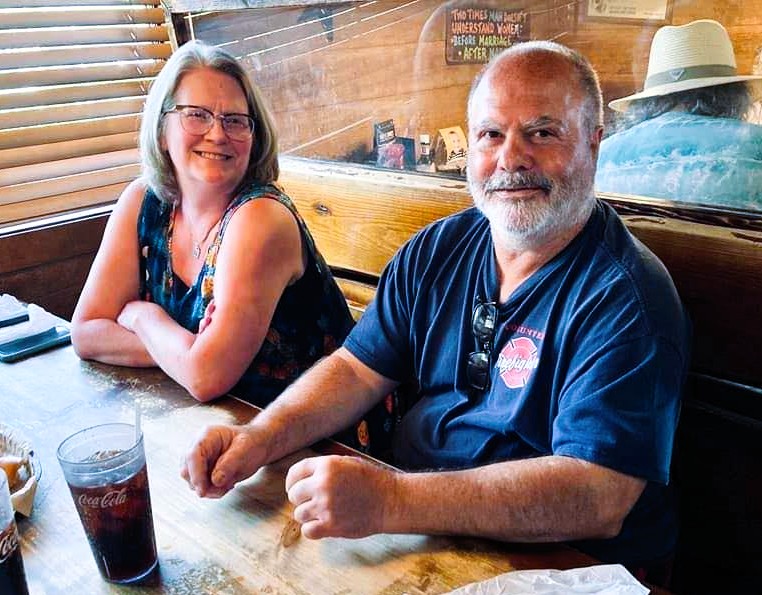
This is us a couple of years ago:  

We are definitely the worse for wear, but we are still here.

Together.

There are a lot of myths floating around about what happens to a marriage on the other side of child loss.  The one tossed out most often cites a “study” reporting 90 percent of marriages fail after the death of a child.  

It’s just not true.

But the danger is that if you believe it is trueyou may stop trying.  You may stop reaching out across the painful abyss that threatens to keep you apart forever.  You may decide that living alone with your broken heart is better than living alongside someone who may be broken in very different ways than you are.

It can become a self-fulfilling prophecy. 

The truth is that child loss is no more likely to destroy a marriage than a list of other terrible life events-even though child loss is the most terrible.

A child’s death shakes a marriage to its foundations and reveals the weak spots. And EVERY marriage has weak spots.

So the challenge in this season of marriage-like every season of marriage-is to turn toward one another instead of away.  Choose to do the work necessary to make it:

  • Do the best you can to take care of your own emotional, physical, psychological and spiritual health so that you can come together stronger and better able to help one another.
  • Assume the best and not the worst about your spouse.
  • Allow for different grieving styles and different ways of honoring your missing child.
  • Get help from others.
  • Don’t expect your spouse to carry your load of grief as well as his or her own.

It takes energy and commitment right when we don’t have any to spare. But at least in this, we have a choice.

I have already lost so much over which I had no control.  

I will fight for what I CAN hold onto as hard as I know how.

wedding rings

Grief In Real Life: It’s OK to Talk About Death

We wall off our world with words.

The ones we speak and the ones we swallow down so they don’t escape our lips.

But, as Mr. Rogers says, “Anything human is mentionable.”

Even death.

We don’t like to talk about death. It’s unpleasant and frightening and often divisive. We all know it’s coming-no one (except Enoch and Elijah) have left this world any other way. Yet the polite thing to do is pretend it doesn’t exist or at the very least, isn’t likely to happen any time soon.

But that serves no good purpose.

It stops us from having meaningful conversations with those we love as they approach the end of their days. It keeps us from making amends while there is still time, saying the things that need to be said, wrapping up loose ends and frayed relationships.

It stops us from listening to the bereaved. If we get too close and pay too much attention to the aftermath of loss then we have to think about what it really means to live on without someone we love.

And it has shaped a society in which those who grieve too loudly or too long are shushed and shamed.

Refusing to talk about death doesn’t make it disappear.

It only makes it harder to deal with.

The rest of the Mr. Rogers quote is this:

…and anything mentionable is more manageable. When we can talk about our feelings, they become less overwhelming, less upsetting, and less scary. The people we trust with that important talk can help us know that we are not alone.

Fred Rogers

Learning the language of loss and lament is part of the healing process in grief.

We’ve never been very good in Western society talking about or dealing with death. So many hearts are hurting and have nowhere to go, no one to talk to, no safe refuge for their pain.

If someone trusts you with his or her feelings, receive it as a gift.

Make space for them to be honest about what they are experiencing.

Remind them that “Anything human is mentionable”.

And listen. 

I don't believe in best friends {discuss amongst yourself ...

Grief In Real Life: Hiding Behind Small Courtesies

It’s what you do, it’s what you say.

Please”and “thank you” are how we live in community with others.

Even when our world is crumbling and our hearts are breaking, we don’t toss these courtesies away.

You begin to realize that everyone has a tragedy, and that if he doesn’t, he will. You recognize how much is hidden beneath the small courtesies and civilities of everyday existence. Deep sorrow and traces of great loss run through everyone’s lives, and yet they let others step into the elevator first, wave them ahead in a line of traffic, smile and greet their children and inquire about their lives, and never let on for a second that they, too, have lain awake at night in longing and regret, that they, too, have cried until it seemed impossible that one person could hold so many tears, that they, too, keep a picture of someone locked in their heart and bring it out in quiet, solitary moments to caress and remember.

Roseanne Cash, Composed: A Memoir by Roseanne Cash

I remember walking down the grocery store aisle wondering if the face I smiled into was faking it like I was. I wondered if they were hiding behind pleasantries because they form a good shield.

I imagine, on some level, most were. Because nearly everyone has a secret wound.

And, like Cash said, if they haven’t yet, they will be.

Grief In Real Life: Why I Say, “My Son Died.”

Died.  

It is a harsh word.

I understand completely that some parents don’t want to use it to describe their child and I respect that.

I have chosen to use it often (not always-sometimes I say “left” or “ran ahead to heaven”) because what happened IS harsh. I don’t want to soften it because there was nothing soft about it for me or my family.

It is heartbreaking, lonely, heavy, hard and utterly devastating. 

grief bubble

As a believer in the promises of Scripture, I use it because I want to paint a stark contrast between hopelessness without Christ and the hope I have because of the blood of Jesus applied to my heart and the heart of my son.

Without that assurance, the hopelessness would continue for eternity.

romans 10_9

But because of Jesus, while this reality is harsh, hard and heartbreaking, I have an eternity of rest, renewal and redemption to look forward to.

not ashamed

I think each of us finds our own path through this Valley and should say or use whatever word is best for our own heart.

This is simply one choice among many.  

I’m so sorry that we need ANY words to describe our child’s physical absence in this earthly journey. 

no evil can conquer grace forever

What’s Changed, What’s the Same Eleven Years Down the Road?

What’s changed and what is still the same eleven years down the road of child loss?

I’ve thought about this a lot in the past few months as I prepared for, greeted and marked another year of unwelcome milestones since Dominic ran ahead to Heaven.

Some things are exactly the same:

  • Whenever I focus solely on his absence, my heart still cries, “Can he REALLY be gone?” I am STILL A Mess Some Days….
  • The pain is precisely as painful as the moment I got the news.
  • It’s just as horrific today to dwell on the manner of his leaving.
  • I miss him, I miss him, I miss him. I live every day with his Tangible Absence.
  • I am thankful for his life, for the opportunity to be his mama and for the part of me shaped by who he was.
  • The absolute weight of grief has not changed. The burden remains a heavy one.
  • Daily choices are the difference between giving up and going on. I have to make Wise Choices in Grief.
  • My faith in Christ and my confidence that His promises are sure is the strength on which I rely. I have been Knocked Down But Not Destroyed.
  • I passionately look forward to the culmination of all history when every sad thing will come untrue.

Some things are very different:

  • Dominic’s absence is no longer all I see.
  • Sorrow and pain are no longer all I feel.
  • I’ve learned to live in spite of the hole in my heart-his unique place isn’t threatened by allowing myself to love others and pouring my life into the people I have left.
  • Joy and sorrow are not mutually exclusive. They live together in my heart and I can smile and laugh again while still pining for a time when things were different and easier.
  • I am Stronger because I’ve carried this burden for years. I’ve learned to shift it from side to side.
  • The darkness has receded so that I see light once more. I’m not as prone to fall as fast down the dark hole of despair.
  • My heart longs for reunion but has also learned to treasure the time I have left here on earth.

I’ve never hidden the struggle and pain of this journey.

But I don’t want those who are fresh in grief to think that how they are feeling TODAY is the way they will feel FOREVER.

By doing the work grief requires, making wise choices and holding onto hope a heart does begin to heal.

I am not as fragile today as I was on the first day.

And I am so, so thankful for that. 

Grief In Real Life: It Lasts a Lifetime

I’ve been reminded afresh in the past few days that loss changes everything.

We often wish it didn’t-that it would last only a season and then things would return to normal. But they don’t.

When one life is yanked violently from the fabric of a family the hole simply can’t be mended. You have to learn to live with the fragility and compromised strength that remains.

It’s hard and it keeps on being hard.

❤ Melanie

When a child dies, everything shifts.

Every relationship is altered.  

Every pattern changed.

loss happens in a moment but lasts a lifetime

Grief In Real Life: You Don’t Have to Pretend

There is SO much pressure on grievers to pretend they are “OK” once the socially acceptable amount of time has passed since their loss.

And that is more than unfortunate because not only does it place an undue burden on broken hearts, it inhibits the very necessary work grief requires.

Sharing honestly and openly with safe people, giving voice to our feelings, letting the tears and words flow freely is the only way forward on this treacherous journey.

It’s OK to not be OK.

If you are grievingyou are not responsible for making others feel better about YOUR pain.

You have suffered a great wound and you carry a heavy load.

heal and acknowledge

You are allowed to express sorrow and longing.  It’s what people do.

It’s what we have to do if we are going to make it through this dark valley.

Find a safe person and let. it. out.

Bottling it up inside only drags me deeper under the waves.  Hiding my tears doesn’t save me from sorrow, it only makes me ashamed and anxious.

ann voskamp love will always cost you grief

And there is nothing shameful in grieving my missing child.

Great grief is the price I pay for great love.

I’m not advocating pitching a fit in public.

It’s good to be sensitive to other people, and I want to extend the same courtesy and kindness to others I would like to have extended to me.

BUTwhen sorrow rolls over me like a tidal wave, I do not have to hide to preserve the comfort of others.

And I won’t.

mourning