God of the Day and God of the Night

I was afraid of the dark until I was almost forty years old.

My fear was rooted in scary childhood moments and even years of adult experience could not rip it from the soil of my psyche. I never could convince my heart what my head knew to be true: there was nothing in the dark that wasn’t also there in the light.

It was fear, not darkness, that controlled me.

There is great darkness in grief.  So many unanswerable questions, so much anquish, so much pain.

And there is darkness in many other painful, unchangeable circumstances.

The darkness can hide things that I see clearly in the light.  And if I’m not careful, I  can allow the darkness to foster fear and keep me from venturing futher.

In my own strength, depending on my own resources, I am afraid.

But when I call out from my scary place to the God Who made me, I can face the fear in confidence He hears and cares.

When I am afraid, O Lord Almighty, I put my trust in you.

Psalm 56:3 GNT

Sometimes believers in Christ can convince themselves that admitting their world is dark with pain or suffering or questions diminishes the power of God–that it speaks ill of God or that it means God is insufficient to uphold us in our weakness.

If I pretend that I’m never afraid, or that I never experience darkness, I am denying others my aid.

Even worse, I may be shaming them to silence, sending the message that if they are experiencing pain, something is wrong with THEM.

How many people are sitting in our pews with broken hearts and broken lives, afraid to reach out for help because–in addition to the pain of their broken life–they live under condemnation?

Life is full of pain and darkness.  Even for those who follow Jesus.

When I deny that truth, I also refuse to testify to God’s power to help me carry on and give me the courage to face my fear.

God is the God of the day AND the God of the night.  

I do not diminish Him by admitting that I experience both.

He invites me to lean into Him and to hold hands with His children as I journey on, even when it’s dark.

“Christians with this unflinching faith in the sovereign God do not deny grief. But even in their darkest hours, they borrow God’s strength. In their tears and pain they cling to God who will never let them go. What the Savior has done for others He will do for you. When you are shaken, and you know that life will never be the same again, you can trust and not be afraid. You can live in HOPE with the sturdy confidence that God will dry your tears and put you on your feet again.”

“Grief, Comfort for Those Who Grieve and Those Who Want to Help” by Haddon W. Robinson


Not Quite So Dry Bones: Learning to Dance Again

I wrote this post several months ago–when falling autumn leaves turned my mind to how every living thing dies.  When the thought of another holiday season without a complete family circle pressed hard against my eyeballs and threatened to undo me.

I felt so very tired.  Some days I still do.  Some days are “dry bone” days.  But there are days when I hear laughter–look around and realize it flows from my own mouth.

I believe God is healing me.  He is restoring life to my bones.  He is redeeming my pain and resurrecting my hope.

It is a process.  So if you have only recently begun a grief journey, don’t despair.  It is hard and it is long.  But there is hope.

Grief has sapped the strength from my body and the life from my bones.  It has turned this forward-thinking planner into someone who rarely ponders even an hour from now.

I was a visionary.  

Now I’m a survivor.

I understand why Naomi changed her name to Mara-“bitter”.

When I read her story in the book of Ruth, I’m tempted to challenge her across time to “look on the bright side” and to “think of the future”.  But she felt her hope and her future had died and been buried with her husband and sons.  She was old.  She was spent.  She couldn’t understand what God was doing or imagine life beyond this moment or this day.

She was dried up all the way down to the bone.  

The breath of the promise of God had left her heart and she was barely there.

But God brought joy back into her life, He breathed life into her dry bones.

The book of Ezekiel records an amazing vision.  God shows the prophet a valley of dry bones.

Very dry bones.

No-life-even-in-the-marrow bones.  

And He challenges Ezekiel to prophesy to them:

Then he said to me, “Prophesy to these bones and say to them, ‘Dry bones, hear the word of the Lord!  This is what the Sovereign Lord says to these bones: I will make breath enter you, and you will come to life.  I will attach tendons to you and make flesh come upon you and cover you with skin; I will put breath in you, and you will come to life. Then you will know that I am the Lord.’” (Ezekiel 37: 4-6 NIV)

I long to have the LORD make His breath enter once again into my own dry bones, so I read His word and prophesy to my dry bones.

He is the God of the resurrection, and He will redeem my sorrow and pain.  

He IS the breath of life.   

I am clinging to His promises and trusting His heart.

One day, these dry bones will dance!

Well With My Soul?

If you have been in a church that sings hymns, I’m pretty certain you’ve heard the backstory to the hymn, “It is Well With My Soul”.

Or at least the most popular version–Horatio Spafford lost four daughters in a tragic accident.  Only his wife survived the sinking ship on its way to England.   Once there, she sent a heart-rending telegram, “Saved alone” to Spafford who had not accompanied them on the voyage.

As the story goes, Spafford, upon crossing the Atlantic to meet his wife, passed over the spot of the sinking and the words to the famous hymn came to mind:

When peace, like a river, attendeth my way,
when sorrows like sea billows roll;
whatever my lot, thou hast taught me to say,
It is well, it is well with my soul.
Refrain:
It is well with my soul,
it is well, it is well with my soul.

But, as Paul Harvey was famous for saying, here’s “The rest of the story”.

Spafford belonged to a congregation that staunchly believed difficulty and tragedy were divine chastening for sin or lack of faith.

Apparently, in the minds of at least some of his friends, the awful things that happened to Horatio and his wife were their own fault. Eventually, Spafford and his family removed themselves from the church and created their own fellowship.

Tragically, it seems that Spafford died confused, dismayed and perhaps, disbelieving.

Why is this important?

Because the support (or lack of support) bereaved parents receive from their fellow Christians can make all the difference between losing sight of Jesus and finishing well, with our eyes fixed on the “Author and Perfector of our faith”

We love the shortened version of the Horatio Spafford story because it ends with a triumph of faith, a crescendo of hope and a tidy finish to a messy story.

But the same reason the broad sweep of Spafford’s life is rarely brought to our attention is the same reason many find it difficult to walk beside grieving parents in their journey–even sincere, committed Christians can have doubts.

Even those who have read and believe the Bible can take longer than anyone would like to settle firmly on trusting God again after tragedy.

And even when we who struggle because of deep grief reach the place where our hearts can again rest in the sovereignty and goodness of God, we may always have unanswered questions.

Believers in Christ are called to minister to the members of His Body.  We are commissioned to encourage, uplift, care for and help each other.

It often involves more energy, time and effort than we are willing to give.

But if we believe, as Paul said, that every single member is called by God to serve a specific purpose then can we afford to ignore even one of them?

The way God designed our bodies is a model for understanding our lives together as a church: every part dependent on every other part, the parts we mention and the parts we don’t, the parts we see and the parts we don’t. If one part hurts, every other part is involved in the hurt, and in the healing. If one part flourishes, every other part enters into the exuberance.

I Corinthians 12:25-26


Life at the Intersection of Desire and Self-Control

Maybe you can relate:  It is easier to do without if what I want isn’t close enough to tempt me. 

I don’t shop if I don’t want to spend.  I don’t get donuts if I don’t want to eat sugar.  I don’t have soda in the house if I don’t want to drink carbonated soft drinks.

It’s much harder to deny my desires when what I long for is within reach.

I have practiced the spiritual discipline of fasting on and off for over a decade.  And I have learned a great deal about myself, about desire and about how very weak I am, in my own strength, to continue long on a path of self-denial.  Who can resist chocolate when it’s right there in front of you???

When I perceive that God is calling me to give up food or something else for a span of time to focus on Him and on spiritual growth, I can prepare myself.

I can pick a date.  I can arrange my home and schedule and commitments to accommodate what I know will be the challenges associated with the battle that is to ensue.

But there is a difference between choosing to fast and being forced to starve.

For those who live in parts of the world overrun by famine, choice has been removed. They don’t go without food because they desire to exercise personal or spiritual discipline–it has been decided for them. And many times, there is not one thing they can do about it except to hang on and try to survive.

Grieving my son feels like an odd and uncomfortable mix of both scenarios.

I certainly had no choice in the matter–I was not consulted, prepared or given any warning.  And he is gone. Gone, gone, gone.

Yet I am surrounded by memories, physical connections and constant reminders of the one I miss.

I must live everyday at precisely the intersection of desire and self-control.

No, I cannot “have” him back.  When I am thinking correctly, I don’t want him back here in this broken world with broken people.  If what Scripture says is true (and I preach to myself that it is) then he is experiencing joy and beauty that fills his heart so full there’s no room for missing me.

But the heart wants what the heart wants.

And my heart wants my family circle whole again.  My heart wants to see how Dominic would use his gifts and talents to impact the world.  My heart wants my surviving children and my husband and my extended family not to have to carry this heavy grief load and to be free to live life without the intimate knowledge of the darkness of death and loss.

Every day I am forced to acknowledge my heart’s desire and then exert the self-control necessary to get out of bed and participate in daily life.

It takes so much energy.  I am often tempted to give up and give in.

This fast is the most strenous ever thrust upon me.

I know in my head my desires will never be fulfilled this side of heaven.  This passionate longing won’t end until I am reunited with Dominic and ultimately, all my loved ones in the Presence of Jesus.  And I have no idea when that might be.

So I must focus my thoughts and fix my heart’s affection on the promise of God in Christ: that He will redeem every broken thing, that He will restore every lost treasure and that resurrection will rule.

Energize the limp hands,
    strengthen the rubbery knees.
Tell fearful souls,
    “Courage! Take heart!
God is here, right here,
    on his way to put things right
And redress all wrongs.
    He’s on his way! He’ll save you!”

 Blind eyes will be opened,
    deaf ears unstopped,
Lame men and women will leap like deer,
    the voiceless break into song.
Springs of water will burst out in the wilderness,
    streams flow in the desert.
Hot sands will become a cool oasis,
    thirsty ground a splashing fountain.
Even lowly jackals will have water to drink,
    and barren grasslands flourish richly.

Isaiah 35:1-7 MSG


Debate and Faith

There are those who say faith means you never doubt.  Those who live by the creed, “Don’t ask questions!”

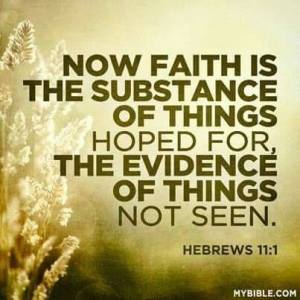
But I say faith is exactly what you cling to in the margins of doubt–when you have exhausted all the possibilities that exist in the physical, you-can-touch-it world and yet you KNOW there is MORE.

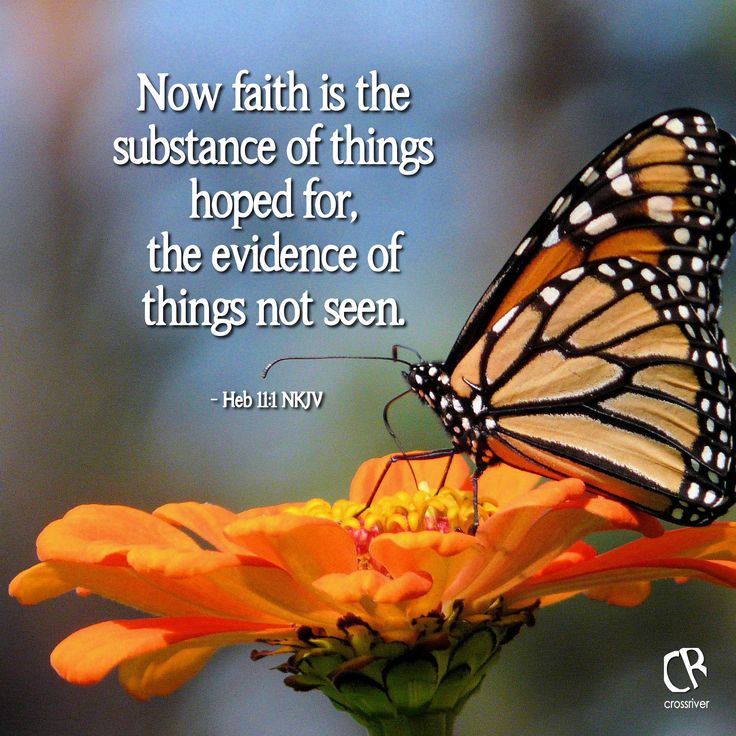
Now faith is the assurance (title deed, confirmation) of things hoped for (divinely guaranteed), and the evidence of things not seen [the conviction of their reality—faith comprehends as fact what cannot be experienced by the physical senses].

Hebrews 11:1 AMP

Questions are how you mark the borders of what you know and find the edges of what you don’t.

This week I judged a high school debate.  It took me back over a decade to the time and place my own children were competing in tournaments.  As I watched the eager and earnest faces of these young adults, I remembered the equally eager and earnest face of Dominic.

He was always passionate about a debate.

Not so much the formal ones–he was on the tail-end of our family’s participation in that scene–but the kind you have around the dinner table and the campfire.  He did not like to lose.  But more importantly, he would not tolerate sloppy thinking or lousy logic.

And I hear his voice in these months after his death challenging me to think critically and work carefully through my doubts and my feelings about life, about death, about grief and about eternity.

When we discussed Scripture, or politics, or lifestyle, or the intersection of all three, Dominic would often be the one digging deeper, looking longer at the hand-me-down Bible verses used to proclaim and prop up popular points of view.  He asked, “Why?” and “Why not?” The six of us spent hours talking (sometimes arguing)–passionately defending our own understanding and interpretations.

All of my children are critical thinkers.  And I am grateful for this.

I don’t want to raise a generation that accepts without comment the thoughts and actions of the generation before.

Isn’t that part of what blinded the Pharisees and Saducees to the Presence of Messiah in their midst?  They clung desperately to what they thought they knew, all the time missing the very revelation of God they craved.

So, in honor of Dominic, I will allow myself the time, the energy and the space to wrestle with my questions.  I will search the Scriptures.  I will ask God for insight.  I will push back against the knee-jerk reactions and answers that come too easily and offer a false sense of closure.

God is not threatened by my wondering.  His throne is in no danger due to my queries.

It is most often other believers who find the questions unsettling.

I don’t want or expect to have the last word.  I believe that belongs to the Creator of the Universe.  But I think He will hear my plea.

In my trouble I called to the Lord. I cried out to my God for help. From his temple he heard my voice. My call for help reached his ears.

Psalm 18:6 ICB


Reminded to Rest

I was reminded in the past few days that I am oh, so vulnerable to attack when I am already wounded.  And that even when I see it coming, I am often unable to fend it off successfully.

The enemy taunts me and encourages me to compare my life with the lives of others.  He stands on the sidelines and calls out, “Your Father loves others better than you!”  He accuses in the shadows, “You are a failure.  Your faith is pitiful.  You will not persevere to the end.”

But he is a liar and the father of lies and deception and untruth are his native tongue.

I have to go back, again and again and again, to the Truth and recite it, write it, declare it and hold fast to it.

I must remember that every promise of God in Christ is “yes” and “amen”.

I must remind myself daily that victory has already been declared even when I can’t see it or feel it.

And when I am too tired to fight, I must allow myself to withdraw and catch my breath-extending the same grace to me that I would extend to another in my place.

It is o.k. to draw boundaries and to create safe places where I can recuperate and regain my strength.

I am not in competition with anyone else.  God has marked my course and He will lead me home.


But I stand silently before the Lord, waiting for him to rescue me. For salvation comes from him alone.

Psalm 62:TLB


Looking Up

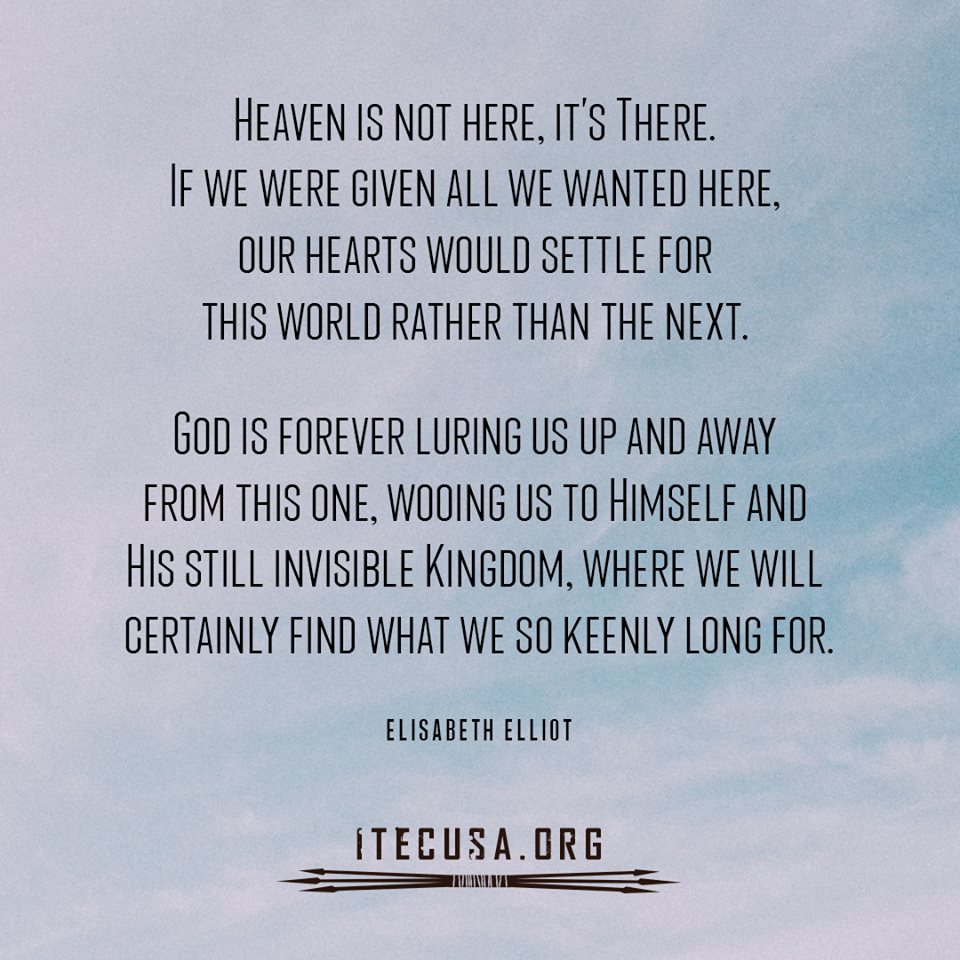
It is so easy to think that the world I see is all there is.  It is so tempting to believe that the here and now is more important than the hereafter.

My heart is deceitful above all things and it can settle its affection on temporary things. The only remedy is to return to Truth.  To feed my soul on the bread of heaven and to strengthen my spirit with the Word of God.

So [I] fix (resolutely focus, gaze intently–without wavering) [my] eyes not on what is seen, but on what is unseen.  For what is seen is temporary, BUT what is unseen is eternal.

2 Corinthians 4:18 NIV

All believers in Jesus are commanded to live as aliens in this world. But it is so easy to get comfortable here. So easy to think we were made for the earth we see instead of an eternity with God in heaven.

Kenny Chesney sings a song;

Everybody wants to go to heaven
Have a mansion high above the clouds
Everybody wants to go to heaven
But nobody wants to go now.

And if we are honest, even most folks in church on Sunday would agree.  Heaven is a great place to look forward to, but not somewhere you would plan to go this week.

Losing my child  has changed that.

Heaven is much more personal.  

This world much less hospitable.

My eyes aren’t attracted to shiny store displays or creative TV ads or flashy cars and clothes.  My eyes strain to catch a glimpse of the glory of God in the sunrise or the sunset, the breeze in the trees reminds me of His Spirit and stirs my heart to cry, “Come now Lord Jesus!”

I want to live the life I have left on this earth with a clear set of priorities that reflect my eternal perspective.  I don’t want to waste my days on things that don’t matter.

 “There are no ordinary people.  You have never talked to a mere mortal.”

C.S. Lewis

People are eternal.  

Love is what matters.  

So I will fix my eyes on what is unseen and I will turn my heart to forever.

It Never Rains in Sunny California

My husband works in Southern California so I spend part of each year on the West Coast.

While shopping one day, a brief rain storm blew in and caught me off guard.  As I was leaving the store, I noticed the reaction of my fellow shoppers–they stood, dumbfounded and paralyzed behind the plate glass windows unsure how to get from the shelter of the store to the shelter of their cars.

They had no idea how to walk in the rain because they didn’t expect it and they were unprepared.

For Christians, pain, loss and death can feel like a sudden storm.  Often these events catch us off-guard, unprepared and we stand frozen–immobilized because we have no idea what to do.

As long as our Sunday schools, sermons and supper table conversations don’t make room for the very real experience of pain and suffering in the Christian life, we are raising a generation to believe that pain and suffering and loss are rare events and that they may very well get through life without experiencing them.

And we are leaving them vulnerable to attacks of the enemy when painful events come along.

Hurting people make us uncomfortable.  It takes courage to sit with the suffering and allow them to share their pain and struggle.  It requires energy and effort to enter in and help bear their burden.  But when we do, we not only offer help for their wounded hearts, we are also learning things that will be useful in our own journey

That day in California I walked to my car, unfazed by the drops falling from the sky because, being an Alabama girl, I was used to the rain.

I share my story and pray that others may find comfort in their own grief and pain.  Not everyone will lose a child.  But everyone will face trials and testing and times of doubt.

And the only safe harbor in the storms of life is in the Person and Promise of Jesus Christ.

He alone can still the wind and waves that threaten to overwhelm us and drown our hope.

We who have run for our very lives to God have every reason to grab the promised hope with both hands and never let go. It’s an unbreakable spiritual lifeline, reaching past all appearances right to the very presence of God where Jesus, running on ahead of us, has taken up his permanent post as high priest for us, in the order of Melchizedek.

Hebrews 6:18-20 MSG


the cost of compassion

I can’t help it.

I think too much.  I wonder too often.  I work too hard to make sense of things.

And the thing that is puzzling me right now is why people pull away from those experiencing deep and lasting pain.

Like the pain of burying a child.  Or the burden of chronic physical disability.  Or the unceasing struggle of overcoming addiction.

I think I’ve hit on a few possibilities:

  • There is no end in sight.  None of these scenarios offer a tidy final chapter that wraps loose ends into a comfortable narrative.
  • It challenges what we believe about God.  It’s one thing to consider the problem of pain and suffering in the world from a theoretical perspective and quite another to experience it in real time.
  • Our days are too full of “busy work” to leave room for real ministry. Overscheduled and frazzled,  we don’t have the emotional, physical or psychological energy required to stand with someone while they battle.

So we trade pity for compassion.

Pity says, “I’m sorry for you.  Let me do something for you that makes me feel better.”

We offer platitudes and prayers from afar as a substitute for presence and personal interaction.

And when our attention is turned elsewhere, we drift away–abandoning the broken to sit alone with their pain.

Most of us don’t mean to do it–we just move on, leaving the limping behind.

But the cold shoulder wounds as much as hurtful words. Acknowledgement is as great a blessing as an extended hand.

Compassion says, “I see your pain.  I hurt with you.  Let me stay with you until you feel better.  And if you never feel better, I’ll still be here.”

Compassion requires conscious commitment to push back against our tendency to forget those who live with things they cannot change and will never forget.

God Himself stepped into His creation to feel the pain of brokenness, to bear the price of sin and to open a Way for restoration and redemption.

Jesus came to make the Father known.

There is no substitute for walking with the wounded.  It is costly, it is painful, it is hard.

But I would argue that when we do, we are most like our Savior.


Sunrise Benediction

My living room window is a huge, energy inefficient affair that lets in too much heat in the summer and too much cold in the winter.

But I will never replace it–because it also gives me a breathtaking view of the sunrise.  

Every morning my body responds to an internal alarm set to the time I was startled out of bed by the deputy delivering the news of Dominic’s death.  I cannot sleep longer.  So I rise, make coffee and settle into my rocking chair with computer, Bible and journal close by.

I spend the dark hours writing, reading and sharing in community with other bereaved parents who wake to their own alarms, unable to fend off another day of living the reality of missing our children.  

It is so quiet that the purring cat in my lap sounds loud in my ears.

Slowly other sounds join the chorus of daybreak–roosters challenging the sun to a duel, birds flitting from branch to branch, calling out the news that now is the time to get the worm.

I look up and the warm glow of sunrise silhouettes bare winter branches of giant oak trees and reminds me that the world still turns.

Seasons still change.

And I am still breathing.

Darkness hides things from us, it fosters fear and isolates. The black of night turns familiar territory into fearsome wilderness.  The enemy thrives in the inky corners of unlit places.

But light disarms the darkness.

I venture forth boldly in the daylight where I would not set foot in the night.

So I treasure the daily reminder that darkness does not last forever, even the night has limits.

Open up before God, keep nothing back; he’ll do whatever needs to be done: He’ll validate your life in the clear light of day and stamp you with approval at high noon.

Psalm 37:6 MSG