Heaven’s Song

A precious waiting mama isn’t waiting anymore.

Eight years after her son ran ahead to Heaven, she’s joined him.

And I have to think that the step from earth to Home wasn’t a huge one for her.

I have never known a kinder or gentler soul in my life. She was always encouraging other hearts, always pointing others to the hope we have in Jesus.

She never preached, she simply extended grace and love that made it absolutely impossible for anyone to ignore the difference between her and most other folks.

I only met this sweet mama once face-to-face when she and a couple other waiting mamas came all the way to my house for lunch and an afternoon of sharing and encouragement. But our friendship continued long distance through Facebook and private messages.

Our mutual love of Jesus, children and children’s books wove our hearts together in so many ways.

I am convinced that the distance between her heart and Heaven is so short because she was already singing Heaven’s Song here on earth-calling grace, mercy, strength and hope to every heart she met.

I thank God for the privilege of knowing her and am looking forward even more to that Day when everything is redeemed, restored and renewed.

Rest well, faithful servant. Dance in the joy of your Savior. Hug your son. Revel in faith made sight.

We’ll be there soon. ❤

Let the beloved of the Lord rest secure in him, for he shields him all day long, and the one the Lord loves rests between his shoulders.

Deuteronomy 33:12

Repost: When Self-Control Is In Short Supply


Have you ever tried to squeeze into too-small jeans, managed to get them over your hips, sucked in and zipped up only to realize that all that extra “you” is now spilling out over the top of the waistband?  

toddler squeezing into jeans

Sometimes that’s how life after loss feels.  

Too much emotion, too much baggage, too much EVERYTHING that has to fit inside a very narrow set of other people’s expectations and tolerance for self-expression.

I find that I CAN squeeze my words and actions into that skinny space-for awhile.  

But then sure as anything, the real me pops out the top and there I am-exposed to the world- warts and all. 

Read the rest here: https://thelifeididntchoose.com/2018/07/29/when-self-control-is-in-short-supply/

Christmas In July: What The Bereaved Need From Family and Friends During the Holidays

What began as a cute marketing ploy to encourage folks to spend some of those December dollars mid-year is now a full blown movement.

From the Hallmark channel to Little Debbie’s snack cakes, retailers and media outlets are promoting Christmas like it’s nearly here.

For some of us, that’s welcome relief from sweltering days. But for many bereaved parents, it’s an unwelcome reminder that faster than we would like, we’ll be right back in the thick of one of the most difficult seasons of the year.

So I’m taking the opportunity during July to re-post this article that has been popular and helpful in the past.  

One of the most trying seasons for grieving parents extends from November through the first week of January. 

The holidays are hard for so many people, but especially for parents trying to navigate these family  focused holidays without the presence of a child that they love.

I know it’s still several months away, but once school starts it seems the weeks roll past faster and faster until suddenly there’s no time to plan and the day is upon us.

I highly recommend speaking to family and friends NOW.  Make plans NOW.  When folks have plenty of time to make adjustments, it is much more likely they will accommodate a grieving heart’s need for change.  

https://thelifeididntchoose.com/2016/09/03/grief-and-holidayswhat-the-bereaved-need-from-friends-and-family/

What I Wanted to Know: How Do You Breathe?


It was the question I asked the bereaved mother that came to my son’s funeral.

It was the question a mother asked me as we stood by her granddaughter’s casket, surrounded by family and flowers.

And it is the right question.

Because when the breath leaves the body of your child, and you look down at the shell that used to be the home of a vibrant, living soul, you simply can. not. breathe.

Read the rest here: https://thelifeididntchoose.com/2016/07/24/how-do-you-breathe/

Scared and Brave: Reaching For Jesus in the Midst of Sorrow

I remember learning lists of synonyms and antonyms as a kid.

Each word was neatly stacked in discrete categories, no overlap.

But that’s not how it is, you know- not in real life.

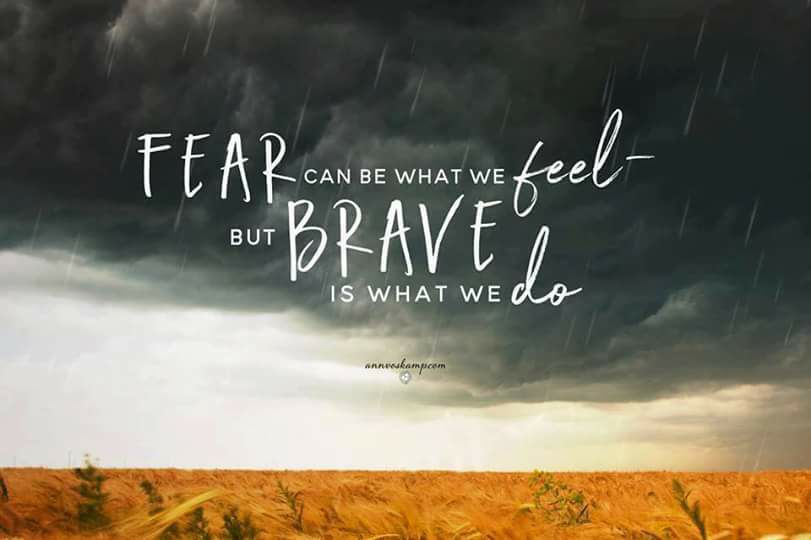
We live with lots of ambiguity, lots of places where the line between joy and sorrow, hope and despair, brave and scared is fuzzy and hard to find.

Life after child loss is full of seeming contradictions.

I am broken yet God is redeeming those fragments and reassembling a life of beauty and meaning. The cracks are visible but they haven’t disqualified me as a vessel that can hold His love, His grace, His mercy and pour all that out on others.

I’m often scared, but am able to walk into each day brave in the knowledge I don’t walk alone.

My life is filled with joyful moments- high notes- accompanied by the low, slow melancholy melody of loss.

No tidy columns of separate experience here.

I’m learning to live satisfied in this undefined and undefeated space.

Scared and brave, reaching for Jesus, carrying on.

Everything broken doesn’t have to be completely fixed for me to be completely fine. I can be scared and brave and frail and unbelievably strong all in the same leap of faith.

And I can be hurt but I don’t have to live hurt. I can choose to believe in the epic goodness of God to completely surprise me with breathtakingly awesome possibilities.

Broken is what people are. Beautiful is what God makes them.

Lysa TerKeurst, Provers 31 Ministries

Bereaved Parents Month Post: Sibling Grief Reactions By Age Group

Grieving parents often face the additional challenge of trying to help their surviving children process the death of a sibling.

While there are many factors that influence how a particular child understands and works through his or her grief, age at time of bereavement plays a significant role.

Children’s grief can look very different than that of the adults around them. And that grief may resurface later on as the child grows and matures, even long after the death of a loved one.

I came across this helpful article that lists common bereavement reactions by age group and have reprinted it in its entirety. It was originally published at KidsHealth New Zealand. http://www.kidshealth.org.nz

Key Points to Remember About Bereavement Reactions:

  • how any child or young person grieves when someone they love has died will depend on many things
  • babies, children and teenagers tend to grieve in bursts, and at other times will look for reassurance and comfort in their normal routines and activities
  • bereaved children and teenagers will need ongoing attention, reassurance and support – it is not unusual for grief to resurface later on, even well after the death

How any child or young person grieves when someone they love has died will depend on many things, such as their:

  • age
  • gender
  • their developmental stage
  • personality
  • ways they usually react to stress and emotion
  • relationship with the person who has died
  • earlier experiences of loss or death
  • family circumstances
  • how others around them are grieving
  • amount of support around them

Babies, children and teenagers may often seem unconcerned, playing or doing their usual activities, so adults can assume they are not properly aware of the death, or affected by it. They are, but in their own ways. Babies, children and teenagers tend to grieve in bursts, and at other times will look for reassurance and comfort in their normal routines and activities.

Bereaved children and teenagers will need ongoing attention, reassurance and support. It is not unusual for grief to resurface later on, even well after the death. This can happen as they move through different life milestones, and develop as individuals.

Babies and Toddlers:

At this young age babies and toddlers don’t have an understanding of death nor the language to say how they are feeling. However, they can definitely experience feelings of loss and separation and are likely to pick up on the anxiety or distress of close adults or others around them.

Common reactions can include:

  • looking for the person who has died
  • being irritable
  • crying more
  • wanting to be held more; being clingy
  • being less active – quiet, less responsive
  • possible weight loss
  • being jumpy, anxious
  • being fretful, distressed

How to help them:

  • keep routines and normal activities going as much as possible
  • hold and cuddle them more
  • speak calmly and gently to them – and be calm around them
  • provide comfort items, such as a cuddly toy, special blanket etc

Preschoolers

At this age children find it hard to understand that death is permanent. They are also at a stage of magical thinking, for example, thinking someone will come alive again or thinking somehow they made someone die. They understand separation though, and feel insecure and frightened when the familiar things around them change. This age group needs a lot of reassurance that they will be safe and looked after.

Common reactions can include:

  • looking for the person who has died
  • dreams, or sensing the presence of the person who has died
  • fearfulness, anxiety
  • clinginess
  • being fretful, distressed
  • being irritable; having more tantrums
  • withdrawing, being quiet, showing a lack of response
  • changes in eating
  • difficulty in sleeping
  • toileting problems, bed wetting, soiling
  • regressing in progress; for example, returning to crawling, wanting a bottle

How to help them:

  • keep routines and normal activities going as much as possible
  • tell them you know they are sad – start to teach and use words that describe feelings
  • tell them they are safe, and who is looking after them
  • keep separated from them as little as possible
  • comfort them with hugs, cuddles, holding their hand, and by encouraging them
  • speak calmly and gently to them – and be calm around them
  • explain death as part of life, so they come to understand it bit by bit. Using some examples in nature may be helpful, such as watching plants grow, bloom and die or seasons change
  • provide comfort items, such as a cuddly toy, special blanket etc
  • encourage play – children can often use play to help them process what’s happened; for example, sand play, puppets, dolls, writing, drawing, painting and various physical activities

Primary School Children

Primary school children are still learning to understand death and can have some confused thoughts about it. They may think death is temporary, or that the person who has died may still feel things, such as coldness, hunger or loneliness etc. They may ask where the person is now, and have blunt questions to ask about what happened to them and to their body. Explaining death to them is very important.

Common reactions can include:

  • looking for the person who has died
  • having dreams about, or sensing the presence of, the person who has died
  • blaming themselves for the death
  • being easily distracted, forgetful
  • being anxious; having increased fears, such as of the dark, of others’ safety
  • clinginess – wanting to be near you or others more
  • withdrawing, being quiet, showing a lack of response
  • being fretful, distressed, not wanting to go to school
  • feeling embarrassment; feeling different from others; may conceal their loss
  • physical complaints, such as tummy aches, headaches, aching
  • being irritable, having more tantrums, being defiant, or developing antisocial or aggressive behaviour
  • changes in eating or sleeping habits
  • toileting problems, bed wetting, soiling

How to help them:

  • frequently reassure them they are safe, and who is looking after them
  • keep routines and normal activities going as much as possible
  • tell them you know they are sad – start to use words that describe feelings
  • keep separated from them as little as possible
  • allow questions and provide honest answers
  • comfort them with hugs, cuddles, holding their hand, and by encouraging them
  • speak calmly and gently to them – and be calm around them
  • explain death as part of life, so they come to understand it bit by bit. Using some examples in nature may be helpful, such as watching plants grow, bloom and die or seasons change
  • let them help in planning the funeral or something to remember the loss
  • provide comfort items, such as a cuddly toy, special blanket etc
  • encourage play – children often can use play to help them process what’s happened; for example, sand play, puppets, dolls, writing, drawing, painting and various physical activities

Older Children (10-12 years)

Common reactions include:

All of the above relate to this age group, but it’s important to be aware that by this age children know death is final. They are also more aware of how adults and others around them are reacting to death. This group may also:

  • be especially anxious about the safety of family and friends, and themselves
  • try very hard to please adults and not worry them, and so not let themselves grieve
  • feel stronger emotional reactions, such as anger, guilt, sense of rejection
  • want to take on more adult responsibilities, trying very hard to please
  • feel embarrassment; feel different from peers; may conceal their loss
  • become more focused on what’s happened and ask questions, think about it a lot, have dreams about it, and perhaps want to talk about it often to others

How to help them:

They need all of the help in the previous section plus:

  • time to talk with you and other trusted adults, when they need to
  • regular reassurance – spoken, and with encouraging physical touch (such as hugs, pat on the back etc).
  • honesty about events, and feelings
  • to know you understand their grief
  • regular encouragement
  • avoid expectations of adult behaviour – allow them to be the age and stage they are

Teenagers

By adolescence, death is accepted as part of life, but it may not have affected a teenager personally yet. Their reactions may fluctuate between earlier age group reactions and reactions that are more adult.

Teenagers will often want to be more with friends than family as they seek support. They may find the intensity of emotion overwhelming or scary and not be able to find the words or ways to talk about them with others. They may want to feel they’re coping, and be seen to be, but inside be hurting a great deal, or be putting their emotions on a shelf for a later time.

Death can so shake teens that some react with risk taking behaviour – to escape the feelings and reality and as a source of comfort; for example, drinking, drugs, more sexual contact or reckless driving.

Common reactions can include:

  • being easily distracted, forgetful
  • having difficulty concentrating at school
  • being unsettled in class, a change in class performance, not wanting to go to school
  • being overwhelmed by intense reactions, such as anger, guilt, fear
  • having difficulty expressing intensity of emotions, or conflict of emotions
  • blaming themselves for the death
  • anxiety – increased fears about others’ safety, and their own
  • having questions or concerns about death, dying, mortality
  • dreams about, or sensing the presence of, the person who has died
  • wanting to be near family or friends more
  • withdrawing to be alone
  • physical complaints, such as tummy aches, headaches, aching
  • being irritable, defiant, more antisocial or displaying aggressive behaviour
  • risk-taking behaviour to escape, to comfort, or to prove they’re alive and strong; for example, drinking, drugs, more sexual contact or reckless driving
  • changes in eating, sleeping habits
  • bedwetting
  • jokes or humour, masking feelings
  • saying, or acting like, they don’t care
  • wanting to take on more adult responsibilities, trying very hard to please
  • strained relationships with others – fear or awkwardness about being close to others
  • feeling embarrassment; feeling different from peers; may conceal their loss
  • a sense of loneliness – isolation
  • a change in self-image, lower self-esteem
  • possibly suicidal thoughts
  • possibly moving from sadness into depression

How to help them:

  • be honest and let them know what’s happening
  • be willing to listen, and available to talk about whatever they need to talk about
  • acknowledge the emotions they may be feeling—fear, sadness, anger
  • it can be helpful for parents, or other adults, to share their own feelings regarding the loss
  • frequently reassure them they are safe, who is caring for them, and which adults they can trust to ask for further support
  • keep routines and normal activities going as much as possible
  • talk to them about grief – what it is, that it’s normal, that everyone is different
  • avoid expectations of adult behaviour – allow them to be the age and stage they are, encourage them to express their thoughts and feelings – give them ideas of things they could try, such as doing physical activities, writing, singing, listening to music, talking with friends, reading etc
  • allow questions and provide honest answers
  • comfort them with hugs, cuddles, holding their hand, and by encouraging them
  • speak calmly and gently to them – and be calm around them
  • talk about death together; answer any questions they may have
  • let them help in planning the funeral or something to remember the loss

Bereaved children and teenagers will need ongoing attention, reassurance and support. It is not unusual for grief to resurface later on, even well after the death. This can happen as they move through different life milestones, and develop as individuals.

If you are concerned about any extreme reactions, or if you think the young person may have become depressed, contact your doctor or other trained adviser, such as a counsellor, senior staff member from their school, social worker, community or youth worker or a local family support agency.

Originally published on: http://www.kidshealth.org.nz

Repost: Should I DO Something? Yes! Absolutely.

It’s possible to stand frozen at the corner of good intentions and helpful action.

I’ve done it dozens of times.

And every time I’ve allowed myself to swallow “but I don’t know what to do” and done nothing I’ve regretted it.

Every. Single. Time.

So I’m here to tell you that when you get that urge, feel that itch, hear that still, small voice that says, “DO something“, then do it.

You may already have a good idea of what it is you need to do, but in case you don’t know exactly how to make a difference in the life of a heart hanging on by a thread, here are some things to get you started:

Read the rest here:

Should I DO Something? Yes. Absolutely.

On My Worst Days, Mustard Seed Faith is Enough

I didn’t grow up doing in-depth Bible studies so when I “discovered” the Bible in my early twenties, it was an exciting adventure to dig for treasure in the Word of God.

Along with Scripture itself, I devoured book after book on theology.

I could not get enough.

By my mid-thirties I had developed a fairly well-defined and defensible doctrine. I really thought I understood how God works in the world.

Then my son died.

And all the things I thought I knew, all the absolutes I had marked down in an notebook followed by an underlined verse to support them, didn’t seem so solid or well-defined.

I never questioned certain fundamental truths:

  • God is in control.
  • God is good.
  • God is present and will not abandon me.

But what form His goodness and control might take was unpredictable and many times beyond my understanding.

I’ve learned in the years since is that I don’t have to understand. I don’t have to have my theological ducks in a row. I don’t have to be able to give a defense (to myself or others) of how God works in the world.

I don’t have to have faith that moves mountains.

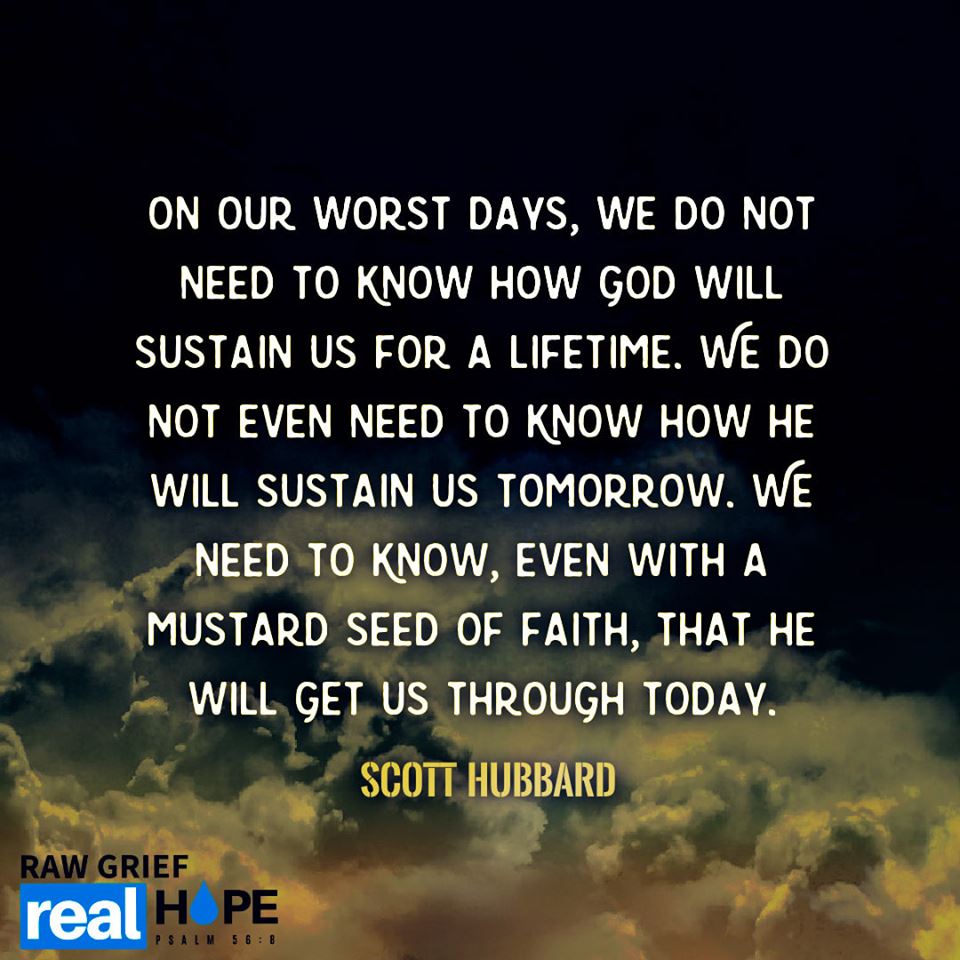
I only need mustard seed faith and God will do the rest.

I only need to hold onto the hem of His garment, and Jesus will honor my outstretched hand and heart.

*If you would like to join with me in ministry to bereaved parents and their families, you can make a tax-deductible donation using this link:

https://square.link/u/cNen14Q1

Why Can’t I Keep My House Clean? Grief and Everyday Responsiblities

I freely admit I was never a housecleaning fanatic.

With a busy family, a small farm and mountains of paper, pencils and books scattered around I was content if the most obvious dirt was swept up and the sink free of dishes.

But, I DID have a routine.  I DID clean my bathrooms and wash clothes and make beds and vacuum the rugs on a regular basis.

Not anymore.

Even all this time after Dominic ran ahead to heaven, I have not reestablished any kind of rhythm to keeping house, making meals or doing the most basic, necessary chores.

And I don’t really know why.

I’m not overly busy.  I’m not doing other things that keep me away from the necessary things.  

In fact, sometimes I actually sit down for what I think will be a few minutes only to find a couple hours have raced by while I was doing nothing.  That NEVER happened before.

Literally, never.

I was a dynamo from the time I woke in the morning until evening-moving, moving, moving.  I certainly still have plenty I COULD do, but not so much that I WANT to do.

I’ve pondered, “Why?” and only been able to come up with a single answer: Grief is WORK.  And apparently I only have so much energy to divide between what I need to do (grief work) and what I’d like to do (clean my house, etc.).

The hours I spend “doing nothing” are actually hours spent working through feelings, thoughts, spiritual conundrums and rediscovering who I am in light of what has happened.

So I’m learning to cut corners and give myself a break.  Because it doesn’t appear that my get-up-and-go is coming back anytime soon.

Here are some practical things I’ve been doing to make daily life work:

I’ve adjusted my standards.  I have a minimal acceptable standard and apply that to my home and myself instead of trying to live up to “what others want me to do/be”. For me, it means no germy surfaces, clutter free places to sit and eat, wiped down bathrooms and clean clothes for the day.  

Anything over that is a bonus!

I take shortcuts.  Paper goods for meals to cut down on dishes.  Easy menus for dinners (lots of crockpot recipes).  I keep paper towels and cleaner in each bathroom and wipe down when I’m in there for something else instead of making “clean the bathrooms” a separate chore.  

I have baskets to catch wayward items and carry them upstairs all at once or just leave them in the baskets.  I wash clothes but don’t worry if I get them folded.  I bought more underwear and socks so washing isn’t an emergency.

I don’t apologize when someone stops by and things aren’t as tidy as they used to be or I wish they were. 

I won’t waste emotional energy on worrying about what they think.  

And when I find that I’m sitting down, pondering some aspect of loss or life or love, I lean in and do it.  I grab my computer or a journal and write out what’s running through my head.  

Because that’s the more important work right now.  

Companioning The Bereaved

I’ve learned so much in this journey.

I’ve had to unlearn some things too.

One of the things I’ve had to unlearn is that the medical model of “identify, treat, cure” is not applicable to grieving hearts.

Grief is not a disease. It’s not an abnormality. It doesn’t need to be treated and cured so that it “goes away”.

It’s the perfectly normal and appropriate response to loss.

A more helpful model is compassionate companionship.

What grievers need is faithful friends and family who choose to come alongside and refuse to be frightened away when the process seems long, tortuous and challenging. We need others to be present, to truly listen and to bear witness to our wounds.

Recently I found this list from Dr. Alan Wolfelt, founder of the Center for Loss (http://www.centerforloss.com) and I love it!

It’s an elegant synopsis of what compassionate companionship looks like in practice:

  1. Being present to another person’s pain; it is not about taking away the pain.
  2. Going to the wilderness of the soul with another human being; it is not about thinking you are responsible for finding the way out.
  3. Honoring the spirit; it is not about focusing on the intellect.
  4. Listening with the heart; it is not about analyzing with the head.
  5. Bearing witness to the struggles of others; it is not about judging or directing these struggles.
  6. Walking alongside; it is not about leading.
  7. Discovering the gifts of sacred silence; it is not about filling up every moment with words.
  8. Being still; it is not about frantic movement forward.
  9. Respecting disorder and confusion; it is not about imposing order and logic.
  10. Learning from others; it is not about teaching them.
  11. Compassionate curiosity; it is not about expertise.

~Dr. Alan Wolfelt, Eleven Tenets of Companioning the Bereaved

At one time or another each of us need someone to be present, to truly listen and to bear witness to our wounds.

When your world is profoundly dark, an outstretched hand is often the only way a heart can hold onto hope. 

`