Summer Scripture Challenge: Verses on Grief

I first shared this series several years ago.

I’d love to report that my ability to sit and study Scripture had once more grown to what it was in the “before” time, but I can’t.

But what I CAN tell you with confidence is that the Bible is still my greatest source of truth and comfort.

In its pages I find my Shepherd King in the flesh and in His majesty, holding Hope as a beacon of light on this journey I’d never have chosen for myself.

And as long as I keep that lantern lit, no matter how dark or frightening the path, I know I am safe in His arms.

❤ Melanie

I don’t know about you but it’s been much harder for me to study Scripture since Dominic ran ahead to Heaven.

Not because I don’t want to dive deep like I used to but because I don’t have the same ability to sit still and read like I did before.

So I’ve looked for easy ways to make Scripture study part of my morning routine.

One way I’ve done that is by using a themed “Monthly Scripture Writing” calendar.

In an effort to encourage myself and anyone who wants to join in, I’m going to be writing blog posts using a calendar of verses on Grief.

It will work like this:

Purchase or find a notebook you can designate as your Scripture journal. It can be a spiral notebook (easy to find and on sale now before school starts), a composition book (plain or fancy), a traditional journal (usually in a smaller format) or simply loose-leaf paper that you can pop in a three ring binder. It really doesn’t matter. Use what is easiest for you to keep track of and write in.

I personally prefer the cheap 70 sheet spiral notebooks because they lay flat when opened and make writing and drawing easier. It also means that if I want to or need to, I can use up to four pages per day and it will all still fit in one notebook. The covers are easy to decorate (if I want to) and pages are durable. I choose wide-ruled which leaves room for doodling around words for emphasis.

Round up some colored pens, pencils, crayons and/or markers. We will use these to highlight/emphasize words and to illustrate verses.

Purchase or locate a few regular pens that you prefer for writing. For just a couple dollars you can get roller ball or gel pens that really do make a huge difference when copying the longer verses. It’s no fun to write with a cranky instrument!

A Bible in the version you prefer. I have more than one in various versions but also use an online resource like Biblegateway.com or Biblehub.com which makes most English versions available at my fingertips. I really like that option because even though I will only copy out the verse in a single version, reading it in several versions sheds more light on the meaning than when I only read it in one. I’ve also found that familiar verses can become stale if I only read/copy them in the version I know best.

That’s really all you absolutely need for this challenge.

But if you are interested in making your journal more fun and expanding your knowledge a little more, here are a few other things I’d add to my Bible journal basket:

Sticky notes in several different colors. I love, love, love these! I will often copy out the verse in one Bible translation and then jot down significantly different language from another onto a sticky note and add it to the page. I also sometimes use these notes for my own insights or personal illustrations/examples. On occasion, when pressed for time, I’ll write out a question I want to look up later and pop it into the journal as a reminder.

A dictionary. I love to look up words. While it may well be that I technically understand the meaning of a word, when I look it up in the dictionary I’m always reminded of subtle distinctions I’d miss otherwise. Plus there is usually a list of antonyms and synonyms that refine my understanding.

Stickers. I confess I’ve never quite gotten over having these colorful, playful and pretty little additions in my stash to brighten pages here and there. Absolutely NOT necessary but awfully fun.

Topical concordance. If you’ve never learned to use one, now’s a great time to do so. Obviously our main topic will be grief for this month. But often as I’m reading a verse, I want to explore other topics mentioned and use the concordance for that. It’s true you can Google the topic but what you usually get in those results is someone else’s idea of which verses are most pertinent. A good concordance lists all the verses that contain that word in order for the whole Bible.

Magazines that I am comfortable ripping apart for illustrations. I comb through magazines and rip out pages that have interesting graphics or word bubbles or landscapes and keep them in a folder for when I want to add just a little something to a page.

This list could be endless. I hope that some folks will comment below and share what they enjoy adding to a journal.

I place all these in a basket I keep by my rocking chair so I never have to go searching for one or more of the things I need to complete each day’s assignment.

That’s really all there is to it.

Each day you will write that day’s verse(s) on one page. You can add in-text notes or save your observations and notes for after the Scripture. Use a second page to record thoughts and observations, cross-referenced scriptures, an illustration or two, quotes, pictures or prayers.

At the end of the month you will have your very own personalized topical Bible reference notebook and prayer journal.

I’ll be posting something about each day’s selection here and on Facebook in both our closed bereaved parents’ group and on the public Heartache and Hope page if you’re looking for companionship and encouragement.

I hope you’ll join me and add your own voice to the discussion. 

Bereaved Parents Month 2026: Given a Chance, Life Grows Around Grief

When days become months and months become years it’s hard to explain to others how grief is both always present but not always in focus.

I’ve struggled to help those outside the loss community understand that the absolute weight of the burden is precisely the same as when it fell on me without warning that dark morning.

Dominic’s absence, if anything, has seeped into more places, changed more relationships and influences more choices than it did eleven years ago when I was only just beginning to comprehend what a world without him would look like.

But I, and my family, have continued to live.

We’ve added family members through marriage and birth. We’ve gone places, made memories and made career moves. We’ve gotten older. My husband retired. Children moved away.

All these things and more mean that life is simply bigger than it was when Dom left us.

I really like this graphic that puts this in perspective.

It’s a slow, gradual process. And for some hearts who are forced to endure multiple losses in a short time the circle may never get very large because the grief is so great.

I remember when I realized that sorrow was not ALL I felt nor Dominic’s absence ALL I saw. It was a bit frightening to be honest.

Did that mean my love for him was waning or that his importance in our family was forgotten? Was I a bad mother because I no longer cried every day for the child not here? Had my heart grown cold?

But then I realized none of those things were true. What allowed me to feel joy again, to participate fully in family outings or gatherings, to plan holidays and birthdays once more was instead that my heart had found a way to hold both sorrow and gladness at the same time.

There are still days when grief looms large and my world seems too small to contain it. But those don’t come as often as they once did.

Life will march on, regardless of how hard we might wish it wouldn’t.

And, in large measure, life after loss is what we choose to make of it.

I’m not abandoning Dom by embracing my life now.

In fact, I’m sure he’d approve.

Bereaved Parents Month 2026: Ten Ways to Cope During Hard Seasons

My hardest grief season begins in November and runs to the end of May.  Thanksgiving through Dominic’s birthday on (or near) Memorial Day are days full of triggers, memories and stark reminders that one of us is missing.

If I could fall asleep November first and wake up in June I’d do it.

But I can’t so I have to employ all the tricks I’ve learned in the over twelve years since Dominic ran ahead to heaven to survive those particularly challenging months.

Here are ten ways I survive hard grief days:

1.  I make lists of things to do.  I’ve found that if I don’t make a plan for each day it’s far too easy to just lie around and feel sorry for myself.  I use index cards but whatever works for you is fine.  I list household chores, phone calls to make or notes to write, exercise, errands or whatever.  And then I consider them non-negotiable.  These are my marching orders and after my morning coffee I start down the list.

2.  I do something creative.  I crochet or arrange flowers or sew a little.  Taking just five or ten minutes to make something beautiful changes my perspective.  I have a can opener that takes the lids off without sharp edges and I make magnets for friends and family members or just to have on hand for a little gift.

3.  I take a walk.  I am thankful I can go outside on my own property and enjoy fresh air and country sunshine.  I know not everyone has that option.  But even a walk inside your office building or up and down a couple flights of stairs gets the blood pumping and releases endorphins.  If I can’t walk, then I at least change my physical position-from sitting to standing, from standing to moving.  Body position impacts my emotions.

melanie feet crocs and driveway step

4.  I find something to make me smile.  There is scientific evidence to back our common sense experience that smiling lightens our mood and helps our hearts.  I read jokes or check out some of my Facebook friends that tend to post funny memes or stories.  Sometimes I just “practice” a smile and even that can send feel-good hormones surging through my system.

paco face (2)
“Don’t try to win over the haters, you are not a jackass whisperer.” ~ Brene Brown
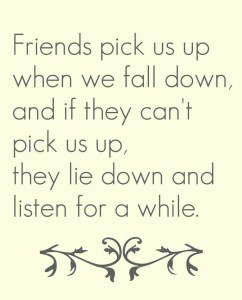
friends pick us up

5.  I call or text a friend.  Sometimes I just need to know that someone else is aware of my hard day. No one can undo my grief but when I feel there is a witness, it lightens the load somehow.

6.  I stay off Facebook and other social media platforms.  I love that I’m able to keep in touch with friends and family via social media.  But it can be full of drama and negativity as well.  So if I’m having a tough day, I remove the potential for it to be made harder due to random comments, posts or photographs.

Styled Stock Photography

7.   I pet my cats.  I have always been an animal lover.  But I truly do not know how I could have survived these past four years without the companionship of my cats and other furry friends.  Study after study confirms that being in the presence of pets lowers blood pressure and calms nerves. 

hand-coffee-roosevelt

8.  I go with my feelings.  There is no rule book that says I have to be tough and hide my tears.  If I’m having a hard grief day it is perfectly acceptable to let the sorrow wash over me and let the tears fall.  Sometimes fighting the feelings only prolongs my pain.  Often a good cry is cleansing and I am much better afterwards.

sometimes you can hurt yourself more by keeping feelings hidden

9.  I journal.  There are things I need to “say” that are better kept between me, God and my notebook.  I have kept a journal for nearly three decades.  Many times just writing out my feelings, my fears, my thoughts and my frustrations is enough to take the sting out.  There’s something about not keeping it all bottled up inside-even if no other soul reads it-that acts as a catharsis.

10.  I copy encouraging quotes or Scripture and hang them prominent places throughout the house.  I have notes tacked to my bed post, on my bathroom mirror, taped to the cabinet next to my stove, stuck on the fridge, slid into my wallet in my purse-absolutely everywhere.  Because when my heart is hanging on by a thread, the smallest bit of encouragement is often enough to help me hold onto hope.

None of these things undo my grief in the most basic sense.

Dominic is gone, gone, gone and I will not see him or hear his voice until we are reunited in the Presence of our Savior.

But they DO help.

One of the most devastating aspects of child loss is the overwhelming sense that NOTHING makes sense anymore and that I have absolutely NO control.

Choosing helpful habits and actions gives me a way to regain dominion over a tiny corner of my world.

And that little bit of action strengthens my spirit and helps my heart hold on.

remember to take care of yourself you cant pour from an empty cup

Bereaved Parents Month 2026: Finding Courage to Share Our Stories

You know what breaks my heart all over again?  

The fact that so many bereaved parents tell me they don’t feel they can share their experience on their own FaceBook or other social media pages.  

That’s just SO SAD!

They have been shushed to silent suffering because when they break open the vault of emotions and let others see what’s inside, many people turn away-or worse, they condemn that wounded heart for sharing.  

I grew up in the Deep South where ladies were supposed to keep silent about anything “unmentionable”.

Problem is, that included many things that SHOULD be spoken aloud.

Because a conspiracy of silence forces those who are suffering to hide.  It creates huge gaps between what goes on behind closed doors and public image.

And it causes those who are wounded to question the authenticity of their own experience.

In recent years we have dragged many topics into the light.  We’ve made space in the public square for discussion of things we used to pretend didn’t exist.

But life after child loss is still a hushed topic.

The long road to healing after burying a child is rarely acknowledged outside the community of bereaved parents.

The FACT that as long as I live, my son’s absence will be a shadow trailing me, the burden of sorrow will slow my steps, the heartache of missing will shape my world is glossed over and set aside.

I understand why.

It is scary to speak aloud what you hope will never happen to you.  It’s unbelievably frightening to admit that we really have no control over whether, or when, we or the ones we love might leave this world.

But I am not going to keep silent.

Not because I want pity or special treatment, but because I want that parent who just buried his or her child to know that you. are. not. alone.

I want you to know that what you are experiencing is not unusual.

I want you to understand that the horrible pain you feel is absolutely normal.

And I want you to be assured that you are NOT Crazy!

I will tell my story because even though it is hardit matters.  And even though it hurts, it can help heal another.  And even though it isn’t finished, it can blaze a trail for others to follow.

Join me, be BRAVE, tell yours.

Courage is a heart word. The root of the word courage is cor – the Latin word for heart. In one of its earliest forms, the word courage meant “To speak one’s mind by telling all one’s heart.” Over time, this definition has changed, and today, we typically associate courage with heroic and brave deeds. But in my opinion, this definition fails to recognize the inner strength and level of commitment required for us to actually speak honestly and openly about who we are and about our experiences — good and bad.

~Brene Brown

Bereaved Parents Month 2026: I Don’t Want to Remember My Son

I don’t want to remember my son. 

I want to make memories with him.  

I want him to watch me grow old, to watch him get married and have children and to hear his voice mingled with his siblings at my table.

I’ve tried dozens of times to write a post that describes the abyss that divides the life I thought I would live and what it’s turned out to be.

I can’t do it.  

A twenty-three year old isn’t planning his legacy.  A mom of a twenty-three year old isn’t carefully preserving daily moments in the event he suddenly disappears.

Whatever legacy Dominic has left behind is a function of his huge personality rather than careful planning.  And all I have left of his life are bits and pieces I’m trying to string together so he’s not forgotten.

I was not prepared to wake up one morning and learn that his earthly story ended.  

I didn’t get to say good-bye, didn’t get to look him in the eye and tell him how very much I love him, didn’t even get to hold his hand as he left this life and entered Heaven.

I know he is just fine.  He’s full of joy and perfectly content.  

But I’m not.  

I don’t want Dominic to be a memory.  

I want him to be here.  

Bereaved Parents Month 2026: The Gift of Mindfulness

When I was a young mother, my brother used to love to sit back and wait to see how many things I could do at once.

I could hold a baby, iron a shirt and talk on the phone at the same time.  I could pick things up with my toes when I didn’t want to disturb the sleeping child in my lap and couldn’t reach the object with my hand.

Four children in six years, breastfeeding, homeschooling and taking care of all the household chores meant that I got pretty darn good at keeping multiple balls in the air at the same time.

juggling huff post

Those days are over.

Like so many things at this point in my life I don’t know how much of what I experience and feel is a function of getting older (definitely middle aged here!) and how much is attributable to grief following the death of Dominic.

But this I do know:  I am only able to focus on a single task, thought, desire or problem at a time. If I try to multi-task, I might as well cry, “Uncle!” from the start.

It’s a little discouraging.  

Often I feel like I’ve wasted an hour or a day or even a week. What exactly did I get done?

But it’s also a kind of freedom.  

My household isn’t nearly as busy as it once was so there’s really no need to rush from here to there or stack task on top of task.

I’m learning that taking time, talking to people for as long as they need me, doing something well even if I don’t do it quickly are all perfectly acceptable ways to spend a day.

And while I miss so much of who I was before Dominic ran ahead to heaven, I don’t miss the frantic craziness of trying to do too much in too little time.

I will receive THIS change as a gift.  

if you are always racing to the next moment

Bereaved Parents Month 2026: Truth About Child Loss

I wrote this post December, 2015.  It hadn’t been long since I joined an online community of bereaved parents and began to see that I wasn’t the only one who had friends and family that misunderstood child loss.

I was spending a lot of time in my life trying to help others comprehend, just a little, what it felt like to bury a child.

Trying to give them a tiny taste of how this pain is so, so different than any other I had experienced.  Begging them to toss the popular ideas bandied around that grief followed “stages” and was “predictable”.

I re-share every so often because it seems to help, a little.  

I’m re-sharing today in  honor of Bereaved Parents Month. 

People say, “I can’t imagine.“

But then they do.

They think that missing a dead child is like missing your kid at college or on the mission field but harder and longer.

That’s not it at all.

It isn’t nostalgia for a time when things were different or better or you talked more: it’s a gut-wrenching, breath-robbing, knee-buckling, aching groan that lives inside you begging to be released.

There is no smooth transition up the ladder of grief recovery so that you emerge at the top, better for the experience and able to put it behind you.

We’ve all heard the much touted theory that grief proceeds in the following stages:

  • denial
  • anger
  • bargaining
  • depression
  • acceptance

And people (who haven’t experienced grief) tend to think it’s a straight line from one stage to another, gradually going from bottom to top and then on with life.

But it just isn’t true.

Reality is, these “stages” coexist and fluctuate back and forth from day to day and even hour to hour.

Grief remakes you from the inside out.

Losing a child has made me rethink everything I believe and everything I am.  It has changed and is changing my relationship with myself and with others in ways I couldn’t imagine and often don’t anticipate.

And it is hard, hard work.

Life around us doesn’t stop.  Grieving parents return to work, continue to nurture their surviving children, keep getting up in the morning and taking care of daily details.

We are doing all the things others do, but we are doing them with an added weight of sorrow and pain that makes each step feel like wading through quicksand.

We want you to know we are doing the best we can.

Life without my child is like having a leg amputated–I am forced to learn to manage without it, but everything will always be harder and different.

And it will be this way for the rest of my life.

The one thing a grieving parent DOESN’T want you to know is how it feels to bury your child.

I don’t want anyone else to know what it means to leave part of your heart and a chunk of your life beneath the ground.

“But please: Don’t say it’s not really so bad. Because it is. Death is awful, demonic. If you think your task as a comforter is to tell me that really, all things considered, it’s not so bad, you do not sit with me in my grief but place yourself off in the distance away from me. Over there, you are of no help. What I need to hear from you is that you recognize how painful it is. I need to hear from you that you are with me in my desperation. To comfort me, you have to come close. Come sit beside me on my mourning bench.”

Nicholas Wolterstorff   LAMENT FOR A SON

Bereaved Parents Month 2026: Why Friends Disappear After Child Loss

It happens in all kinds of ways.  One friend just slowly backs off from liking posts on Facebook, waves at a distance from across the sanctuary, stops texting to check up on me.

Another observes complete radio silence as soon as she walks away from the graveside. 

Still another hangs in for a few weeks-calls, texts, even invites me to lunch until I can see in her eyes that my lack of “progress” is making her uneasy.  Then she, too, falls off the grid.

Why do people do that? 

Why is it, when we need them most, many friends-and I mean really, truly FRIENDSjust can’t hang in and hold on?

I admit in the early days I didn’t care WHY they did it. 

It broke my heart and enraged me all at the same time.  I felt abandoned, judged, forgotten, pressured to conform to some unwritten standard of how I was “supposed” to do grief and utterly, completely forsaken.

It took me months to begin to even consider their perspective and years to come to a place where I could forgive them.

butterfly away from hand

Here’s what I’ve figured out this side of devastating, overwhelming, heart-shattering pain about why some friends run away:

  • I represent their greatest fear.  I am a billboard for loss.  My life screams, “We are NOT in control!” And that is scary.  Most folks run away from scary if they can.
  • I remind them that faith is a living thing, tender and vulnerable to trials and testing.  We love to tout Sunday School answers that follow like the tag lines on Aesop’s fables when asked about anything to do with Jesus or how God works in the world.  But it’s just not that simple.  The Bible is full (FULL!) of untidy stories where even the giants of faith got it wrong for a season.  I think people are afraid that if they follow me down the rabbit hole of questions they might never come back out.  Better to stand outside and hope I emerge safe and sound without risking themselves.
  • My situation is messy and they don’t want to get involved.  I will need ongoing, intense investments of emotional energy and time. Who knows where it might lead?  Who knows how many hours might have to be given to come alongside and support someone whose journey looks more like slogging through a swamp than a walk in the park?  These folks are just not going to risk entanglement.
  • Some friends and family are genuinely afraid of doing harm.  They feel my pain so deeply that they are frozen, unable to do or say anything because they fear they will make things worse.  These are the hearts most easy to forgive and the ones most likely to jump back in when I assure them they cannot make it worse but their support can make it better.
  • Some people were going to disappear anyway.  We don’t like to admit it but many friendships are only for a season-we go to the same church, live in the same neighborhood, our kids go to the same school-and as soon as circumstances change these people fade away.  Well, circumstances certainly changed!  They leave because our differences outweigh our similarities and it requires too much effort to maintain the friendship.

Understanding why people run away has helped my heart. 

It doesn’t undo the pain inflicted by abandonment of those I felt sure would stay close by my side, but it puts it in perspective.

Truth is, I’m not sure how many people I would have stalwartly supported for the long haul either before Dominic ran ahead to heaven.  

None of us possess infinite emotional, mental, physical and relational resources.  It’s only natural that we portion them out according to our own priorities-even when that means abandoning friends who really need us.

Rehearsing offense only ties me in knots. 

It changes nothing.

I have limits as well. 

Forgiving those that chose to walk away frees me to use my resources in more fruitful ways that help me heal.  

forgiveness_is_the_fragrance_that_the_violet_sheds_on_the_heel_that_has_crushed_it-385646

Bereaved Parent Month 2026: How Grief Continues to Shape My Life

It would be lovely if life were neatly divided into seasons or sections.

But like so many things, there are no clean lines between now and what used to be.

Who I am today is shaped by who I was the day before.

I think that’s one of the things I enjoy most about fiction-authors are free to wander back and forth among character’s thoughts, past experiences and present reality.

It makes for a more complete story.

Each year about this time (in the waning days of my Season of Sorrow) I usually stop and take stock of how far I’ve come and how grief continues to shape my life.

There are many, many ways I’ve healed and am healing:

  • I no longer cry every day.
  • I feel true joy!
  • The pain of losing Dominic doesn’t dominate me although it plays like Background Music-not always demanding my attention.
  • I celebrate my family and my family’s milestones with genuine excitement and once again enjoy planning get togethers, birthdays and (most!) holidays.
  • I function at a higher level and am able to rejoin some groups and participate in some activities I just couldn’t manage in the early years.
  • I’ve made peace with the questions that won’t be answered this side of eternity.
  • I’ve incorporated traumatic loss into my understanding of Who God is and how He may work in world while accepting I don’t always like it.
  • I attend baby showers, weddings and even funerals without bringing all my lost dreams or personal sadness to the event.
  • I laugh-a lot. It feels good again to belly laugh at family memories or new jokes.
  • I can extend hospitality once more. That was a core component of my pre-loss life and personality and I missed it.

But there are many ways in which grief and loss continues to inform how I walk in the world:

I absolutely, positively cannot multitask! I have to break daily chores into single actions so I can focus and accomplish one thing at a time. I used to be able to cook, talk on the phone, bend over and motion to a child needing help with school all at once. Not anymore! Just recently I lost an important piece of mail most likely because I was looking at it while chatting to a family member. I put it down and cannot for the life of me remember where it is.

I become anxious when around too many people-especially if they are people I don’t know or the venue is one with which I’m unfamiliar. This even happens in the car driving in new places. I was never an anxious person before. In fact, I was typically the voice of calm in a group of friends panicking over some small detail that went awry. I try not to share my anxiety, but it’s there and it takes a huge amount of energy to corral it and keep it from escaping into wild demonstrations like running from a room. (I do a lot of counting/visualizing/breathing and self-soothing.)

I don’t like noise. To be fair, I never really did but now it’s exacerbated. Shopping can be a real trial when stores insist on blasting music in hopes it makes patrons feel like spending more money. I, for one, just want to get what’s on my list and get the heck out of Dodge! I love children but I can’t tolerate the incessant chatter little ones bring to a Sunday School classroom or a Vacation Bible School craft table. I used to be the first one to volunteer for those posts but I just. can’t. do. it. anymore.

I crave predictability. I know, I know, of all people I should understand control is an illusion. I do. But the tiny details of life-like planning meals, choosing clothes, cleaning routines and evening quiet times- are things I want to be able to count on. Routine is my friend. It helps my mind (such as it is) operate on reliable pathways. I’ve never been a big fan of random, but now it’s something I try to avoid at all costs.
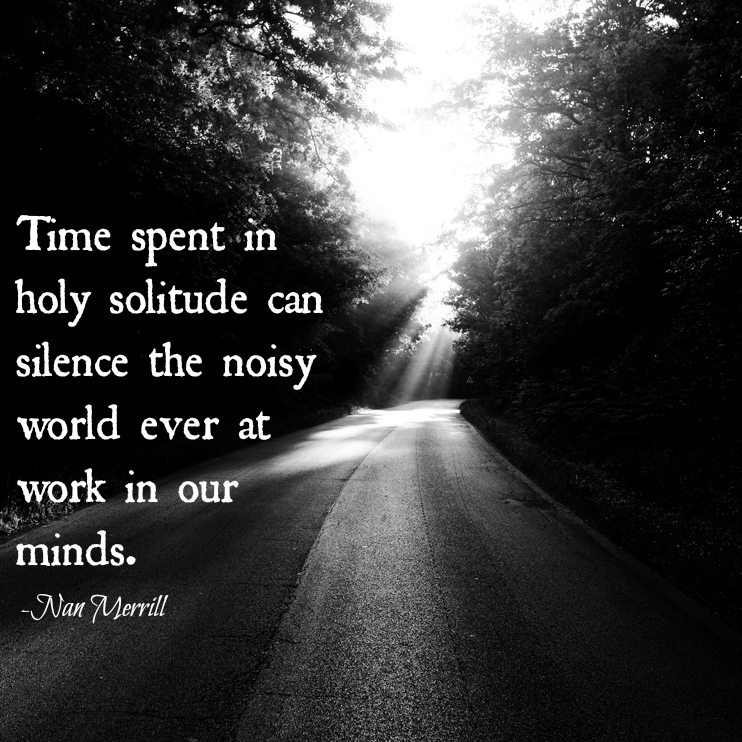
I need solitude. I’m still processing some things. I imagine I’ll be doing that the rest of my life as different experiences from NOW interact with my loss. I cannot do that in the presence of others. I need to think, reflect, write, read and walk it out. That means I have to devote time and space to being alone. If circumstances prevent me from quiet solitude for too long my blood pressure climbs, my patience disappears and little things grow large.

I don’t sweat the small stuff (usually-see above!). If time, effort or money can remedy it then it’s just. not. a. problem. I’ve learned the hard way that life and love are the most important things in life. Everything else might be nice but it’s not essential. I’m not minimizing the stress and strain of broken pipes, wrecked cars or lost jobs. It’s just that eventually those are situations that can be fixed. And lest you think I’ve not experienced any of those, I have. My first thought whenever anything happens I once perceived as “the worst thing that could happen” is, “It’s absolutely, positively NOT the worst thing that can happen”.

I need to observe a careful rhythm of commitment and freedom on a daily, weekly and monthly basis. I always kept my big calendars each year and tossed them into a box of “if I ever need to know these things”. When I look back on how busy we were as a young family I’m astounded at the pace we kept, the places we went, the hours I was frantically working to fulfill all our obligations along with the things we just wanted to do. I’m sure some of this is a function of age-I’m no spring chicken any more-but I know in my bones it’s also a function of the ongoing toll grief takes on my body, mind and soul. I can only manage a few days of busyness in a row until I need a complete shut-down for at least twenty-four hours or more. I refuse to schedule any but the most difficult to get appointments in a week where I’ve already inked in other commitments.

Sleep, regular exercise and good food are necessary for me to face life with a good attitude. This is probably true of most folks but just a day or two of fast food, no outdoor walks or interrupted nights and I’m toast. I’m not a whole foods, organic everything kind of gal but I try to eat a variety of fresh and less-processed meals. When I’m home I have an almost two mile path through woods and up gentle inclines that builds muscle, exercises my lungs and body and gives me ample time to drink in the beauty of birds, wildflowers and leafy trees. If you’ve ever been to my home you know that the rest of the crowd can stay up as long as they want to but I’m headed upstairs between eight and nine. Of course I get up before the sun, so my total hours are roughly the same but there’s something about that pre-midnight sleep that restores me like no other.

I could probably list dozens more, less obvious, ways grief still shapes the me of today. But it no longer binds me like it did in the early days. I’m better able to work around the difficult bits and still make a meaningful life with the people I love.

But it’s Ok to not be OK some days.

Those days are fewer and farther between.

I’m very thankful for that. 

Bereaved Parents Month 2026: Knowing God in Suffering

I first shared this some years ago as I was beginning to work through the theological implications of a God who did not intervene to save my son.

I thought I understood who God was and how He worked in the world because nothing that had happened to me challenged those assumptions. Things were neat and tidy with clear edges that demarcated “those who love God” and “those who refuse Him”.

But God is not confined to a box I or any other human can construct. He is GOD.

That’s a hard, hard truth to digest but it is truth. 

❤  Melanie

It’s possible that you haven’t thought of it this way, but if you are a believer in Christ and have yet to walk through faith-shattering trials, you may have placed God in a box.

I know I had.

I thought that after decades of walking with Jesus, reading and studying Scripture and wading through some fairly significant trials I had God pretty well figured out.

I could quote verses for every occasion, open my Bible to any book without looking in the Table of Contents, and had something sprirtual to say about everything.

But now, like Job, I cover my mouth.

C.S. Lewis shared his grief journey after losing his wife in the book,  A Grief Observed.

What many may not know is that he was pressured to publish it under a pseudonym.  

His publishers and some of his close friends didn’t want people to know that this giant of the Christian faith, this celebrated apologist for believing Christ was shaken to the core by the death of his beloved bride.

Lewis resisted and I am so thankful.  

It brings me great comfort to know that one who was much more equipped to face a faith crisis found himself floundering in the ocean called sorrow and grief.

He knew where the boat was.  

But he, like me, wasn’t sure he wanted to climb back in.

Not that I am (I think) in much danger of ceasing to believe in God. The real danger is of coming to believe such dreadful things about Him. The conclusion I dread is not ‘So there’s no God after all,’ but ‘So this is what God’s really like. Deceive yourself no longer.”

C.S. Lewis, A Grief Observed

Grief has forced me to reexamine every notion I had of God and how He works in the world.  I’ve had to pull out all my theological assumptions and compare what I thought I knew to what is in the Bible and what I have experienced in life.

It is exhausting.  And necessary.

Like Lewis, I’ve discovered that I had ideas about God, but that they were not necessarily true: “My idea of God is not a divine idea. It has to be shattered time after time. He shatters it Himself.” 

I had decided that God acted in certain ways, that prayers guaranteed certain results and that my life as a believer in Christ was destined to be one of favor and blessing because I was honoring Him.

My box for God included room for some pain and suffering-but definitely not enough space for Him to to allow the death of my child and plunge me into this abyss of grief and sorrow.

What do people mean when they say, ‘I am not afraid of God because I know He is good’? Have they never even been to a dentist?”

C.S.Lewis

At the dedication of the Temple, Solomon prayed:

“But, God, will you really live here with us on the earth? The whole sky and the highest heaven cannot contain you. Certainly this house that I built cannot contain you either.”

2 Chronicles 6:18 ERV

God has broken out of my boxHe was never really in it to begin with.  

Only my ideas of Him could be contained in so small a space.