It’s possible to stand frozen at the corner of good intentions and helpful action.
I’ve done it dozens of times.
And every time I’ve allowed myself to swallow “but I don’t know what to do” and done nothing I’ve regretted it.
Every. Single. Time.
So I’m here to tell you that when you get that urge, feel that itch, hear that still, small voice that says, “DOsomething“, then do it.
You may already have a good idea of what it is you need to do, but in case you don’t know exactly how to make a difference in the life of a heart hanging on by a thread, here are some things to get you started:
I freely admit I was never a housecleaning fanatic.
With a busy family, a small farm and mountains of paper, pencils and books scattered around I was content if the most obvious dirt was swept up and the sink free of dishes.
But, I DID have a routine. I DID clean my bathrooms and wash clothes and make beds and vacuum the rugs on a regular basis.
Not anymore.
Even all this time after Dominic ran ahead to heaven, I have not reestablished any kind of rhythm to keeping house, making meals or doing the most basic, necessary chores.
And I don’t really know why.
I’m not overly busy. I’m not doing other things that keep me away from the necessary things.
In fact, sometimes I actually sit down for what I think will be a few minutes only to find a couple hours have raced by while I was doing nothing. That NEVER happened before.
Literally, never.
I was a dynamo from the time I woke in the morning until evening-moving, moving, moving. I certainly still have plenty I COULD do, but not so much that I WANT to do.
I’ve pondered, “Why?” and only been able to come up with a single answer: Grief is WORK. And apparently I only have so much energy to divide between what I need to do (grief work) and what I’d like to do (clean my house, etc.).
The hours I spend “doing nothing” are actually hours spent working through feelings, thoughts, spiritual conundrums and rediscovering who I am in light of what has happened.
So I’m learning to cut corners and give myself a break. Because it doesn’t appear that my get-up-and-go is coming back anytime soon.
Here are some practical things I’ve been doing to make daily life work:
I’ve adjusted my standards. I have a minimal acceptable standard and apply that to my home and myself instead of trying to live up to “what others want me to do/be”. For me, it means no germy surfaces, clutter free places to sit and eat, wiped down bathrooms and clean clothes for the day.
Anything over that is a bonus!
I take shortcuts. Paper goods for meals to cut down on dishes. Easy menus for dinners (lots of crockpot recipes). I keep paper towels and cleaner in each bathroom and wipe down when I’m in there for something else instead of making “clean the bathrooms” a separate chore.
I have baskets to catch wayward items and carry them upstairs all at once or just leave them in the baskets. I wash clothes but don’t worry if I get them folded. I bought more underwear and socks so washing isn’t an emergency.
I don’t apologize when someone stops by and things aren’t as tidy as they used to be or I wish they were.
I won’t waste emotional energy on worrying about what they think.
And when I find that I’m sitting down, pondering some aspect of loss or life or love, I lean in and do it. I grab my computer or a journal and write out what’s running through my head.
One of the things I’ve had to unlearn is that the medical model of “identify, treat, cure” is not applicable to grieving hearts.
Grief is not a disease. It’s not an abnormality. It doesn’t need to be treated and cured so that it “goes away”.
It’s the perfectly normal and appropriate response to loss.
A more helpful model is compassionate companionship.
What grievers need is faithful friends and family who choose to come alongside and refuse to be frightened away when the process seems long, tortuous and challenging. We need others to be present, to truly listen and to bear witness to our wounds.
Recently I found this list from Dr. Alan Wolfelt, founder of the Center for Loss (http://www.centerforloss.com) and I love it!
It’s an elegant synopsis of what compassionate companionship looks like in practice:
Being presentto another person’s pain; it is not about taking away the pain.
Going to the wildernessof the soul with another human being; it is not about thinking you are responsible for finding the way out.
Honoringthe spirit; it is not about focusing on the intellect.
Listening with the heart; it is not about analyzing with the head.
Bearing witnessto the struggles of others; it is not about judging or directing these struggles.
Walkingalongside; it is not about leading.
Discovering the gifts ofsacred silence; it is not about filling up every moment with words.
Being still; it is not about frantic movement forward.
Respecting disorder and confusion; it is not about imposing order and logic.
Learning from others; it is not about teaching them.
Compassionate curiosity; it is not about expertise.
~Dr. Alan Wolfelt, Eleven Tenets of Companioning the Bereaved
Atone time or another each of us need someone to be present, to truly listen and to bear witness to our wounds.
When your world is profoundly dark, an outstretched hand is often the only way a heart can hold onto hope.
I accidentally dialed my son’s number the other night.
All he heard amidst the noise of the baseball game he was attending was, “I’m sorry” which immediately put him in “oh no!” mode.
A couple words later and he understood that what I was sorry for was interrupting him, not another tragedy that required a heart-wrenching, life-changing long distance phone call.
I’m not blind to the danger social media poses to in-person friendship.
For lots of people with busy lives and messy houses it’s a no brainer to choose online companionship over face-to-face lunches, brunches or book clubs.
If I can curate my online presence to reflect only my brightest, funniest and most enviable moments (all from the comfort of home in my pajamas!), why not?
But social media isn’t all bad.
In fact, it can be very, very GOOD for lots of people.
It’s been a godsend for my heart.
I live in a rural area and didn’t have WiFi until late in 2011 and there’s no cell phone reception in the little valley where my home is situated. So before then I wasn’t on social media very much. In fact, I used to get irritated with folks who ONLY posted important things on Facebook (remember this was years ago!) because I often missed them.
By the time Dominic left for Heaven, I was in the habit of checking in at least once a day. That changed to several times a day when I discovered online groups for bereaved parents.
All of a sudden I was not alone in my grief, my experience, my questions, my tears, my tiny victories nor my setbacks.
It’s no cause for celebration that there are so many of us. But it IS cause for celebration that we’ve found one another.
So here’s to all the friends I haven’t met yet from another town, state or country.
You know who you are.
You speak kindness, grace and wisdom over my heart and into my life. You listen when I need to “say” something aloud no one who hasn’t walked our path can understand. You don’t care how many times I talk about my missing son or post his picture. You share encouraging memes, quotes, songs and Scripture verses.
When you wonder if you are making a difference sitting in your living room or at your desk or kitchen table and sharing on Facebook, don’t you believe it.
In addition to their own heartache, bereaved parents carry the heartache of their surviving children.
The family everyone once knew is now a family no one recognizes. Hurting hearts huddle together-or run and hide-and it is so, so hard to find a way to talk about that pain.
I’ve learned that there are new things to miss even five years down this road of child loss.
I’ve learned that any odd moment, random smell, taste,touch, or occasion can pierce that place in my heart that screams, “Dominic should be here!”.
I’m also learning additional ways his absence continues to shape the family we have NOW. Dom’s absence continues to impact decisions, expectations, hopes and dreams TODAY.
I miss family photos when I don’t count heads and note unfilled spaces. It’s not just Dom I’m yearning for. I long for us to all be together-no one missing. It’s a little easier (sometimes) when one or more of us aren’t able to make a particular trip or event because then it’s not ONLY Dominic gone from the frame.
But truth be told, I can’t stop my heart from looking and hoping that this time, it’ll be different.
This time, we’ll be whole.
I miss the ease with which I used to toss together family meals, social occasions and holiday gatherings. I’ve always LOVED making things special and never minded cooking buckets of food. I used to plan weeks in advance-gathering recipes, ideas, decorative items and sometimes little gifts or favors for those who attended. I checked with folks for dietary preferences or allergies. It was a joy even when it exhausted me because I loved shaping spaces and experiences to strengthen family ties.
I miss waking up and facing a new day without reservation or trepidation. I’m a sunrise kind of gal. I used to turn my face toward the big picture window in our living room waiting for first light to dawn and the day to get going. Fresh start. New opportunities.
It took awhile but some days I can do that.
Still there are many days I watch the trees come into focus knowing daylight can’t always lift the darkness in my heart.
I miss turning corners in my house or walking on my land encountering only good memories, happy reverie and hope that tomorrow would bring more of the same. When we moved here over twenty years ago, it felt like home. Plenty of space for children to run, exciting adventures discovering woods, water and animal life abounded. There are so, so many memories everywhere I turn. Memories used to spark hope for more. Now they are silent witness to the line that demarcates our lives into BEFORE and AFTER.
I miss the certain assurance when someone doesn’t pick up the phone or answer a text that “all is well”. We have always been a family on the move. It sounds ridiculous today, but a driver’s license was the ticket to a personal cell phone when my kids were growing up. As each one gained the privilege of driving away alone, we made sure they had a way to call and let us know they arrived safely. If I called them and there was no answer, it was a good hour or two before my heart went into overdrive and my mind imagined all the horrible possibilities.
Now I make that trip in seconds or minutes despite any logic that can easily explain it away.
I miss having energy to spare. I know part of my energy drain is simply age. I’m not so cocky as to assume the years don’t play a role in slowing me down. But I know that’s only half (or less!) of it. The constant effort to edit, direct, control and contain my words, thoughts and emotions sucks the life right out of me. What used to easily be a one hour job takes two. And projects I could whip together in a day require a week or more. Discouragement makes me sad and tired. So the cycle continues.
I miss sound sleep and good dreams. Right after Dominic ran ahead to Heaven I could barely sleep at all. There was no escaping awful scenes playing across my closed eyelids. Eventually I was able to lull my mind into a kind of calm and sleep a little. Five years later I rarely sleep more than two hours at a stretch without waking. While I usually roll over and doze off again, I never get the kind of restorative rest I really need.
Dreams are another matter altogether.
They are often full of jumbled bits that leave me unsettled and full of dread.
I miss making plans for next month or next year without the silent caveat that we just can’t be sure they will come to pass. A large calendar hanging prominently in our kitchen was my go-to for keeping track of crazy family schedules and commitments for decades. I took it down a day after Dominic died and didn’t hang another for over two years. I couldn’t bear to turn page after page knowing Dominic’s name would never show up again except in reference to him being gone. I have one now. But while I still write things in different colored pen (easier to see and track) my mind knows every single plan is really just penciled in.
Until the day comes or the moment arrives, my heart holds it lightly.
I miss saying innocent good-byes. I was never the crying mom waving a handkerchief as my kids made their way down the long driveway to the larger world. I always missed them, of course. But the goal was to raise independent persons capable of doing things, going places and living their own lives. So a good strong hug, a kiss on the cheek, “I love you” and they were off leaving a smiling mama behind. It never occurred to me that THIS time could be the LAST time I touched or talked to them.
Now, every good-bye is sacred. Every hug a prayer.
I miss hearing Dominic’s name in casual conversation. Oh, we still talk about him. But it’s not the same. Sometimes it’s awkward and leads to odd pauses. Most times it’s more natural. Always it’s with sad recognition that instead of memories we should be sharing fresh stories of adventure.
I appreciate each new day I’m given.
I take nothing for granted because I know how quickly and easily it can be snatched away.
But my heart can’t help but long for the way things used to be and yearn for the way things would be if Dominic were still here.
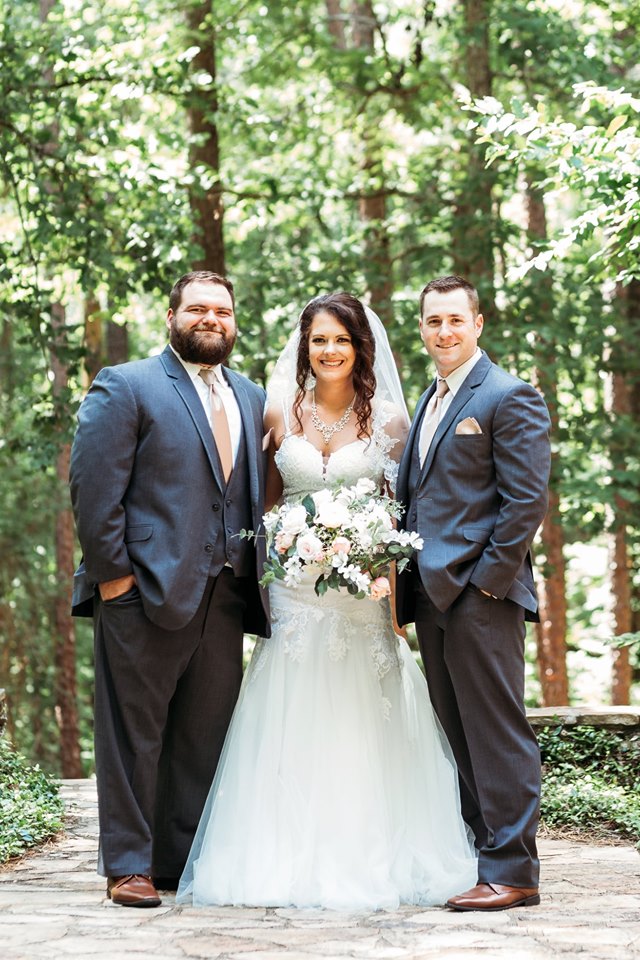
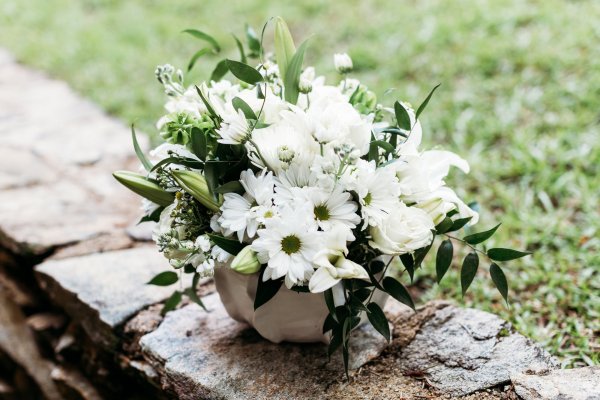
In memory of Dominic from an anonymous friend for Fiona’s wedding. Photo by Katie Jewell Photography
But when you ask me how I’m doing I never know exactly what to say.
Do I give the conventional, anticipated answer so we can each get on with our day or do I give you the answer that reflects the state of my heart right now?
Either way is risky.
When I go along with convention and answer, “fine”, I let others off the hook. I assure them the card they wrote or the meal they brought or the flowers they sent have staying power to convince my heart they care.
Depending on my relationship with them, sometimes it’s all (or more than) I expected. So we’re good.
But sometimes I thought they’d stick around, check in more often or offer some kind of ongoing support. Then I battle the temptation to reveal the actual state of my heart as a kind of retribution for being abandoned.
When I bravely offer an honest answer, I may catch someone by surprise, or make them supremely uncomfortable, or put them on the defensive as they scramble for some kind of response.
As a society we are simply unequipped to deal with the ongoing impact grief and loss has on a heart. We want all things to fit into the medical model of “wound-treatment-healing”.
But they don’t.
So, so many sad, heartbreaking, life-changing blows are never healed this side of Heaven.


















 thelifeididntchoose