For a long, long time I couldn’t bear to see a monthly calendar.
I didn’t want to be reminded that time refused to stand still for my broken heart and I hated there were no more “Dominic” events to scribble in on the blank squares.
Around the third year I was able to once again mark major events like birthdays, holidays and short family trips. But it was even longer before I was able to truly look forward with excitement to those things.
Eleven plus years, multiple family changes, a pandemic, retirement and two grandchildren have reshaped my heart so that I’m genuinely thrilled to prepare and participate in most things from family meals to “Granny Camp” , quarterly Bereaved Mom Retreats (next one in just over a month!), and my oldest child’s fortieth birthday celebration in a couple weeks.
I’m not forgetting nor minimizing Dominic by diving into these events with gusto. In fact, I’m sure he would approve.
So I’m entering a new season of grief-one which makes room for current joys and celebrations while still holding space for Dominic.
I can be present and participate without reserve.
I am making memories with those who are still here.
It’s hard to explain to anyone who hasn’t walked this path.
Deep pain and unfathomable sorrow stripped me of any reserve, any defense, any padding between the wider world and my oh-so-fragile heart.
I was a walking nerve.
Every awkward and less-than-thoughtful word or deed by friends, family and acquaintances rubbed me raw. I was utterly incapable of extending grace even as I knew I should and understood that most often their intentions were kind.
I had suffered a grievous wound and spent most of my energy just trying to protect what was left of my heart.
All I wanted to do was retreat to the safe cocoon of my own home. I unfollowed people on social media, I screened telephone calls, I rarely ventured out for anything but the most necessary supplies. It was the only way I could provide the space and time needed for my heart to heal enough to bear even the slightest brush with folks who might say or do the wrong thing.
It helped.
Eventually I found the strength to venture beyond the safety of home, family and the few friends with whom I felt comfortable and secure.
I could scroll through Facebook once again without reacting to every single post.
I went back to church and even showed up for covered dish socials where I couldn’t be certain which way the conversation would flow or who might get me blocked into a corner and ply me with questions.
I attended a few large gatherings: graduations, weddings and a Stephen Curtis Chapman concert.
So if you are in the early days of this hard, hard journey, do what you have to and find the safe circle that gives you time, space and grace to help your heart toward healing.
It may take longer than you’d like, but resting from the constant pressure of trying to protect yourself from the hustle and bustle in a world where child loss is misunderstood and frequently ignored will make a difference.
And one day, like me, you might well wake up and realize that what once felt like personal attacks are simply folks saying and doing foolish things because they haven’t been forced to learn the wisdom of compassion through unfathomable loss.
I’m still more sensitive than I used to be.
There are times I just can’t take crowds, unpredictable settings, offhand comments about death, dying, grief and heartache.
But I’m finally able to walk in the world without feeling I have to protect my heart at every turn.
The quote that reverberates in my head is from the dad of one of the shooting victims, “We want people to remember who he was, not how he died.”
The cry of every bereaved parent’s heart.
No matter how our children leave for Heaven, what we want most is for folks to remember the light they were when they were here, impacting others, laughing, living and making a difference.
Dominic left in a tragic, could-have-been-avoided single vehicle motorcycle accident. I’m sure there are people who judge him, who judge me, who think that if it had been THEIR child, they wouldn’t have been going too fast in that curve.
It’s something I live with every single day.
But there’s nothing I can change about that night. There’s no way I can reach back across time and make things different.
So when you interact with a bereaved parent, please don’t focus on the illness or the addiction or the tragic circumstances that transported their child from time to eternity.
Ask them about who they were, what they liked, where they found the most joy in life.
Give them permission to share their life, love and light with you, not only their death.
Our children are so. much. more than how they left this life.
They are potential unrealized, lives lived, love spread to others.
Before my mother’s illness and death, before the frighteningly early arrival of our little Captain and his brother, before an overseas deployment, a destructive hurricane, Covid19, my husband’s cancer diagnosis and too many other stressful events to list.
I have watched my kids meet every challenge-sometimes with grace, sometimes with grit, sometimes with both.
They are different people than they would have been if Dominic still walked beside us. They know things their peers can’t even guess.
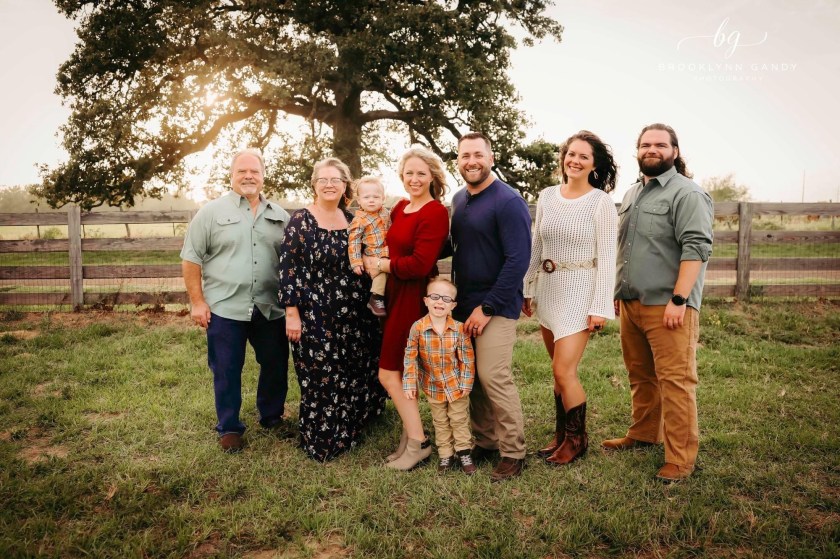
We all lost so much when we lost Dom. But we still have each other.
And that’s a treasure.
I never thought it possible to love you more than I already did.
But I do.
Your brother’s untimely departure has opened my heart in a whole new way to the glory that is your presence. It has made me drink you in like water in the desert.
No more do I take even a moment for granted. Never again will I be “too busy” to listen to you, to hug you, to greet you on the porch when you decide to make your way back home.
I promised you when that deputy came to the door we would survive.
And we have.
I promised you that I would never raise Dominic onto a hallowed pedestal that obliterated his orneriness and only kept track of his laudable qualities.
I pray I have lived up to the promise.
We are changed-every one of us.
I am so very proud of you for continuing to live. It would have been easy to give up. It would have been easy to “live for the moment” and give in to hedonism.
You haven’t done that.
You have had to carry more weight than you should. I am so very anxious to see how you take this awful pain and weave it into your own stories-how this dark thread helps define who you become and how you choose to impact your world.
You have lent me your strength when mine was waning.
You have checked on me and loved meand borne patiently with me and with one anotherwhen it would have been easier to walk away and try to create a life outside this place of brokenness and vulnerability.
I am always cautious when ascribing feelings and words to our departed Dominic-it’s easy to make him say or feel whatever is most convenient since he’s not here to dispute it. But I am certain of this: while he would never, ever have wanted us to bear this awful burden, he would be so, so proud of the way we have supported one another in doing so.
Like always, our family has closed ranks and lifted together the weight that would have crushed us individually.
It’s who we are.
It’s who we have always been.
*I am absolutely convinced that Dominic is very much ALIVE today in the presence of Jesus. But for now, I’m denied his daily companionship,
So much of this battle has been fought in my mind.
Really, even more than in my heart.
Because you can’t argue with sad or shock or missing or disappointment.
But you can absolutely argue with hopelessness (there is nothing to live for), apathy (there is nothing to do) and distrust (there is no one who can help me).
So I spend a lot of time filling my mind with truth and doing the best I can to empty it of lies. Some days I’m more successful than others, but I battle on regardless.
When hopelessness tries to take up residence I say:
Remember the word to Your servant upon which you have caused me to hope.
~Psalm 119:49
AND
Do you see what this means—all these pioneers who blazed the way, all these veterans cheering us on? It means we’d better get on with it. Strip down, start running—and never quit! No extra spiritual fat, no parasitic sins. Keep your eyes on Jesus, who both began and finished this race we’re in. Study how he did it. Because he never lost sight of where he was headed—that exhilarating finish in and with God—he could put up with anything along the way: Cross, shame, whatever. And now he’s there, in the place of honor, right alongside God. When you find yourselves flagging in your faith, go over that story again, item by item, that long litany of hostility he plowed through. That will shoot adrenaline into your souls!
~Hebrews 12:1-3 MSG
Apathy sits heavy on my chest and makes me want to give up and give in. Why try if life is random and chaos is rampant?
I push it off with:
28 We are confident that God is able to orchestrate everything to work toward something good and beautiful when we love Him and accept His invitation to live according to His plan. 29-30 From the distant past, His eternal love reached into the future. You see, He knew those who would be His one day, and He chose them beforehand to be conformed to the image of His Son so that Jesus would be the firstborn of a new family of believers, all brothers and sisters. As for those He chose beforehand, He called them to a different destiny so that they would experience what it means to be made right with God and share in His glory.
~Romans 8:28-30 VOICE
I remember that I still have work to do:
“For we are His workmanship [His own master work, a work of art], created in Christ Jesus [reborn from above—spiritually transformed, renewed, ready to be used] for good works, which God prepared [for us] beforehand [taking paths which He set], so that we would walk in them [living the good life which He prearranged and made ready for us]. “
~Ephesians 2:10 AMP
The enemy of my soul whispers the same lie he told Eve in the garden,“God really doesn’t have your best interest at heart. He’s holding out on you. You can’t trust Him.”
I shout him down and declare:
The God Who sent His only Son to save me will not let me go. He will uphold me with His Righteous Right Hand. Even in the flood of grief, the fire of trial and the darkness of despair, He is with me.
I have verses and quotes and hymn choruses posted all over my house so that everywhere I turn, my eyes can land on encouragement.
I won’t win any awards with my decorating scheme, but I don’t care.
All of this will be dust one day.
I’m building an eternal future that won’t rot, rust or decay.
“3 Blessed is God, the Father of our Lord Jesus, the Anointed One! Because He has raised Jesus the Anointed from death, through His great mercy we have been reborn into a living hope— 4 reborn for an eternal inheritance, held in reserve in heaven, that will never fade or fail. 5 Through faith, God’s power is standing watch, protecting you for a salvation that you will see completely at the end of things.”
My family has opened our eyes to thousands of mornings knowing the one thing we would change if we could is outside our control.
When the world faced the pandemic these past years, it was a new and disturbing feeling for millions (billions?). We are still reaping the consequences of decisions taken during that time.
Eventually, though, most people’s lives have returned to a semblance of normal that makes allowances for the changes.
But some of us emerged on the other side of that season carrying the new and unrelenting burden of loss.
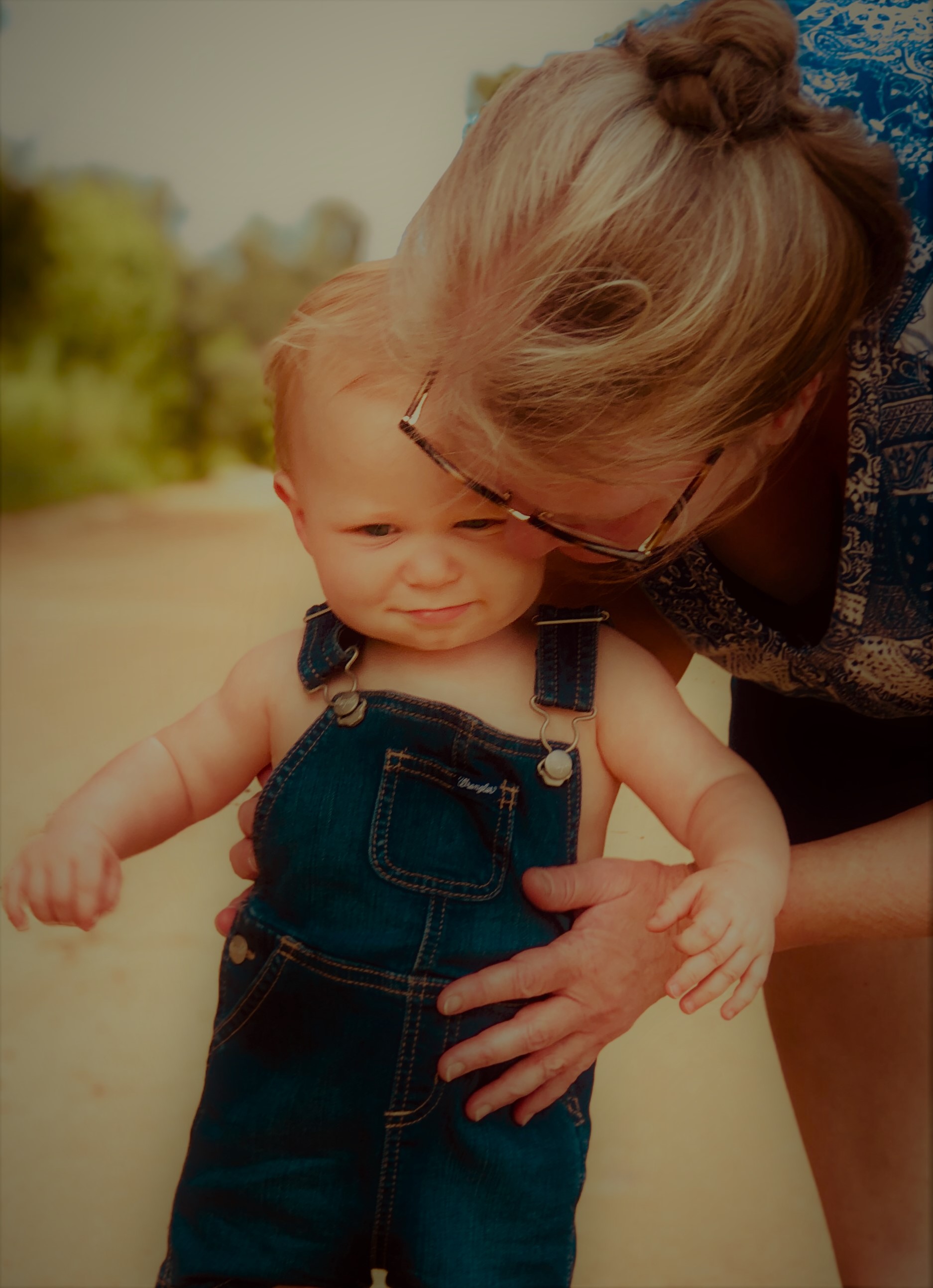
When my daughter was learning to walk, I would hover near-ready to catch her if she fell.
I covered sharp corners or moved furniture so that the chance of injury was minimized. I clapped and cooed each time she made a little progress-pulling up, cruising around the edge of the sofa and coffee table-those tentative moments when she was brave enough to let go and then plop on her bottom.
And finally, when she made her first unassisted steps between the security of holding on and my waiting arms.
It was a judgement free zone.
I wasn’t looking for technical perfection or measuring progress according to any external metric.
I didn’t rush the process. I couldn’t do it for her. I could only support her own efforts toward the goal we both had in our hearts. I never despised her baby steps.
They were a beginning.
And everything has a beginning.
When Dominic ran ahead to heaven, I felt like I was physically, mentally, emotionally and spiritually knocked to the floor. I had no idea how I was going to make a life after this great blow. I could barely get dressed, much less do anything that took more thought or energy than that.
I was overwhelmed. I had to learn to walk all over again.
And I did it with baby steps, in a judgement free-zone I created for myself where I refused to gauge my progress against anyone else’s.
Because baby steps count.
Here are some of the baby steps I’ve taken and am still taking:
Got up, got dressed, bought groceries.
Cooked dinner.
Cleaned the bathrooms.
Went to church.
Remembered a birthday and sent a card.
Drove to an unfamiliar place to meet someone for lunch.
Exercised.
Made phone calls.
Went to work.
Volunteered.
Slept through a whole night.
Organized a party.
Showed up to graduations, a couple funerals and a wedding.
Kept doctor’s appointments.
Laughed.
I have yet to hit my stride and I don’t think running is in my near future, but I am moving forward. I’m making progress. I don’t have to meet a timetable or get anyone else’s approval.
You plan to mark this day as a special milestone for the rest of your life.
You absolutely, positively NEVER think you will have to mark another one: the day he or she leaves this life and leaves you behind.
But some parents have to mark both. The dash in the middle is shorter than we anticipated, and our child’s life ends before ours.
So how do you do it? How in the world do you observe the polar opposite of a birthday?
Here are some ideas (shared with permission) that parents shared recently in an online discussion sparked by one mom’s very honest admission that she just didn’t have it in her to create another video montage from the same old photos to mark yet another year without the earthly companionship of her precious son:
Don’t do anything. That is an option. We do not have to draw a red circle around THAT day on the calendar, gather folks as if it’s a celebration. As one mama said, “Yes, the day they left us does not need to be ‘remembered’.” For some parents, going to work like it’s a regular day, engaging in whatever normal activities are required, ticking the hours off on the clock until night falls and the earth turns to the next day may be the very best choice. Another mama wrote this: “I have friends who celebrate a ‘heaven day’ for their son. I can’t. I just can’t. If it were up to me, I would probably go camp somewhere all alone, and not move a muscle for the entire day.”
Do something big (or small). Some parents choose this day to hold an annual “Celebration of Life”. It might take the form of a balloon release, or lantern release at home, at a park or other outdoor venue or at the cemetery. It might be lunch or dinner out at your child’s favorite restaurant or at home with your child’s favorite menu. Invite friends and family to join you and ask that they bring a photograph or memory and share. One mom said that such an event kind of happened organically and spontaneously when contacted by her son’s widow: “We went to one of [his] favorite restaurants. Told funny stories about him, talked about how missed he is, then went o his grave and put fresh flowers.”
Serve others. Did your child have a special interest in a particular charity or community organization? Maybe you can spend this day volunteering or raising awareness/money for that group. Often having something to do helps a heart from sinking into despair. If the group allows, maybe put up a sign saying, “Volunteering today in honor of __________” and attach appropriate photos of your child. Some parents whose child died from cancer or suicide or violence participate in walks or fundraisers that highlight those causes.
Encourage Random Acts of Kindness (RAK). I plan to do this one in April. It will be seven years (!) and I can barely stand it. But so many of the comments from Dominic’s friends after he left for Heaven went something like this one, “He was always doing something for someone else. Fixing their car or showing up when they needed an encouraging word.” He was known for his many acts of generosity and kindness and I feel like he lives on in the hearts of others because of that. I had cards printed ( I intentionally let his “dates” off) which I will distribute well in advance of April 12th for friends and family to leave behind when they do a RAK in memory of Dom. Vistaprint and other online publishing companies offer reasonable prices and will guide you through the process step-by-step.
Escape. Lots of us find being at home (alone or in the company of others) too hard to bear. Many received word of their child’s death at home and as the day creeps closer, the memories crowd every corner of mental and physical space and are inescapable. So sometimes parents plan a trip around this time. Go somewhere your child would have loved to go or go somewhere he or she enjoyed visiting. Take photos and post them in honor of your child if you want to.
Focus on family. You may not want to be alone, but the thought of being with anyone outside your closest grief circle is overwhelming. That’s OK. Spend time with the people who, like you, are most affected by your child’s absence. You don’t have to do anything special. You can make room for them to speak or not speak about their grief as they choose. Sometimes just having another warm body in the room is enough to ward of the chill of despondency.
Flip the script. For those of us who believe that this life is not all there is, the day can be one of celebration. Our children have escaped life full of sorrow and trouble and are safe forever in the arms of Jesus, where we will also be one day. Waiting is hard, but waiting is not forever.
Simply allow yourself to feel the full force of missing and grief.“As far as his death day, for me, that is a day when I allow myself to fully feel and express the pain of my loss. It is a way to (temporarily) empty myself of all this pain, so I can breathe again to face another day. I will sit in his sweatshirt, listen to reflective music, cry a lot, talk to him, pray to God, and just allow myself to feel all the pain and emotion that everyday responsibilities cause me to stuff away.” If you can manage it, taking the day off work and giving yourself grace and space to grieve in ways that are denied so often may be the very best way to experience the day.
Here’s a list of ways some parents honor their child on this day:
Giving away stuffed toys with a card or note explaining why.
Taking goodies to first responders and/or nurses who were served their family during an accident or illness.
Handing out Bibles or books in memory of their child.
Making memory baskets for parent whose child will be born straight into heaven.
Adding to a scholarship fund or other charitable fund in honor of their child.
Placing balloons, flowers or other special decorations on their child’s final resting place.
Lighting candles, releasing butterflies, balloons or lanterns.
Placing a memorial advertisement in a local paper.
Do or don’t do whatever helps you make it through those twenty-four hours that represent another year of sorrow, another year of missing.
There is NO wrong way to mark or not mark this day.
It’s up to you and your heart.
And absolutely does not require anyone else’s permission or approval.

























 thelifeididntchoose