Bereaved Parents Month 2026: The Effects of Grief on Your Body

Grief is not *just* feelings. It is so much more.

I shared this last year around this time in response to many, many comments and questions from bereaved parents about what felt like random or unusual physical manifestations of their own grief.

I hope it helps another heart navigate this life none of us would choose.

It’s a well known fact that stress plays a role in many health conditions.  

And I think most of us would agree that child loss is one of (if not THE) most stressful events a heart might endure.  

So it’s unsurprising that bereaved parents find themselves battling a variety of physical problems in the wake of burying a child.  

grief head in hands and stress words

What may be surprising is how uninformed medical and even psychological professionals are with respect to the very real ways child loss intersects with chronic conditions and often creates new symptoms.  

Here is a list of only SOME of the physical manifestations of grief (via What’s Your Grief?) with my own comments :  

Fatigue.  If you’ve always been an energetic sort, you might find this aspect of grief particularly disconcerting.  This kind of fatigue doesn’t get better with rest.  I’ve written about that here. 

Some days I can barely make myself get out of bed and when I do, I struggle to do any but the most necessary tasks.  Don’t automatically dismiss this symptom as ONLY grief (although it most certainly could be!) get a thorough check-up to rule out other causes such as low thyroid, diabetes, heart disease, major depressive disorder or a number of conditions that can be treated effectively with medicine.  Don’t beat yourself up if the doctor decides “nothing is wrong” with you.  You are grieving and grief is work!  I know this symptom has improved for me over time as I’ve established boundaries, admitted limitations and learned to rest when necessary.
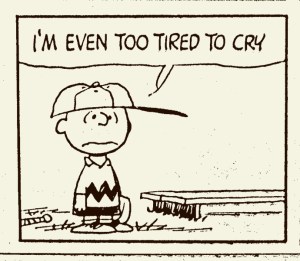
charlie brown too tired to cry

Aches and Pains.  Our bodies and minds are connected in ways not well understood.  Mental and emotional distress can make any underlying pain condition that much worse.  When I’m feeling especially lonely, desperate or sad my autoimmune disease flares AND my perception of the very real pain that causes is heightened.  Pain and heartache can lead to a downward spiral that is hard to undo.  Get help and treatment for the physical and give yourself grace and space to endure the emotional causes of body aches.  Don’t self-medicate with drugs, alcohol or other self-destructive coping strategies.  Reach out to a safe person and let them help you find a better way.

painlevels

Headaches.  Needless to say, stress makes tension headaches more likely.  Sometimes, though, a headache can be a symptom of something more serious.  Don’t dismiss an especially sudden, intense or long-lasting headache as “just grief”.  It could be previously undiagnosed high blood pressure, stroke or migraine.  Those being ruled out, various relaxation techniques, cold or warm compresses, over-the-counter analgesics and gentle stretches might help.

Sometimes grief headaches can be alleviated by the simple act of telling our stories.  Bottling up emotions and thoughts adds to the ongoing stress and tension of my child loss burden.  When I spill them-either on paper in a journal, in a closed online bereaved parents’ group or in person to a safe friend or family member-often I feel the band around my head relax and the pain fade away.

Tightness in Chest, Shortness of Breath.  The day I got the awful news, I remember asking friends who came to sit with me over and over, ” Am I still breathing?”  My world was spinning out of control and my body responded.  Anxiety after child loss is real. Broken Heart Syndrome is real.  Heart attacks are not uncommon.  Don’t ignore these symptoms.  But don’t be surprised if they persist despite all tests to the contrary.  When I feel trapped and overwhelmed, a walk outside or even to another room can help.  Deep breathing exercises and grounding exercises can often interrupt an episode.

Broken_Heart_syndrome_EN-01

Forgetfulness.  I wrote this post on Grief Brain: It’s a Real Thing! a couple years ago and am always surprised to see it shared repeatedly.  But I think it strikes a chord with any heart walking through grief.  You are not crazy!  You are not experiencing early onset dementia (most likely).  Like other symptoms, get checked out if they persist or worsen.  But odds are, your experience falls within the range of normal for anyone whose life has been shattered by child loss.  Losing things, forgetting things, getting lost in familiar places, missing appointments or bill payments, inability to remember names of people you know well-all of these are common after loss.  In time, the symptoms usually diminish.  They have for me.  I still have to rely on lists and reminders much more often, though.  And that’s OK.

griefbrain1

Inability to Focus.  Like grief brain, this is another cognitive manifestation that’s not only annoying, it can impact life in significant ways.  Before Dominic ran ahead to Heaven, I was an avid reader.  I often had three or four books going at the same time.  I could spend hours focused on a single project.  Not anymore.  I sometimes find it difficult to read a recipe.

I have to take frequent breaks when working on something because my mind gets fuzzy and I just can’t pay attention for more than a few minutes at a time.  Some bereaved parents have to change jobs or careers because they are not able to perform necessary tasks anymore.  This particular symptom has not improved very much for me although I’ve found ways around it.  I use lists to keep an external record of what I should be doing and when.  I mix up mindless chores with ones that require more attention to give my brain a break.  I try to dissect larger jobs into smaller, manageable chunks.  And sometimes I just have to admit that today a particular thing just isn’t happening. 

Appetite or Digestive Issues.  Stress has long been linked to gut problems.  I suspect we’ve all had that “rumbling in our tummy” from time to time even before child loss.  For many of us it’s exponentially worse after.  Some bereaved parents try to stuff emotions by stuffing themselves with food.  Others can’t eat at all.  Still others experience stomach ulcers or bowel disease ranging from acute to chronic.  I was hospitalized twice in the first year after my son’s death for serious colon issues.

Again, don’t ignore sudden or persistent symptoms.  Try to eat well and avoid self-medicating with food.  Added pounds rarely add up to better emotional or mental health.  I let pounds I’d lost ten years ago find me again.  Get help if you need to from someone willing to act as an accountability partner.  I’ve recently joined a friend in setting goals for ourselves and sharing recipes and meal prep.  Try to treat food as another aspect of grief work and manage it the best you can.

the struggle bus

Getting Sick More Often.  Stress lowers the immune system.  That’s a fact.  So when bereaved parents encounter germs (as we all do from time to time) it may well be our bodies don’t have the energy or resources to combat them.  Colds, flu, strep throat, skin infections may all be more likely this side of child loss.  Don’t be discouraged to seek treatment.  There is so much we can’t control in life, but getting antibiotics for an infection is pretty easy.

It’s not in your head, mom or dad! 

Grief has real physical manifestations.   

Don’t be dismissed or denied the care you need. 

Educate your healthcare providers and insist on being heard. 

the weight of grief without words

*photo credit:  The Weight of Grief  Scupture ~ Celeste Roberge*

Bereaved Parents Month 2026: Why Friends Disappear After Child Loss

It happens in all kinds of ways.  One friend just slowly backs off from liking posts on Facebook, waves at a distance from across the sanctuary, stops texting to check up on me.

Another observes complete radio silence as soon as she walks away from the graveside. 

Still another hangs in for a few weeks-calls, texts, even invites me to lunch until I can see in her eyes that my lack of “progress” is making her uneasy.  Then she, too, falls off the grid.

Why do people do that? 

Why is it, when we need them most, many friends-and I mean really, truly FRIENDS–just can’t hang in and hold on?

I admit in the early days I didn’t care WHY they did it. 

It broke my heart and enraged me all at the same time.  I felt abandoned, judged, forgotten, pressured to conform to some unwritten standard of how I was “supposed” to do grief and utterly, completely forsaken.

It took me months to begin to even consider their perspective and years to come to a place where I could forgive them.

butterfly away from hand

Here’s what I’ve figured out this side of devastating, overwhelming, heart-shattering pain about why some friends run away:

  • I represent their greatest fear.  I am a billboard for loss.  My life screams, “We are NOT in control!” And that is scary.  Most folks run away from scary if they can.
  • I remind them that faith is a living thing, tender and vulnerable to trials and testing.  We love to tout Sunday School answers that follow like the tag lines on Aesop’s fables when asked about anything to do with Jesus or how God works in the world.  But it’s just not that simple.  The Bible is full (FULL!) of untidy stories where even the giants of faith got it wrong for a season.  I think people are afraid that if they follow me down the rabbit hole of questions they might never come back out.  Better to stand outside and hope I emerge safe and sound without risking themselves.
  • My situation is messy and they don’t want to get involved.  I will need ongoing, intense investments of emotional energy and time. Who knows where it might lead?  Who knows how many hours might have to be given to come alongside and support someone whose journey looks more like slogging through a swamp than a walk in the park?  These folks are just not going to risk entanglement.
  • Some friends and family are genuinely afraid of doing harm.  They feel my pain so deeply that they are frozen, unable to do or say anything because they fear they will make things worse.  These are the hearts most easy to forgive and the ones most likely to jump back in when I assure them they cannot make it worse but their support can make it better.
  • Some people were going to disappear anyway.  We don’t like to admit it but many friendships are only for a season-we go to the same church, live in the same neighborhood, our kids go to the same school-and as soon as circumstances change these people fade away.  Well, circumstances certainly changed!  They leave because our differences outweigh our similarities and it requires too much effort to maintain the friendship.

Understanding why people run away has helped my heart. 

It doesn’t undo the pain inflicted by abandonment of those I felt sure would stay close by my side, but it puts it in perspective.

Truth is, I’m not sure how many people I would have stalwartly supported for the long haul either before Dominic ran ahead to heaven.  

None of us possess infinite emotional, mental, physical and relational resources.  It’s only natural that we portion them out according to our own priorities-even when that means abandoning friends who really need us.

Rehearsing offense only ties me in knots. 

It changes nothing.

I have limits as well. 

Forgiving those that chose to walk away frees me to use my resources in more fruitful ways that help me heal.  

forgiveness_is_the_fragrance_that_the_violet_sheds_on_the_heel_that_has_crushed_it-385646

Bereaved Parents Month 2026: Practicing Patience


Can I be honest here?

A tender broken heart can make all kinds of excuses for less-than-gracious behavior or words.

I know that often we grievers bear the brunt of others’ well-meaning but misplaced and sometimes downright painful advice, remarks, looks and gossip and that makes it easy to rationalize returning like for like.

But I’m not responsible for THEM, I’m responsible for ME.

❤ Melanie

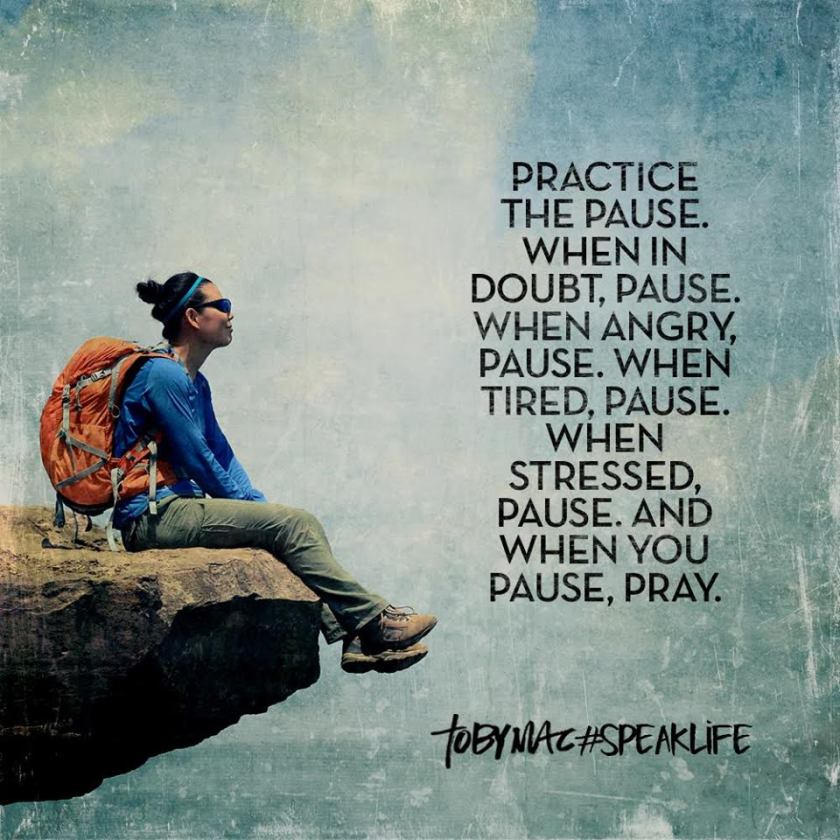
Oh, how I need to learn to practice the pause!

I’m getting better, but still react when I should reflect.

I need to do this EVERY time.

practice the pause toby mack

Lord,

Help my stubborn heart slow down and give me grace to yield and allow You to melt it, mold it and make it more like Your own!

~ ❤

Bereaved Parents Month 2026: Knowing God in Suffering

I first shared this some years ago as I was beginning to work through the theological implications of a God who did not intervene to save my son.

I thought I understood who God was and how He worked in the world because nothing that had happened to me challenged those assumptions. Things were neat and tidy with clear edges that demarcated “those who love God” and “those who refuse Him”.

But God is not confined to a box I or any other human can construct. He is GOD.

That’s a hard, hard truth to digest but it is truth. 

❤  Melanie

It’s possible that you haven’t thought of it this way, but if you are a believer in Christ and have yet to walk through faith-shattering trials, you may have placed God in a box.

I know I had.

I thought that after decades of walking with Jesus, reading and studying Scripture and wading through some fairly significant trials I had God pretty well figured out.

I could quote verses for every occasion, open my Bible to any book without looking in the Table of Contents, and had something sprirtual to say about everything.

But now, like Job, I cover my mouth.

C.S. Lewis shared his grief journey after losing his wife in the book,  A Grief Observed.

What many may not know is that he was pressured to publish it under a pseudonym.  

His publishers and some of his close friends didn’t want people to know that this giant of the Christian faith, this celebrated apologist for believing Christ was shaken to the core by the death of his beloved bride.

Lewis resisted and I am so thankful.  

It brings me great comfort to know that one who was much more equipped to face a faith crisis found himself floundering in the ocean called sorrow and grief.

He knew where the boat was.  

But he, like me, wasn’t sure he wanted to climb back in.

Not that I am (I think) in much danger of ceasing to believe in God. The real danger is of coming to believe such dreadful things about Him. The conclusion I dread is not ‘So there’s no God after all,’ but ‘So this is what God’s really like. Deceive yourself no longer.”

C.S. Lewis, A Grief Observed

Grief has forced me to reexamine every notion I had of God and how He works in the world.  I’ve had to pull out all my theological assumptions and compare what I thought I knew to what is in the Bible and what I have experienced in life.

It is exhausting.  And necessary.

Like Lewis, I’ve discovered that I had ideas about God, but that they were not necessarily true: “My idea of God is not a divine idea. It has to be shattered time after time. He shatters it Himself.” 

I had decided that God acted in certain ways, that prayers guaranteed certain results and that my life as a believer in Christ was destined to be one of favor and blessing because I was honoring Him.

My box for God included room for some pain and suffering-but definitely not enough space for Him to to allow the death of my child and plunge me into this abyss of grief and sorrow.

What do people mean when they say, ‘I am not afraid of God because I know He is good’? Have they never even been to a dentist?”

C.S.Lewis

At the dedication of the Temple, Solomon prayed:

“But, God, will you really live here with us on the earth? The whole sky and the highest heaven cannot contain you. Certainly this house that I built cannot contain you either.”

2 Chronicles 6:18 ERV

God has broken out of my box–He was never really in it to begin with.  

Only my ideas of Him could be contained in so small a space.

Bereaved Parents Month 2026: Marking Time

I think I counted months for nearly three years after Dominic ran ahead to Heaven.

Just like when he was an infant and toddler.

When he was living and growing I celebrated each milestone. But after he left, I cringed when the twelfth rolled around again.

Every time I folded the calendar back to reveal another four weeks had passed, I felt my heart flip flop in response to time’s unstoppable progression. 

The months roll by, the calendar pages turn, soon school will be back in session and you are still not here.

Sometimes I think I have figured out how to do these days that remain between now and when we will be together again.  

And sometimes I realize that I haven’t.

Today is one of those days.

IMG_2637

I miss you.

I love you.

I can’t round a corner without thinking of you and wishing this was not my life.

But it is.  

So I’ll keep on keeping on.  Just like you would want me to.

Just like you would do.

Even when it’s hard.  

And some days it is so very hard.

Bereaved Parents Month 2026: The Hard Work of Letting Go

I’m pretty sure I’m not the only bereaved parent who has boxed up things post loss and left them untouched for years.

Life kept moving at a fast pace after Dominic ran ahead to Heaven and it’s only been in the last couple of years that I’ve had the time to even consider going through his stuff.

Time alone was not enough to push me toward doing the hard work of deciding what to keep, what to give away and (most painfully!) what to throw away. But various circumstances forced my hand and I’ve spent much of the last couple of years digging through stuff and digging up memories.

To be sure, not everything has a direct connection to Dominic. I have a giant pile of craft materials that needed sorting and organizing.

Even then, as I put like items together I remembered pushing two littles in a buggy with two older children on either side through the craft store or Walmart. I knew where this tidbit was purchased and what school or church project prompted buying dozens of a certain sticker or wooden cut out.

This past week I’ve been working on “my” side of our two-car garage.

It’s never been used as a garage but instead as a catch-all for a house that has no basement. My side is where I store pantry overflow and all kinds of supplies from toilet paper to party goods.

It’s also where I put some things from Dominic’s kitchen when we had to hurriedly empty his apartment over twelve years ago.

Twelve years. How can it be twelve years?

I finally had to do the hard work of deciding what I should REALLY keep and what it was time to let go of. I don’t like it. I don’t like it one little bit. But it is necessary.

I’m taking it in small doses-two or three hours a day-and trying to give myself grace when even that amount of time doesn’t seem to make a dent.

It’s grueling labor to dig up memories and lay down dreams.

Unrelenting emotional work.

Every bit tossed in the trash is a declaration that he isn’t coming back to claim it. I can’t ask him if he deems it worthy of saving because I can’t ask him anything.

That in itself is a kind of concession to defeat.

Where he is he doesn’t need or miss this stuff but it represents hopes and dreams to me.

I have to lay them down.

And that hurts.

Bereaved Parents Month 2026: No ‘At Least’ in Child Loss

I know most folks are doing the best they can to come up with something to say when both they and I know there’s nothing to be said.

So sometimes they fall into the trap of pointing out what I still have as if it makes up for what I’ve lost.

But there really, truly is no “at least” in child loss.

None. At. All.

❤

“At least you had him for 23 years.”

Yes, but I thought I’d have him for my whole life!

“At least you still have three other children.”

Yes, but which one of yours would you choose to do without?

“At least  you know he’s in Heaven.”

Of course that brings me comfort and hope, but it doesn’t take away my pain.

A wise friend once said that any comment to a griever that begins with “at least” needs to remain unsaid.

It’s especially true for those of us grieving our child.

Because there is no “at least” in child loss.

NONE.

child-and-mama-heart-together

Bereaved Parents Month 2026: Importance of Grace AND Space

It didn’t take long after Dominic’s leaving for life to ramp up and obligations to pour in. We had two graduations and a wedding within two months of his funeral.

Then there were thank-you notes to write, dishes to return and every day chores necessary to manage a home and family.

No escaping what must be done.

It took me a little while to realize that if I was going to survive this lifelong journey I had to make some changes in how and when I responded to requests to do something, be somewhere or participate in outside events.   Because no matter how worthy the request, there was only so much of me to go around and I was forced to spend nearly all my energy and time and effort on figuring out how this great wound was impacting me and my family.

I cannot overemphasize how much strength and energy is needed to do the work grief requires.

At first, turning down a request or asking someone to reschedule was relatively easy-the loss was fresh in their minds and they were gracious and understanding.  As the weeks and months and now YEARS have passed, it is harder.  Not always because they don’t understand but because I sometimes hold myself to an untenable standard that says I should be better by now.   I should be able to do all that I could once do.  I shouldn’t be so sensitive to the date on the calendar or the place we might meet for lunch or the rainy weather that brings my mood down.

But I’m not able to ignore all those things and sometimes I just can’t do what someone else would like me to be able to do.

So I keep repeating the mantra, “grace and space” to myself.

I need grace-from my own heart FOR my own heart– I must cut myself the slack I would be happy to extend to others.

I need grace from friends and family. I cannot help you understand exactly what it’s like to be me.  You can never know all the ways I ache for the life I had before Dominic ran ahead to heaven.  You could never imagine all the daily pinpricks my soul must suffer as I walk in this world and am reminded of what I’ve lost.

So you will have to take it on faith when I say, “I just can’t do that”.

I need space.

I need space between me and the noise of the world and the shouting urgency of “to do” lists and project deadlines.  So much of the work I must do is silent, solitary work. It takes hours and hours of thinking, talking to God, reading Scripture, journaling and just being alone to sort this all out.

I’m not rejecting YOU-I’m trying to preserve ME.

It isn’t selfishness, it’s love for my family.  I refuse to add to their burden by running myself into the ground.  I won’t choose to make life harder for them by creating an unecessary crisis.

I don’t know when I might (or IF I might) return to the busy bee I once was.  Right now I can’t even imagine it.

I think I will need grace and space for a very, very long time.

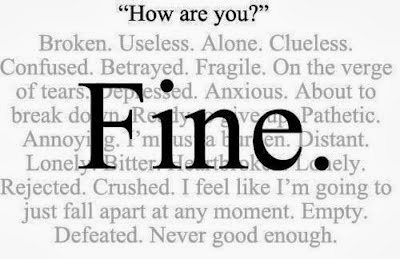
fine not fine

Bereaved Parents Month 2026: Supporting Surviving Siblings

Grieving parents often face the additional challenge of trying to help their surviving children process the death of a sibling.

While there are many factors that influence how a particular child understands and works through his or her grief, age at time of bereavement plays a significant role.

Children’s grief can look very different than that of the adults around them. And that grief may resurface later on as the child grows and matures, even long after the death of a loved one.

I came across this helpful article that lists common bereavement reactions by age group and have reprinted it in its entirety. It was originally published at KidsHealth New Zealand. http://www.kidshealth.org.nz

Key Points to Remember About Bereavement Reactions:

  • how any child or young person grieves when someone they love has died will depend on many things
  • babies, children and teenagers tend to grieve in bursts, and at other times will look for reassurance and comfort in their normal routines and activities
  • bereaved children and teenagers will need ongoing attention, reassurance and support – it is not unusual for grief to resurface later on, even well after the death

How any child or young person grieves when someone they love has died will depend on many things, such as their:

  • age
  • gender
  • their developmental stage
  • personality
  • ways they usually react to stress and emotion
  • relationship with the person who has died
  • earlier experiences of loss or death
  • family circumstances
  • how others around them are grieving
  • amount of support around them

Babies, children and teenagers may often seem unconcerned, playing or doing their usual activities, so adults can assume they are not properly aware of the death, or affected by it. They are, but in their own ways. Babies, children and teenagers tend to grieve in bursts, and at other times will look for reassurance and comfort in their normal routines and activities.

Bereaved children and teenagers will need ongoing attention, reassurance and support. It is not unusual for grief to resurface later on, even well after the death. This can happen as they move through different life milestones, and develop as individuals.

Babies and Toddlers:

At this young age babies and toddlers don’t have an understanding of death nor the language to say how they are feeling. However, they can definitely experience feelings of loss and separation and are likely to pick up on the anxiety or distress of close adults or others around them.

Common reactions can include:

  • looking for the person who has died
  • being irritable
  • crying more
  • wanting to be held more; being clingy
  • being less active – quiet, less responsive
  • possible weight loss
  • being jumpy, anxious
  • being fretful, distressed

How to help them:

  • keep routines and normal activities going as much as possible
  • hold and cuddle them more
  • speak calmly and gently to them – and be calm around them
  • provide comfort items, such as a cuddly toy, special blanket etc

Preschoolers

At this age children find it hard to understand that death is permanent. They are also at a stage of magical thinking, for example, thinking someone will come alive again or thinking somehow they made someone die. They understand separation though, and feel insecure and frightened when the familiar things around them change. This age group needs a lot of reassurance that they will be safe and looked after.

Common reactions can include:

  • looking for the person who has died
  • dreams, or sensing the presence of the person who has died
  • fearfulness, anxiety
  • clinginess
  • being fretful, distressed
  • being irritable; having more tantrums
  • withdrawing, being quiet, showing a lack of response
  • changes in eating
  • difficulty in sleeping
  • toileting problems, bed wetting, soiling
  • regressing in progress; for example, returning to crawling, wanting a bottle

How to help them:

  • keep routines and normal activities going as much as possible
  • tell them you know they are sad – start to teach and use words that describe feelings
  • tell them they are safe, and who is looking after them
  • keep separated from them as little as possible
  • comfort them with hugs, cuddles, holding their hand, and by encouraging them
  • speak calmly and gently to them – and be calm around them
  • explain death as part of life, so they come to understand it bit by bit. Using some examples in nature may be helpful, such as watching plants grow, bloom and die or seasons change
  • provide comfort items, such as a cuddly toy, special blanket etc
  • encourage play – children can often use play to help them process what’s happened; for example, sand play, puppets, dolls, writing, drawing, painting and various physical activities

Primary School Children

Primary school children are still learning to understand death and can have some confused thoughts about it. They may think death is temporary, or that the person who has died may still feel things, such as coldness, hunger or loneliness etc. They may ask where the person is now, and have blunt questions to ask about what happened to them and to their body. Explaining death to them is very important.

Common reactions can include:

  • looking for the person who has died
  • having dreams about, or sensing the presence of, the person who has died
  • blaming themselves for the death
  • being easily distracted, forgetful
  • being anxious; having increased fears, such as of the dark, of others’ safety
  • clinginess – wanting to be near you or others more
  • withdrawing, being quiet, showing a lack of response
  • being fretful, distressed, not wanting to go to school
  • feeling embarrassment; feeling different from others; may conceal their loss
  • physical complaints, such as tummy aches, headaches, aching
  • being irritable, having more tantrums, being defiant, or developing antisocial or aggressive behaviour
  • changes in eating or sleeping habits
  • toileting problems, bed wetting, soiling

How to help them:

  • frequently reassure them they are safe, and who is looking after them
  • keep routines and normal activities going as much as possible
  • tell them you know they are sad – start to use words that describe feelings
  • keep separated from them as little as possible
  • allow questions and provide honest answers
  • comfort them with hugs, cuddles, holding their hand, and by encouraging them
  • speak calmly and gently to them – and be calm around them
  • explain death as part of life, so they come to understand it bit by bit. Using some examples in nature may be helpful, such as watching plants grow, bloom and die or seasons change
  • let them help in planning the funeral or something to remember the loss
  • provide comfort items, such as a cuddly toy, special blanket etc
  • encourage play – children often can use play to help them process what’s happened; for example, sand play, puppets, dolls, writing, drawing, painting and various physical activities

Older Children (10-12 years)

Common reactions include:

All of the above relate to this age group, but it’s important to be aware that by this age children know death is final. They are also more aware of how adults and others around them are reacting to death. This group may also:

  • be especially anxious about the safety of family and friends, and themselves
  • try very hard to please adults and not worry them, and so not let themselves grieve
  • feel stronger emotional reactions, such as anger, guilt, sense of rejection
  • want to take on more adult responsibilities, trying very hard to please
  • feel embarrassment; feel different from peers; may conceal their loss
  • become more focused on what’s happened and ask questions, think about it a lot, have dreams about it, and perhaps want to talk about it often to others

How to help them:

They need all of the help in the previous section plus:

  • time to talk with you and other trusted adults, when they need to
  • regular reassurance – spoken, and with encouraging physical touch (such as hugs, pat on the back etc).
  • honesty about events, and feelings
  • to know you understand their grief
  • regular encouragement
  • avoid expectations of adult behaviour – allow them to be the age and stage they are

Teenagers

By adolescence, death is accepted as part of life, but it may not have affected a teenager personally yet. Their reactions may fluctuate between earlier age group reactions and reactions that are more adult.

Teenagers will often want to be more with friends than family as they seek support. They may find the intensity of emotion overwhelming or scary and not be able to find the words or ways to talk about them with others. They may want to feel they’re coping, and be seen to be, but inside be hurting a great deal, or be putting their emotions on a shelf for a later time.

Death can so shake teens that some react with risk taking behaviour – to escape the feelings and reality and as a source of comfort; for example, drinking, drugs, more sexual contact or reckless driving.

Common reactions can include:

  • being easily distracted, forgetful
  • having difficulty concentrating at school
  • being unsettled in class, a change in class performance, not wanting to go to school
  • being overwhelmed by intense reactions, such as anger, guilt, fear
  • having difficulty expressing intensity of emotions, or conflict of emotions
  • blaming themselves for the death
  • anxiety – increased fears about others’ safety, and their own
  • having questions or concerns about death, dying, mortality
  • dreams about, or sensing the presence of, the person who has died
  • wanting to be near family or friends more
  • withdrawing to be alone
  • physical complaints, such as tummy aches, headaches, aching
  • being irritable, defiant, more antisocial or displaying aggressive behaviour
  • risk-taking behaviour to escape, to comfort, or to prove they’re alive and strong; for example, drinking, drugs, more sexual contact or reckless driving
  • changes in eating, sleeping habits
  • bedwetting
  • jokes or humour, masking feelings
  • saying, or acting like, they don’t care
  • wanting to take on more adult responsibilities, trying very hard to please
  • strained relationships with others – fear or awkwardness about being close to others
  • feeling embarrassment; feeling different from peers; may conceal their loss
  • a sense of loneliness – isolation
  • a change in self-image, lower self-esteem
  • possibly suicidal thoughts
  • possibly moving from sadness into depression

How to help them:

  • be honest and let them know what’s happening
  • be willing to listen, and available to talk about whatever they need to talk about
  • acknowledge the emotions they may be feeling—fear, sadness, anger
  • it can be helpful for parents, or other adults, to share their own feelings regarding the loss
  • frequently reassure them they are safe, who is caring for them, and which adults they can trust to ask for further support
  • keep routines and normal activities going as much as possible
  • talk to them about grief – what it is, that it’s normal, that everyone is different
  • avoid expectations of adult behaviour – allow them to be the age and stage they are, encourage them to express their thoughts and feelings – give them ideas of things they could try, such as doing physical activities, writing, singing, listening to music, talking with friends, reading etc
  • allow questions and provide honest answers
  • comfort them with hugs, cuddles, holding their hand, and by encouraging them
  • speak calmly and gently to them – and be calm around them
  • talk about death together; answer any questions they may have
  • let them help in planning the funeral or something to remember the loss

Bereaved children and teenagers will need ongoing attention, reassurance and support. It is not unusual for grief to resurface later on, even well after the death. This can happen as they move through different life milestones, and develop as individuals.

If you are concerned about any extreme reactions, or if you think the young person may have become depressed, contact your doctor or other trained adviser, such as a counsellor, senior staff member from their school, social worker, community or youth worker or a local family support agency.

Originally published on: http://www.kidshealth.org.nz

Bereaved Parents Month 2026: But I Had All That BEFORE!

I absolutely understand that when people say things like, “Just think of all the wonderful memories you have” or “He brought you so much joy” they mean well.

Because it’s true-I have beautiful memories of Dominic.  And he DID bring me great joy.

But I had those things BEFORE he was beyond my reach.

Childhood memories, photographs, mementoes from school and athletic teams-they were already displayed on the walls and shelves of my home.

But there were things I had then that I don’t have now:

  • his physical presence;
  • his laughter ringing down the hallway;
  • his text messages telling his absent-minded mama that there were storms headed her way;
  • his level-headed relationship advice;
  • and his tech-savvy, “I can fix it” help when I crashed my computer or other electronic device.

I don’t have a hundred different uniquely Dominic parts of my life anymore.

And I miss every one of them.  

missing from me