A tender broken heart can make all kinds of excuses for less-than-gracious behavior or words.
I know that often we grievers bear the brunt of others’ well-meaning but misplaced and sometimes downright painful advice, remarks, looks and gossip and that makes it easy to rationalize returning like for like.
But I’m not responsible for THEM, I’m responsible for ME.
❤ Melanie
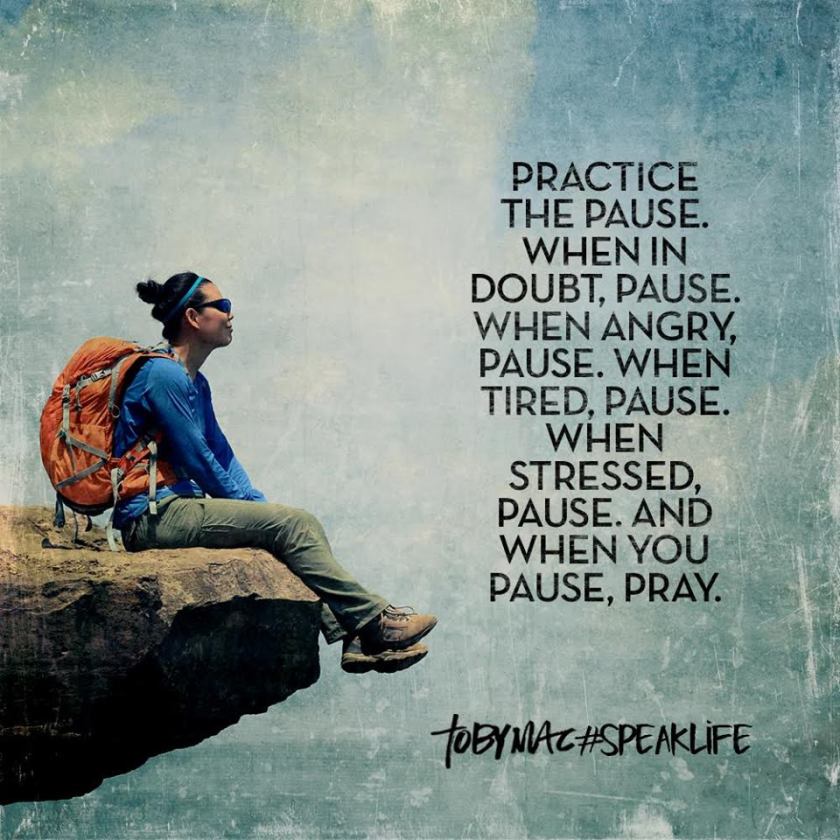
Oh, how I need to learn to practice the pause!
I’m getting better, but still react when I should reflect.
I need to do thisEVERYtime.
Lord, help my stubborn heart slow down and give me grace to yield and allow You to melt it, mold it and make it more like Your own!
It would be lovely if life were neatly divided into seasons or sections.
But like so many things, there are no clean lines between now and what used to be.
Who I am today is shaped by who I was the day before.
I think that’s one of the things I enjoy most about fiction-authors are free to wander back and forth among character’s thoughts, past experiences and present reality.
It makes for a more complete story.
Each year about this time (in the waning days of my Season of Sorrow) I usually stop and take stock of how far I’ve come and how grief continues to shape my life.
There are many, many ways I’ve healed and am healing:
I no longer cry every day.
I feel true joy!
The pain of losing Dominic doesn’t dominate me although it plays like Background Music-not always demanding my attention.
I celebrate my family and my family’s milestones with genuine excitement and once again enjoy planning get togethers, birthdays and (most!) holidays.
I function at a higher level and am able to rejoin some groups and participate in some activities I just couldn’t manage in the early years.
I’ve made peace with the questions that won’t be answered this side of eternity.
I’ve incorporated traumatic loss into my understanding of Who God is and how He may work in world while accepting I don’t always like it.
I attend baby showers, weddings and even funerals without bringing all my lost dreams or personal sadness to the event.
I laugh-a lot. It feels good again to belly laugh at family memories or new jokes.
I can extend hospitality once more. That was a core component of my pre-loss life and personality and I missed it.
But there are many ways in which grief and loss continues to inform how I walk in the world:
I absolutely, positively cannot multitask! I have to break daily chores into single actions so I can focus and accomplish one thing at a time. I used to be able to cook, talk on the phone, bend over and motion to a child needing help with school all at once. Not anymore! Just recently I lost an important piece of mail most likely because I was looking at it while chatting to a family member. I put it down and cannot for the life of me remember where it is.
I become anxious when around too many people-especially if they are people I don’t know or the venue is one with which I’m unfamiliar. This even happens in the car driving in new places. I was never an anxious person before. In fact, I was typically the voice of calm in a group of friends panicking over some small detail that went awry. I try not to share my anxiety, but it’s there and it takes a huge amount of energy to corral it and keep it from escaping into wild demonstrations like running from a room. (I do a lot of counting/visualizing/breathing and self-soothing.)
I don’t like noise. To be fair, I never really did but now it’s exacerbated. Shopping can be a real trial when stores insist on blasting music in hopes it makes patrons feel like spending more money. I, for one, just want to get what’s on my list and get the heck out of Dodge! I love children but I can’t tolerate the incessant chatter little ones bring to a Sunday School classroom or a Vacation Bible School craft table. I used to be the first one to volunteer for those posts but I just. can’t. do. it. anymore.
I crave predictability. I know, I know, of all people I should understand control is an illusion. I do. But the tiny details of life-like planning meals, choosing clothes, cleaning routines and evening quiet times- are things I want to be able to count on. Routine is my friend. It helps my mind (such as it is) operate on reliable pathways. I’ve never been a big fan of random, but now it’s something I try to avoid at all costs.
I need solitude. I’m still processing some things. I imagine I’ll be doing that the rest of my life as different experiences from NOW interact with my loss. I cannot do that in the presence of others. I need to think, reflect, write, read and walk it out. That means I have to devote time and space to being alone. If circumstances prevent me from quiet solitude for too long my blood pressure climbs, my patience disappears and little things grow large.
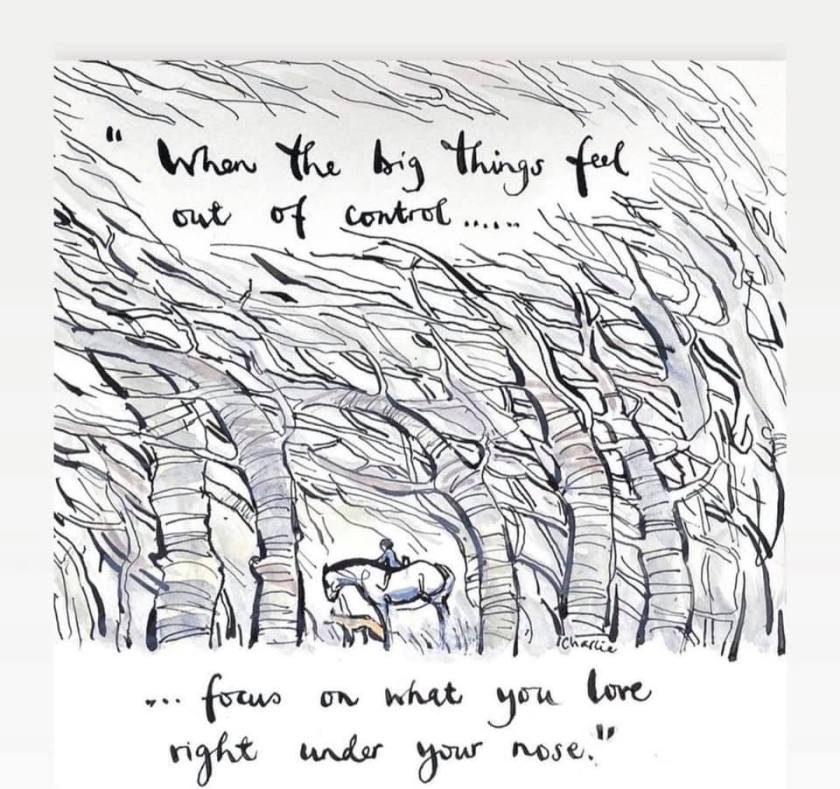
I don’t sweat the small stuff (usually-see above!). If time, effort or money can remedy it then it’s just. not. a. problem. I’ve learned the hard way that life and love are the most important things in life. Everything else might be nice but it’s not essential. I’m not minimizing the stress and strain of broken pipes, wrecked cars or lost jobs. It’s just that eventually those are situations that can be fixed. And lest you think I’ve not experienced any of those, I have. My first thought whenever anything happens I once perceived as “the worst thing that could happen” is, “It’s absolutely, positively NOT the worst thing that can happen”.
I need to observe a careful rhythm of commitment and freedom on a daily, weekly and monthly basis. I always kept my big calendars each year and tossed them into a box of “if I ever need to know these things”. When I look back on how busy we were as a young family I’m astounded at the pace we kept, the places we went, the hours I was frantically working to fulfill all our obligations along with the things we just wanted to do. I’m sure some of this is a function of age-I’m no spring chicken any more-but I know in my bones it’s also a function of the ongoing toll grief takes on my body, mind and soul. I can only manage a few days of busyness in a row until I need a complete shut-down for at least twenty-four hours or more. I refuse to schedule any but the most difficult to get appointments in a week where I’ve already inked in other commitments.
Sleep, regular exercise and good food are necessary for me to face life with a good attitude. This is probably true of most folks but just a day or two of fast food, no outdoor walks or interrupted nights and I’m toast. I’m not a whole foods, organic everything kind of gal but I try to eat a variety of fresh and less-processed meals. When I’m home I have an almost two mile path through woods and up gentle inclines that builds muscle, exercises my lungs and body and gives me ample time to drink in the beauty of birds, wildflowers and leafy trees. If you’ve ever been to my home you know that the rest of the crowd can stay up as long as they want to but I’m headed upstairs between eight and nine. Of course I get up before the sun, so my total hours are roughly the same but there’s something about that pre-midnight sleep that restores me like no other.
I could probably list dozens more, less obvious, ways grief still shapes the me of today. But it no longer binds me like it did in the early days. I’m better able to work around the difficult bits and still make a meaningful life with the people I love.
I was utterly amazed at the questions people plied me with not long after Dominic’s accident.
They ranged from digging for details about what happened (when we ourselves were still unsure) to ridiculous requests for when I’d be returning to my previous responsibilities in a local ministry.
Since then, many of my bereaved parent friends have shared even more questions that have been lobbed at them across tables, across rooms and in the grocery store.
Recently there was a post in our group that generated so many excellent answers to these kinds of questions, I asked permission to reprint them here (without names, of course!).
So here they are, good answers to hard (or inappropriate or just plain ridiculous) questions:
I first shared this some years ago as I was beginning to work through the theological implications of a God who did not intervene to save my son.
I thought I understood who God was and how He worked in the world because nothing that had happened to me challenged those assumptions. Things were neat and tidy with clear edges that demarcated “those who love God” and “those who refuse Him”.
But God is not confined to a box I or any other human can construct. He is GOD.
That’s a hard, hard truth to digest but it is truth.
❤ Melanie
It’s possible that you haven’t thought of it this way, but if you are a believer in Christ and have yet to walk through faith-shattering trials, you may have placed God in a box.
I know I had.
I thought that after decades of walking with Jesus, reading and studying Scripture and wading through some fairly significant trials I had God pretty well figured out.
I could quote verses for every occasion, open my Bible to any book without looking in the Table of Contents, and had something sprirtual to say about everything.
I think I counted months for nearly three years after Dominic ran ahead to Heaven.
Just like when he was an infant and toddler.
When he was living and growing I celebrated each milestone. But after he left, I cringed when the twelfth rolled around again.
Every time I folded the calendar back to reveal another four weeks had passed, I felt my heart flip flop in response to time’s unstoppable progression. ❤
The months roll by, the calendar pages turn, soon school will be back in session and you are still not here.
Sometimes I think I have figured out how to do these days that remain between now and when we will be together again.
I first shared this a couple summers ago when I was actively working my way through several piles of boxed up memories.
I’d love to report that I whittled it down to a manageable few but I can’t.
I’m going to pretend it was lack of time that kept me from doing a better job but truth is it was mostly lack of heart.❤
I’m pretty sure I’m not the only bereaved parent who has boxed up things post loss and left them untouched for years.
Life kept moving at a fast pace after Dominic ran ahead to Heaven and it’s only been in the last couple of years that I’ve had the time to even consider going through his stuff.
Time alone was not enough to push me toward doing the hard work of deciding what to keep, what to give away and (most painfully!) what to throw away. But various circumstances forced my hand and I’ve spent much of the last year digging through stuff and digging up memories.
To be sure, not everything has a direct connection to Dominic.
It took me a little while to realize that if I was going to survive this lifelong journey I had to make some changes in how and when I responded to requests to do something, be somewhere or participate in outside events.
Because no matter how worthy the request, there was only so much of me to go around and I was forced to spend nearly all my energy and time and effort on figuring out how this great wound was impacting me and my family.
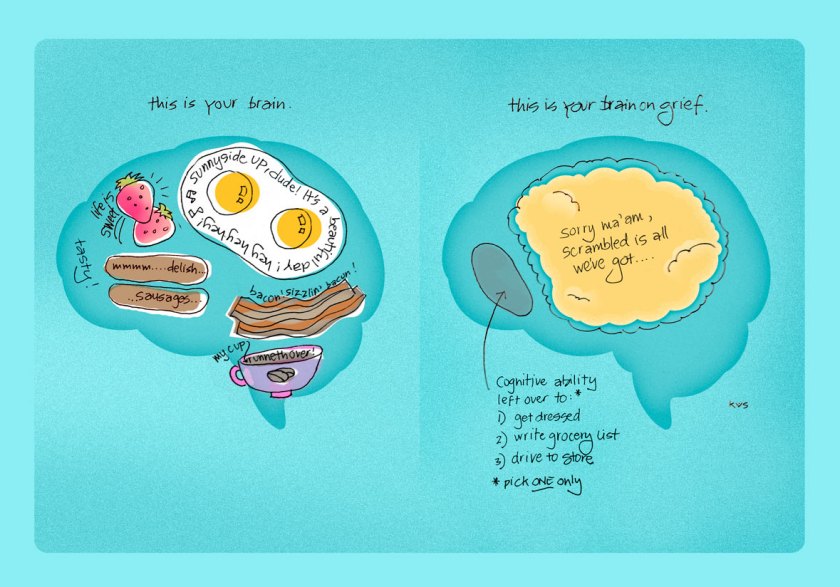
I cannot overemphasize how much strength and energy is needed to do the work grief requires.
Grieving parents often face the additional challenge of trying to help their surviving children process the death of a sibling.
While there are many factors that influence how a particular child understands and works through his or her grief, age at time of bereavement plays a significant role.
Children’s grief can look very different than that of the adults around them.
And that grief may resurface later on as the child grows and matures, even long after the death of a loved one.
I absolutely understand that when people say things like, “Just think of all the wonderful memories you have” or “He brought you so much joy”they mean well.
Because it’s true-I have beautiful memories of Dominic. And he DID bring me great joy.
But I had those things BEFORE he was beyond my reach.















 thelifeididntchoose