I’m Still Human and There’s No Shame in That

I don’t know about you, but since my son ran ahead to Heaven, I’m ultra-aware that every encounter might be the LAST encounter.

That has its pluses-I’m careful when I deal with touchy subjects, I make sure to tell my people I love them, I try not to leave in a huff.

But it has its minuses too.

When things go sideways (and they do!) or someone just isn’t willing to listen to my point of view or I am offended by theirs and can’t manage to cover my feelings, regret and guilt consume me.

That’s not helpful or healthy, though.

I have to remember I’m human just like everyone else. Bereavement hasn’t changed that.

Everyone struggles.

Everyone makes mistakes.

Everyone wishes, at one time or another, that he or she had done better, spoken more softly or loved more fiercely.

But we are human and can’t get it right all the time.

So if you, like me, have had a less-than-stellar recent record dealing with those you love, those you meet and those you pass on the street or in your car, accept this truth:

You are absolutely, positively NOT perfect.

And that’s OK.

Pick yourself up, dust yourself off and start over.

If apologies are in order, make them.

If hugs can set things straight, hug away.

And if only time can soften a heart then be prepared to wait.

We Don’t Lose Them All at Once-Bit By Bit They Fade Away

I cannot speak for others but in my case, it seems that I did not lose Dominic all at once.

In fact, I’m still losing him.

Bit by bit, a little at a time, nearly molecule by molecule, his mark on my life, my walls, my world grows smaller.

Of course the space he occupies in my heart is safe-a mother’s heart grows larger with each birth and never shrinks again!

But in the physical world, the observable world, the world outside the safe sanctuary of my own soul-his presence THERE is fading.

And that’s it’s own brand of grief that must be recognized, felt, mourned and laid to rest.

fading-away

Every time Dominic SHOULD be here but ISN’T means another memory made without him, another photograph with a missing piece, another family milestone celebrated a bit more quietly because his booming laughter doesn’t join the chorus.

Every decision that would ordinarily involve consulting all four children’s schedules and desires is one more opportunity to count down two, skip one and go to my youngest.  I never can remember that there are only three phone calls or texts to make. My heart hurts each time I don’t check in with Dominic.

desimones uab family

Odd pieces of mail come in his name-leftover from mass mailing lists that have not yet been purged of deceased individuals.  Still a little shocking, always sad, I carry it up the quarter mile to the house and lay it on top of the pile of other things that prove he once walked the earth.

Digging through the toolbox in the garage for a screwdriver and there’s that funny little part he took off a car years ago and tucked inside the drawer-just in case we could use it for something.  I smell the grease and gas and feel him near.

Then my mind drags my heart back to reality and he’s gone again.

Dozens of moments make me miss him anew.

I’m not delusional.

I know he has run ahead to Heaven.

But my heart holds on to every shred of physical connection as long as it can.

any place we ever walked i miss you

And then he’s ripped from me all over again.

Some Days are Hard Stops. When I Can’t Ignore the Missing…

Most of the time I’m just kind of rolling along.

There are things to do, places to go, people to see, animals to feed.

I get up, get going and get on with it.

But there are some days that are what I call “Hard Stops” on this journey.  They are the days that force my heart to take special notice of the fact that Dominic isn’t here.

Sometimes they are milestone days like birthdays or holidays or the anniversary of that awful knock on the door.

Sometimes they are events where he should be there-like seeing his brother one more time before he deploys half-way around the world.

These days make my heart measure the time since I last hugged his neck, heard his voice, saw his strong, square hands reach across the table for the salt shaker-and I am overcome with how long it has been!

Then my heart shifts to the months and likely years I will have to live with this aching empty place where he should be but isn’t and I fear I just can’t do it!

Many days I’m able to distract myself from the sorrow and to live with the missing.

But these “hard stop” days force me to face it head on. and it is overwhelming. 

Every. Time.

So what do I do? 

When my heart is overwhelmed, I take it to the Rock that is higher than I.  

rock that is higher than i

I run to the Refuge of my Faithful Father.  

sing of strength you are my refuge

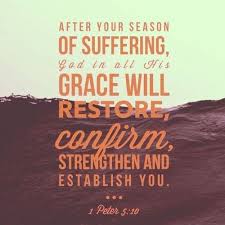
I turn my eyes to my Savior Who will redeem and restore.

restore after season of suffering

I put my hand firmly in the hand of my Shepherd Who will not leave me in this Valley of the Shadow of Death.  

jesus the shepherd the i am

And I pray for myself-and every heart having a hard time holding onto hope today-that we will feel the Father’s loving arms around us and that He will give us strength to stand.  

Lord, Make Me a Lighthouse!

There are two ways to deal with the scars pain leaves behind: try to cover them up or display them boldly.

Hiding seems the easier way so many times-because the scars are tender and the last thing I want is to invite more pain.  But it takes great effort and is rarely successful.

The edges peek out here and there and then I’m left awkwardly trying to explain how I got them and what they mean.

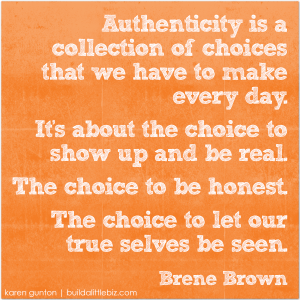
If I refuse to hide my scars and instead lay them open to the world, I am vulnerable, true. But I am also in a position to help others who are suffering the same pain that etched those scars in my heart.

business-authenticity

So I choose not to hide.  

I choose to be a lighthouse.  

Not because I think I can steer others clear of the rocks of loss and sorrow, but because I want them to know they are not alone.

the scars you share become lighthouses

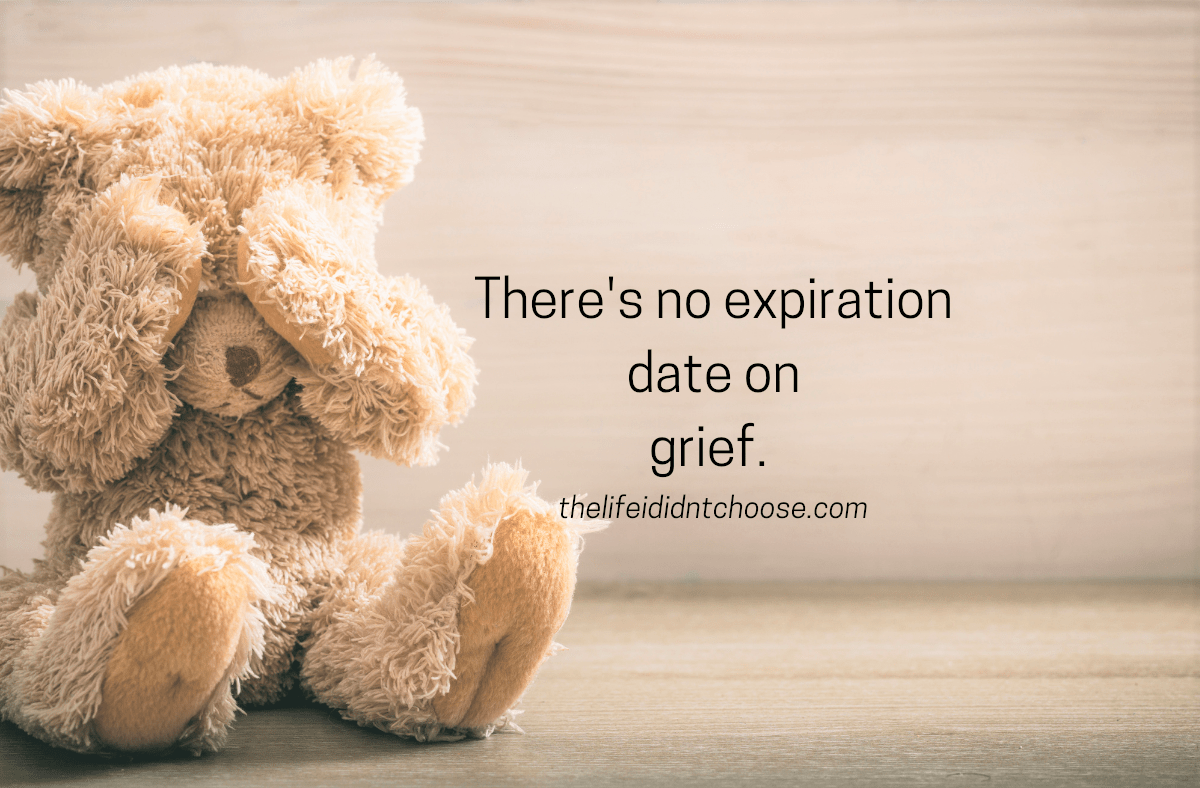
It’s Never Too Late to Step Up. There’s NO Expiration Date on Grief.

I belong to several online closed groups for bereaved parents/ grandparents. A current topic is “How did family support you in your loss?”.

I am stunned at the number of bereaved hearts that were abandoned.

I am thankful I’m not among them.

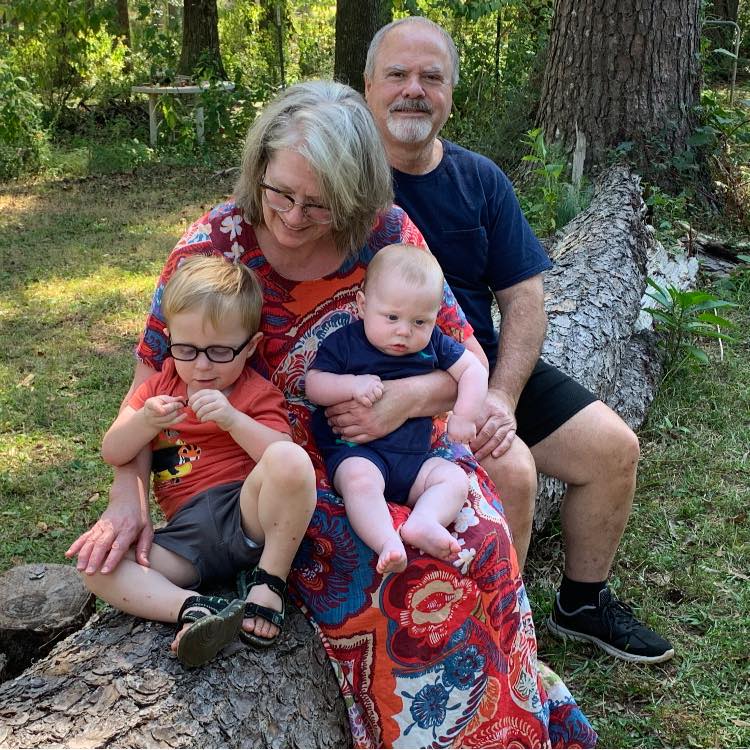
Happier, pre-loss days. My amazing family-all in one place. 

If you stepped back instead of stepping up when a family member experienced loss there is still time.

Admit your fear, failing or whatever and offer support NOW.

They still need you.

There’s no expiration date on grief. ❤️

In The Early Days of Grief, Everything Hurts!

It’s hard to explain to anyone who hasn’t walked this path.

Deep pain and unfathomable sorrow stripped me of any reserve, any defense, any padding between the wider world and my oh-so-fragile heart.

I was a walking nerve.

Every awkward and less-than-thoughtful word or deed by friends, family and acquaintances rubbed me raw. I was utterly incapable of extending grace even as I knew I should and understood that most often their intentions were kind.

I had suffered a grievous wound and spent most of my energy just trying to protect what was left of my heart.

All I wanted to do was retreat to the safe cocoon of my own home. I unfollowed people on social media, I screened telephone calls, I rarely ventured out for anything but the most necessary supplies. It was the only way I could provide the space and time needed for my heart to heal enough to bear even the slightest brush with folks who might say or do the wrong thing.

It helped.

Eventually I found the strength to venture beyond the safety of home, family and the few friends with whom I felt comfortable and secure.

I could scroll through Facebook once again without reacting to every single post.

I went back to church and even showed up for covered dish socials where I couldn’t be certain which way the conversation would flow or who might get me blocked into a corner and ply me with questions.

I attended a few large gatherings: graduations, weddings and a Stephen Curtis Chapman concert.

So if you are in the early days of this hard, hard journey, do what you have to and find the safe circle that gives you time, space and grace to help your heart toward healing.

It may take longer than you’d like, but resting from the constant pressure of trying to protect yourself from the hustle and bustle in a world where child loss is misunderstood and frequently ignored will make a difference.

And one day, like me, you might well wake up and realize that what once felt like personal attacks are simply folks saying and doing foolish things because they haven’t been forced to learn the wisdom of compassion through unfathomable loss.

I’m still more sensitive than I used to be.

There are times I just can’t take crowds, unpredictable settings, offhand comments about death, dying, grief and heartache.

But I’m finally able to walk in the world without feeling I have to protect my heart at every turn.

It’s liberating and I’m thankful.

Grief Work 2025: Loss is Relentless

My family has opened our eyes to thousands of mornings knowing the one thing we would change if we could is outside our control.

When the world faced the pandemic these past years, it was a new and disturbing feeling for millions (billions?). We are still reaping the consequences of decisions taken during that time.

Eventually, though, most people’s lives have returned to a semblance of normal that makes allowances for the changes.

But some of us emerged on the other side of that season carrying the new and unrelenting burden of loss.

And nothing will ever be normal again.

re·lent·less

adjective

oppressively constant; incessant.

Synonyms:  persistent, continuing, nonstop, never-ending, unabating, interminable, incessant, unceasing, endless, unremitting, unrelenting, unrelieved.

please be aware i am trying

Grief Work 2025: What About My Marriage?

For some of us life’s twists and turns include unfathomable pain, sorrow and loss. Broken hearts beating side by side in the dark often find it difficult to reach out across a chasm of grief.

Marriage is hard work under the best of circumstances. Child loss makes it harder.

But there are ways to create space for one another and to extend grace even in this Valley.

 ❤ Melanie

It’s no secret that men and women are different.

It’s the subject of everything from romantic comedies to hundreds of books.

“Men are from Mars, women are from Venus” and all that.

So it shouldn’t surprise those of us walking this Valley that our spouse may be grieving very differently than we do. But it often does. Because everything is amplified when it echoes off the high mountains on either side.

And just when we need it most-for ourselves and for extending to others-grace is often in short supply.

So differences become offenses and offenses stack like bricks to build a wall between us and the one person as intimately connected to our missing child as we are.

Image result for image brick wall

Instead of holding each other up, we sometimes tear each other down. Instead of leaning in, we pull away. Instead of talking, we tune out.

Instead of crying together, we cry alone.

Even when we open up and try to address these differences it often ends in disagreement or is met with silence.

That’s discouraging.

I firmly believe that grief doesn’t really change the fundamentals in a relationship but it magnifies them. We all have cracks in our marriages. Two imperfect people do not make a perfect couple regardless of how lovely the photos might be.

Child loss makes the cracks more evident. What might be ignored otherwise, becomes unavoidable. Add gender differences to the load of grief and it’s no wonder many of us struggle.

So how can a marriage survive?

Here are a few pointers:

  • Admit that you and your spouse are different people. Your life experiences, gender and personality affect how each of you grieve. Different isn’t better or worse, it’s just different.
  • Purpose to assume the best and not the worst of your spouse. When he or she makes a comment or shoots you a “look” don’t immediately ascribe dark motives. It may be she’s having an especially bad day or he is tired or distracted.
  • Look for common ground. When you are both in a neutral environment and rested, ask your spouse what they need from you. Then listen without being defensive. It could be that seeing you cry upsets him so that’s why he tries to shut you down. She might long to hear him say their child’s name aloud. Even if nothing changes, sometimes being heard makes a difference.
  • Consider couples’ counseling. Having someone outside your immediate grief circle listen to and guide you through feelings, concerns and problems is almost always helpful. It might only take a few sessions to give you both the tools necessary to walk yourselves through the rough patches.
  • Talk TO your spouse instead of ABOUT him or her. This can be a hard one! I think we all need a safe friend or two who will let us vent. That’s healthy. But it’s not healthy to talk about our spouse to others in what amounts to a bid for support of our own opinions and prejudices. Gathering wood for the fire of offense is easy. Putting out the blaze (even if you want to) is hard.
  • Remember that when feelings fluctuate, commitment carries you through. Grief isn’t just one emotion, it’s a tangled ball of emotions. On a given day you might feel sad, disoriented, angry, anxious and despondent. All that emotional weight is added to whatever else you may be feeling about your spouse. Sometimes it’s just too much to bear and running away seems like the most logical answer. But it’s not. We can never run far enough or fast enough to get away.

There’s no magic to marriage before or after child loss.

It’s mostly work.

We can choose to do that work together in spite of our differences.

We can choose to grow stronger instead of growing apart.

Still standing. 

****FULL DISCLOSURE****

My husband and I do not do this perfectly or even close to perfectly. But we are still trying. At different points in this long eleven plus year journey we’ve been better or worse at all of it. So don’t think if you are struggling it means you can’t hang on. Sometimes it’s by the tips of your fingernails, but if you refuse to let go, you can make it.

  ❤ Melanie

Grief Work 2025: Healthy Boundaries in Grief

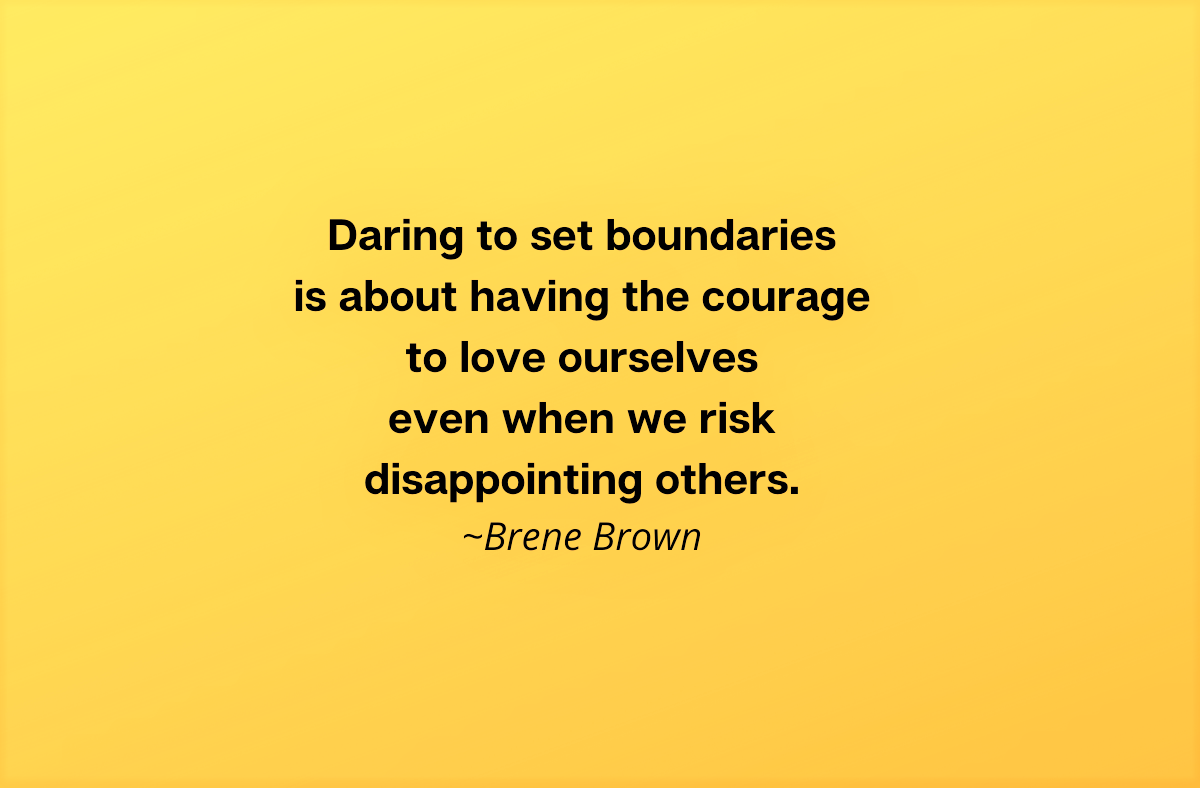
As a people-pleasing first born who hates conflict, giving in has always been  easy for me. It’s only later that I wish I hadn’t.  

So for most of my life, setting personal boundaries has been challenging.

But in the aftermath of child loss, healthy boundaries are no longer optionalthey are necessary for survival.  

So what are healthy boundaries?

  • Saying “no” without guilt
  • Asking for what you want or need
  • Taking care of yourself
  • Saying “yes” because you want to, not out of obligation or to please others
  • Behaving according to your own values and beliefs
  • Feeling safe to express difficult emotions and to have disagreements
  • Feeling supported to pursue your  own goals
  • Being treated as an equal
  • Taking responsibilty for your own emotions
  • Not feeling responsible for someone else’s emotions
  • Being in tune with your own feelings
  • Knowing who you are, what you believe, what you like

~sharonmartincounseling.com

What does this look like in real life?

  • Not being “guilted” into engaging in social/family/church activities before I am ready
  • Letting family and friends know when I need encouragement, companionship, solitude, help or space
  • Keeping or making doctor’s appointments and staying on top of my physical well-being by sleeping/eating/taking medication/exercising as best I can
  • Participating in what is helpful and life-giving to me when I want to and not because I feel like I have to.  
  • Giving myself space and time to figure out how losing a child impacts my beliefs, my sense of self, my understanding of the world-being honest about questions and about struggles.  If I have to take a break from church for awhile, that’s OK.
  • Expecting support from friends and family to do the work grief requires.  If some in my circle can’t do this, then I’ll put those relationships on hold until I feel stronger. I am not required to live up to other people’s standards.
  • Embracing and acknowledging my own emotions.  Not expecting someone else to “make me better”.  No one can take away the sorrow and pain of child loss.  It is excruciating.  There is no way through but THROUGH.  Face the feelings.  Get help from a counselor if necessary.  Join a support group.  Find safe friends.  But I will not be able to distract myself or ignore the heartache forever.
  • Understand that though I share the loss with others-a spouse, my surviving children, my child’s grandparents, etc-I am not responsible for how they are dealing with loss. I may offer help, may arrange counseling (especially for children), should strive toward an environment where feelings can be expressed-but I can’t work through their loss experience for them.  
  • Pay attention to my own feelings and what triggers grief attacks.  When I can, plan around the triggers.  When I can’t, accept the feelings and go with them.  If I need to leave a venue, leave.

What it doesn’t look like:  

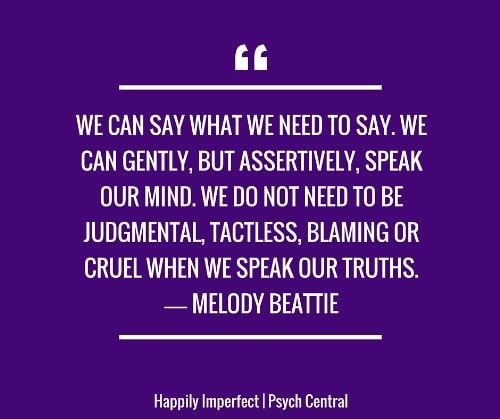
Healthy personal boundaries are not an excuse for bad behavior.  They are not to be used as blunt instruments to bully others into submission or to advance my own agenda against theirs.

My boundaries don’t give me the right to be hateful, hurtful or unkind.  They are not permission to pitch fits, make public displays or belittle others.  

say-what-we-need-to-say-gently

And they are absolutely NOT a reason to plaster hate speech across social media.  If I have a personal relationship issue then it needs to be handled personally and privately not publicly. Vague Facebook statuses that suggest I’ve been offended by half my friend list are off limits.

Establishing healthy personal boundaries is work.  

Already exhausted from grief, the last thing I want is more work.

But if I don’t defend the space and time I need to do the work grief requires I cannot make progress toward healing.

If I don’t limit my interaction with those who are unhelpful or downright hurtful, I will be dragged down further in the mire of sorrow and sadness.

If I don’t purposely pursue physical, emotional and psychological healthgrief will kill me.

Grief Work 2025: Will it Ever Get Better?

I know that when I first stumbled onto a bereaved parent group, it was one of the things I was looking for: evidence that the overwhelming pain of child loss would not last forever.  

Some days I was encouraged as those who had traveled farther down this path posted comments affirming that they could feel something other than sorrow.

Some days I was devastated to read comments from parents who buried a child decades ago asserting that “it never gets better”.

Who is right?  

What’s the difference?

Do I have any control over whether or not this burden gets lighter?

It was eleven years in April since Dominic ran ahead to Heaven and I’ve learned a few things since then.

letting-go

Time, by itself, heals nothing.  But time, plus the work grief requires, brings a measure of healing.  

If I cling with both hands to my loss, I can’t take hold of the good things life still has in store for me.  

Longing for the past all the time only brings sorrow.  I cannot turn back time.  Days, weeks, years will keep coming whether or not I choose to participate in them.  I will rob my heart of potential joy by focusing exclusively on the sorrow I can’t undo.

Daily choices add up.  When I lean into the small things required each day, I build confidence that I can do the bigger things that might still frighten me.  Making phone calls eventually helps me show up to a meeting or to church.  I strengthen my “can do” muscle every time I use it.

Doubt doesn’t disappear. Facing my doubt forces me to explore the edges of my faith.  It does no good for me to stuff questions in a drawer and hope they go away.  They won’t.  I have to drag them into the light and examine them.  Doubt is not denial.  If God is God (and I believe that He is!) then my puny queries don’t diminish His glory.  He knows I’m made of dust and He invites me to bring my heart to Him-questions and all.

My mental diet matters more than I might think.  I have to be very careful what I feed my mind.  If I focus on sadness, tragic stories, hateful speech and media that feeds my fears and despair then those feelings grow stronger.  If instead I focus on hopeful stories, good conversation with faithful friends and inspiring quotes, verses and articles I feed the part of my heart that helps me hold onto hope.

I need a space where I can be completely honest about what this journey is like.  Bereaved parents’ groups have been that space for me and have been an important component of my healing.  But even there I must be cautious about how much time I spend reading other parents’ stories if I notice that I’m absorbing too much pain and not enough encouragement.

me too sharing the path

Grief is hard.  

It’s work. 

And that work is made up of dozens of daily choices that are also often difficult.  

I don’t expect to be healed and whole this side of eternity.  But I do know that if I consistently do the work grief requires I will be stronger, more whole and better able to lean into the life I have left than if I don’t.

I want to live. 

I want to honor my son by living a life that’s more than just limping along, barely making it, struggling for each step.  

So I do the work grief asks of me.  

Even when it’s hard.  

give yourself space to do the work grief requires