Healing? Curing? Same Thing?

Healing and curing are not the same thing.

Healing is a process that takes as long as it takes and may never be complete this side of eternity.  It’s a folding in of the hard parts of my story, an acknowledgement of the way I am changed because of the wounds I’ve received.  It involves scar tissue and sore spots and ongoing pain.

healing is not the absence of pain silhouette of sorrow

To be cured is to be free of the effects of disease or injury.  

And there is no cure for child loss.

I will never be free of the effects of burying a child this side of Heaven.

I did not understand the difference until it was my heart bearing an incurable wound.

The thing about healing, as opposed to curing, is that it is relational. It takes time. It is inefficient, like a meandering river. Rarely does healing follow a straight or well-lit path. Rarely does it conform to our expectations or resolve in a timely manner. Walking with someone through grief or through the process of reconciliation requires patience, presence, and a willingness to wander, to take the scenic route.

~Rachel Held Evans, Searching for Sunday

It really IS all about relationship.

Relationship first with the Living God through His Son, Jesus.

The ongoing life-giving ministry of His Spirit calls courage to me as I travel this Valley and sings hope to my heart when I cannot hear anything else.  

He will not leave me in my distress.

He does not abandon me in my darkest hour.

flesh-and-heart-may-fail

But it is also about relationship with others.

Relationship with those willing to meander with me along this unlit and winding path.  They are the ones who give me courage to carry on. They are the ones who lift me up when I am unable to lift myself and who lie down with me when even their best pep talk is not enough to get me off the floor.
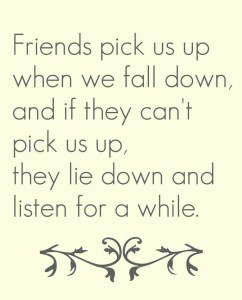
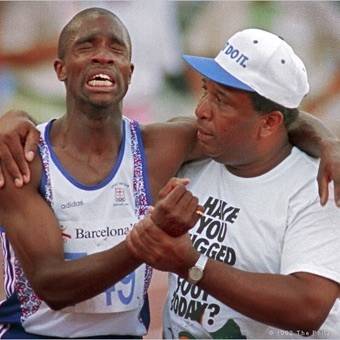
friends pick us up

They have listened to me tell and retell my story.

The first time I told it, I didn’t have a clue what to say or how to say it-what to leave in, what to leave out.  How do you condense a life-sized earthquake to a novel, much less a few sentences?

But I find as I practice telling my story, it is healing.

Sometimes it’s as if I speak without my mind being engaged and listening,  I have an “aha” moment-suddenly recognizing a new insight and another place that needs work or has received healing.

I’ve learned that there is no substitute for companionship on this journey.  

My healing depends on the faithful Presence of my Shepherd

AND

the faithful presence of friends who refuse to leave even when it seems we are lost in the wilderness of grief together,

relationshipmatters-pic


Again and Again

I don’t cry nearly as much as I used to.  

I’m not sure if it’s because I feel the need less often or because I’m just better at holding the tears at bay.  But when I do, it’s pretty ugly.

My heart is still broken.  

My soul still cries out for the child I carried in my womb and mothered for nearly 24 years.

I am not the person I used to be.

And I don’t know how to be the person I am now.  

I had time to grow into the “me” that was shattered in a moment when a deputy knocked on my door.  There was no time to get used to THIS news-not even the nine months it takes for a baby to grow to birth maturity.

In a breath, my son was gone.  In a breath, my world was changed.

I have lived with this truth for nearly three years.

I tell the story like it happened to someone else.  I give the important facts, the little details that make it real but it still seems unreal in so many ways.

I cannot believe this is my life

And when it hits me that this IS, in fact, my life-that’s when the crying starts.

I can’t help it.

I am just as astonished today as I ever was.

For in grief nothing “stays put.” One keeps on emerging from a phase, but it always recurs. Round and round. Everything repeats. Am I going in circles, or dare I hope I am on a spiral?

But if a spiral, am I going up or down it?

How often — will it be for always? — how often will the vast emptiness astonish me like a complete novelty and make me say, “I never realized my loss till this moment”? The same leg is cut off time after time.
~C.S. Lewis, A Grief Observed

Repost: Silence Doesn’t Serve Anyone Well

One of the reasons I write is to share my grief experience with others.

I realized when tossed into the ocean of sorrow that of all the things I had heard about or read about, surviving child loss was never mentioned.

Read the rest here:  Silence Doesn’t Serve Anyone Well

Subtle Disapproval

I mention that today is a hard day to someone who knows my story and the words fall with a loud “thud!”  between us.

I don’t know whether to pick them up or not and she isn’t having anything to do with them.

So I move on to another topic.  Clearly this one isn’t going anywhere.

There are lots of ways to send messages of disapproval.  You can “just say NO” like kids are told to do in anti-drug and anti-bullying campaigns.  You can rant and rave and argue and rail against someone or something in person and on social media.

Or you can just ignore someone when they spill what matters to them like an offering on the ground at your feet.

The opposite of love is not hate.

It’s indifference.

The opposite of support is not opposition.

It’s looking the other way.

Strangers line streets to cheer marathoners on-offering cups of water and words of affirmation.

“You can do it!”  “Keep going!”  “You are more than half-way there!”  “Don’t give up!”

hobbling-runner

And yet many of us are running the race of our lives without a cheering section.

I get ityou are so very tired of the fact that I am so very tired.  I have worn out the welcome mat to the door of your heart.  It DOES get old when I bring the same baggage with me each time we talk.

baggage

Trust me, I’m working hard at unpacking it.  I’m doing all I can to lighten my load and what I ask you to help me carry.

But it is a slow, slow process.

And every time I need help or encouragement and don’t get it, another brick is added to the suitcase.

You might think you are helping me learn to ignore the pain by ignoring my mention of it but I don’t have that luxury.

It’s my heart wound, not yours.  

It’s my child buried, my child not here, my child gone from sight-how exactly should I ignore that?  Which of your children could you put away for a lifetime and forget was ever here?

If you want to help me lighten the load,

let me unpack my pain by telling my story.

If you want me to finish the race strong,

cheer me on.

best way you can help me


Manifesto of the Brave & Brokenhearted~by Brene Brown

I am thankful for Brene Brown.

She has helped me put words to my feelings, helped me see a way forward when I felt there was none and helped me own my story even though it is hard.

I keep her quotes around to encourage my heart and remind me that I am brave.

This is one of my favorites:

manifesto of the brave and brokenhearted

Limping Along

Those of you who follow the blog regularly know I have rheumatoid arthritis.

It’s something I’ve been living with three times as long as the years I’ve lived without Dominic and I find strange parallels in the twin journey of chronic disease and chronic heartache.

Both are crippling in their own way, both force me to work around the pain.  Both have changed me in ways I could not have imagined and certainly wouldn’t have wished on myself or my family.

Both have taught me to endure.

Both have taught me many other things as well:  

I have learned to be more compassionate.  With pain as my constant companion, it reminds me this life is hard and that it’s hard for others too.

I have learned not to take a good day for granted.  I never know when I will wake to an RA flare, I am constantly surprised by random heavy grief days and I can’t tell when I go to bed at night what tomorrow will bring.  So when a day is good, I grab hold of every moment.  I laugh, I move, I do things that make my heart sing.  And I store the memory for days that aren’t so good.

I have learned to be gentle to myself.  I can only do what I can do.  And what I can’t do today will just have to wait for tomorrow-or maybe wait for forever-and that’s OK.

I have learned to say, “no” graciously, without making excuses.  I try very hard to live up to commitments so I am selective in taking on new ones.  I know that if I take on too many, I’m sure to have to let someone down in the end.  I can’t make others outside my disease or my grief understand so I’m learning to not try.  Their disappointment or disapproval is something they have to carry, not me. (I wrote more about this here:  No. It’s a Complete Sentence.)

I have learned to create “work arounds” for the things that I have to do but are very hard to do. For my RA that means unloading the dishwasher two plates at a time instead of lifting the whole stack at once.  For my grieving heart that means spreading out the hard things over a week instead of a few hours.  It means not feeling compelled to answer every message, phone call or text right away if my mind is unclear or my heart too heavy.

I’ve learned to wear what’s comfortable.  Whether that is shoes that accommodate my crooked toes or refusing to put on a “happy face” mask in public-I am who I am.  I certainly don’t mope around or try to draw attention to myself.  But I’m just not responsible for making other people feel comfortable with my disease or my grief.

I have learned to plan “rest stops” on my daily journey.  It may be a moment to sit down or a moment to do something creative or a moment to watch a funny video-but each thing is designed to help me recharge for the next few hours.  If I try to soldier on I end up too tired and emotionally spent to do anything.  One day of that and I may lose a whole week.  So I pace myself.

I have learned that appropriate medical intervention and treatment is not a crutch, it’s a pathway to a more productive life.  I resisted taking medication for my RA for a long time-the potential side effects are frightening.  But when the swelling, pain and joint deformity became too much to bear, I gave in.  I shouldn’t have waited so long.  It was foolish. I will never be free of the disease, but my life can be better with appropriate intervention.  It’s the same with grief.  Anti-depressants and anxiety medicine do not remove the pain of grief but they can make space in a heart and mind to do the work grief requires.  There is NO SHAME in using whatever tools are available to make it through.

I have learned to ask for help. There are a number of things I just can’t do alone.  I used to be able to do them.  But not anymore.  Asking for help is not defeat.  I have to remind myself of that.  At the end of the day what matters is that what matters gets done-I don’t get “extra credit” for struggling through alone.

I have learned to speak my truth.  (This is one I’m still working on!)  If I am having a bad pain day or a bad grief day, I don’t try to hide it.  I just tell those who ask and those closest to me the truth. The energy I have to expend to keep it covered up means less energy to work on the underlying factors contributing to the bad day.  It’s just NOT worth it.  And I’m not good at hiding it anyway.

I have learned that walking (literally or figuratively) with a limp is not a defect.  It’s simply my life.  I won’t apologize for it.  If someone asks, I’ll share.  But if not, I just go limping along, making my way forward.  I might be slow, but I’m moving.

And that’s what counts in the end.

I will walk with an emotional limp for the rest of my life … But I don’t want it to just remind me of the struggle and the pain; I want it to remind me of a place of surrender, a place where God met me and blessed me. Otherwise, it is just wasted pain.

~Nancy Guthrie, The One Year Book of Hope, p. 332

Facing My Inner Pharisee


In centuries past it was common for Christ followers to fast.

They fasted for many reasons:  to consecrate themselves for a task; to seek answers to prayer; observance of seasons on the church calendar; or for strength to overcome besetting sin.

Today, fasting has fallen out of favor in most western churches-deemed unnecessary or an attempt to gain favor with God by “works”.

That’s unfortunate.  

Because fasting has never been about making points with God, it’s been about removing self-reliance from our spiritual vocabulary.

It’s not about demonstrating personal fortitude or displaying self-righteousness, it’s about recognizing my weakness and desperate dependence on Christ.  

Perhaps the greatest hindrance to our work is our own imagined strength; and in fasting we learn what poor, weak creatures we are – dependent on a meal of meat for the little strength which we are so apt to lean upon.

~Hudson Taylor

Like the Pharisees, though, I am apt to make much of my “sacrifice” and little of Christ’s sufficiency.  I want to bargain with God and rise in the ranks of His favor because I’m so “good”.

It doesn’t work like that.  

I was almost to the end of a 40 day fast when Dominic was killed.

I am physically unable to fast 40 days consecutively so, for several years, I had done an every-other-day fast so that it equaled 40 days.

At some point in the first week after Dom ran ahead to heaven I remember crying out to God, “What exactly do You want from me??? I’ve done all that I know to do in an attempt to live up to Your expectations, and yet it is never enough!”

And (not then, certainly!) but at some point in the nearly 3 years since, He answered, “Your righteous acts are as filthy rags. The only sufficient sacrifice is My own Son’s blood.”

THAT was humbling.

Because even though I would have given the same answer to anyone else who thought they could “work” their way into God’s good graces, obviously the truth of it had not seeped into the fabric of my being.

I WAS trying to make points with God.  And I was angry He hadn’t taken that into consideration and spared me the pain of burying my son.

We often mock the Pharisees for thinking that “getting it right” means “being righteous”, but I understand the temptation to substitute acts of righteousness for relying on relationship through Jesus Christ.

The one means I am in control, the other means I have to follow and give up control.

If there is one thing I’ve learned through child loss that I cannot forget for even a millisecond is: I am NOT in control.

I am utterly dependent on Him for life, for breath, for saving AND sustaining grace.  

For it’s by God’s grace that you have been saved. You receive it through faith. It was not our plan or our effort. It is God’s gift, pure and simple. You didn’t earn it, not one of us did, so don’t go around bragging that you must have done something amazing.

Ephesians 2:8-9 VOICE

Fasting from food is relatively easy.  Fasting from my tendency toward self-righteousness is much harder.  

This year, as I observe Lent,

as I fast,

as I add in holy habits,

I am asking God to help me remember that I am not trying to win His favor,

I am making room to hear His heart.

be-still-760x760.jpg


I’m Not Going to “Get Over” This

Think back on the most awful thing that has ever happened to you.

Does it still hurt?  Do you still carry scars from where it pierced your soul and broke your heart?

Can you forget it? Really, really forget it?  

Read the rest here:  When Will You Be Over This?


Repost: Move Over, Make Room for the Broken

I used to position myself at the end of the pew, just in case someone I’m not too comfortable with might come along and try to sit down.

It saved us both that awkward conversation where they ask if they can join me and I say “yes” with my mouth but “no” with my body language.

Read the rest here:  Move Over, Make Room for the Broken

Repost: You Don’t Have to Pretend

It’s OK to not be OK.

If you are grieving, you are not responsible for making others feel better about YOUR pain.

Read the rest here:  You Don’t Have to Pretend