No Comparison

One of the hardest parts of blogging for me is that I am committed to authenticity.  As best as I am able, I try to be honest and transparent.

This entry was tricky.

I never, ever want to minimize ANYONE’S pain-in my mind there is no hierachy of misery. But I also want to let those outside the child loss community see how much it hurts to have our loss compared by others to their very different losses. We would much rather you simply take our hand or hug us or sit silently with us on the mourning bench.

So, here it is.  I hope you receive it in the spirit in which it is intended.

It is just so hard to accept that remaining silent is often better than saying the wrong thing.

It seems like every quiet space MUST be filled with chatter-especially in our overstimulated world of screens and noise boxes.

But, I promise-if you and I are speaking, and I choose to expose my heart-I would rather you take my hand or hug my neck and say nothing than tell me, “I understand exactly how you feel.”

Unless, of course, you do.

If you have buried a child, then please, please, please tell me that!  We will cry together.

women-crying-together-cell-phone

But there is no comparison between losing an aged aunt, full of years,  and losing a child, full of promise.

There is no comparison between losing a job, a house or a dream-any of which have the potential for restoration in this life– and losing a childwhom I will not see until I reach heaven.

There is no comparison between losing a pet and losing my son.

It’s the difference between being hungry because you skipped lunch and starving to death because you don’t have access to food or water.

One is uncomfortable and the other is excruciating.

So, while I deeply appreciate your desire to empathize with me, please don’t try to stretch your limited experience with loss to include my own.

It hurts my heart and minimizes my pain.

There’s just no comparison.

cant-fix-it-my-family-is-always-achingly-incomplete

Refuse Shame

I remember the night of Dominic’s visitation-a few of us, including our pastor were there early and prayed together for strength and for God’s Presence.

In that circle of loving friends and family I was overcome with the need to kneel. My body had to acknowledge the fact that my heart was humbled as it never had been before.  I was in the dust and ashes were my food.  

What could be worse?

But in the days and weeks and months that followed, as the fog of disbelief lifted and the reality of pain, sorrow and missing became undeniable, it did get worse. Part of the “worse” was a sense of shame.

A sense that I should have been able to protect my son, keep him safe, make sure he lived-but I couldn’t.

The pain of child loss is often accompanied by shame:

Shame that I couldn’t save my child.  Shame of suicide, addiction, being in the wrong place, with the wrong people at the wrong time.  Texting while driving. Not wearing a seat belt. The shame of missing something. The shame of waiting to intervene.  The shame of pushing too hard.

The shame of just not being there when it happened.

The list is endless…

Often that shame keeps bereaved parents from reaching out, imprisons them in their own minds and sometimes in their own homes.

owning-our-story-and-loving-ourselves-through-the-process

But it shouldn’t be that way.

Child loss is a tragedy, not punishment.

It highlights the fact that I am not in control-and neither are you.  It happens even when a parent or a child does “everything right”.  And some kids survive to old age even when they have done “everything wrong”.  

Shame tells me that I am unworthy of love and unworthy of belonging.

And that is a lie.

It “erodes our courage and fuels disengagement” (Brene Brown) If I allow shame to overwhelm my heart it drives me away from the very help I need to make it through this awful Valley.

I have to shake it off.

I have to refuse it’s cold creep into my soul, toss it out and bar the door so that it can’t come back inside.   I will name it and drag it from hiding for others to see.  

It cannot survive the light of day.  

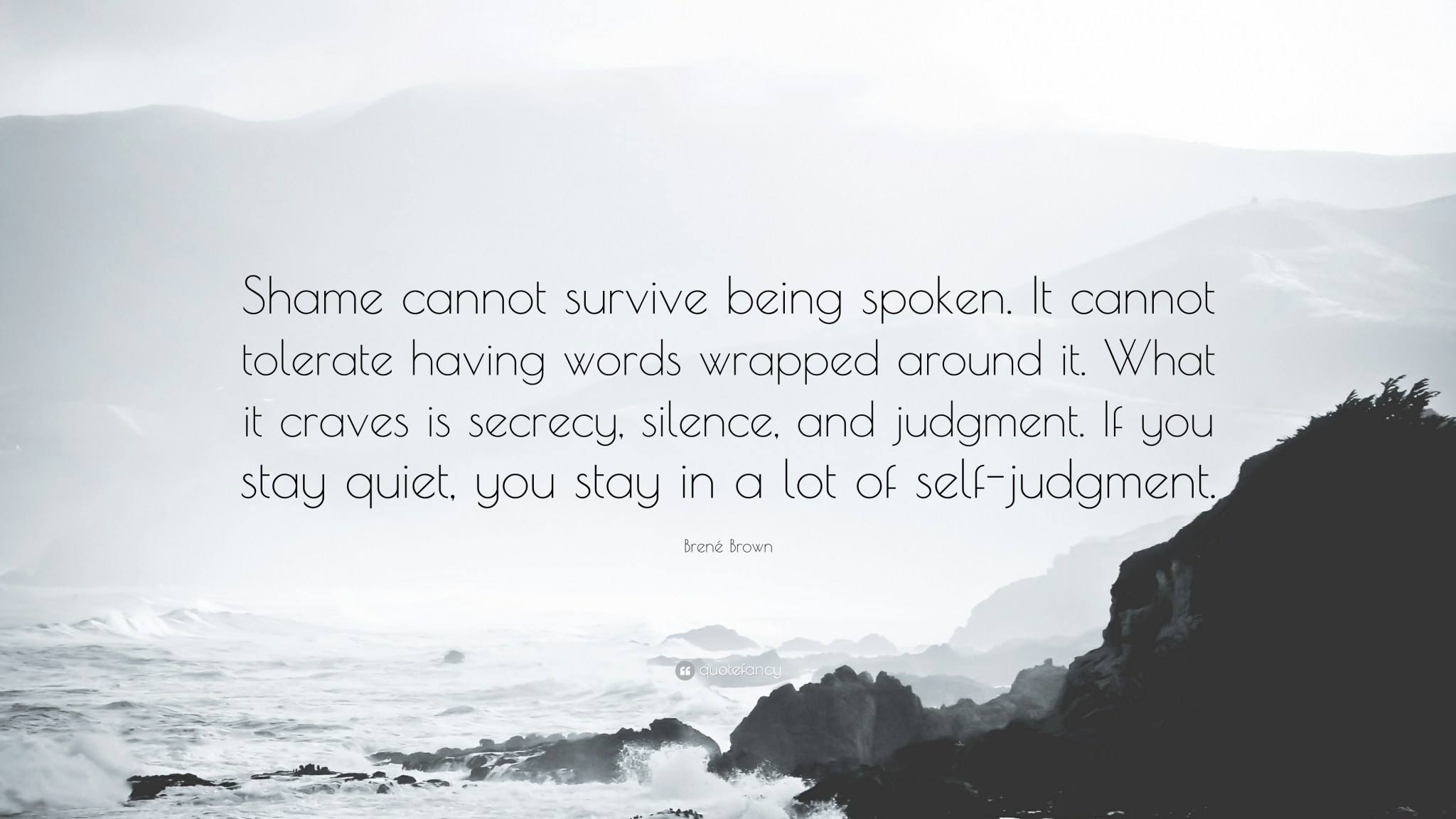
shame-cannot-survive-being-spoken

There is NO shame in burying a child. 

Grief Brain: It’s a Real Thing! PART TWO: Coping Strategies

So now that you know you aren’t going crazy, what to do?

Give yourself grace-understand that the old you is not the new you.

griefbrain

You will not be able to overcome these very real changes by sheer force of will. No matter how talented or together you used to be, it’s unlikely you can operate on that high plane right now. If you try, you will only exhaust the resources you have left.  

So slow down and make room for how grief has impacted your mind.

talk-to-yourself-as-someone-you-love-brene-brown

There are some basic self-care techniques that bear fruit in every area, not only mental acuity:

  • Eat balanced meals or snacks-It doesn’t matter if you WANT to eat.  Consider that you are fueling your body so that it can feed your mind.  Find a protein bar you like or eat easy-to-make salads or sandwiches.  When blood sugar levels are stable, your mind works better.
  • Get as much quality sleep/rest as possible-This is very hard, I know, when the setting sun brings memories and thoughts that make sleep almost impossible.  But research “sleep hygiene” and apply the techniques that might work for you.  Herbal supplements and teas can help as well as prescription medications.
  • Drink enough water-hydration is so very important and easy to ignore.
  • Limit alcohol and/or other stimulants/depressants -any of which can interfere with your ability to think and remember. (Do NOT stop medication unless you do so in concert with your doctor)
  • Exercise-There’s no need to run a 5K. Just a walk around the block or even around your house can get your blood pumping and providing more oxygen to your brain.
  • Get a physical exam to rule out hypothyrodism, diabetes, heart disease, or any other physical cause for your symptoms.  If prescribed treatment, follow the protocol.

brain-cogs-and-light-bulb

Develop work arounds:

  • I simply admit to people I’m meeting for the first time that I will not remember their name unless and until I use it multiple times, and even then I might forget.  It takes the pressure off so I don’t have to pretend when I see them again.
  • I write down EVERYTHING.  If I put something “someplace safe” I jot down the location in my calendar.  If I make an appointment or need to make a phone call, I write it where I can see it.  If I commit to bring something to a potluck meal, I put down what I promised and when it needs to be there.
  • I ask for help.  Like I said before, if I make lunch plans with friends, I ask that they text me the day before to remind me.  If I need extra time to fill out a form, I speak out-I’ve never had anyone refuse.  If I can’t remember something important, I admit it and look it up.  I have given my family permission to tell me when I’m repeating myself.
  • I maintain routines and habits.  Keys-same place,always. I have a carabiner on my purse to attach them when I leave my truck.  Glasses-same place, always.  Medicines in those little seven-day sorted containers.
  • I use the Internet, mail and telephone calls to expedite things and minimize stressful interactions with people.  If I am going out to a restaurant, I look up the menu online so I’m not forced to make a decision on the spot.  I look up and print directions even though my phone can navigate on the fly.  I call ahead to learn how long a repair will take, if items are available and if my prescriptions are actually ready.  I send letters and cards instead of visiting when I’m feeling overwhelmed.

take-control-of-your-life

Lifestyle choices:

  • I aim for balance:  Harder tasks with easier ones; stressful outings with quiet moments; reading with sewing; outside and inside; work and play.  Switching up seems to help keep me sharper somehow.
  • I don’t overcommit.  When someone asks me to do something, unless it is truly an emergency requiring an immediate answer, I consult my calendar.  If I already have a couple commitments for a week, I beg off or reschedule for another time.  I realize that those working outside the home have far less control over these things but perhaps you might ask your boss for some leeway.
  • I group similar tasks and do one thing at a time.  I find that doing things that require the same skillset on a single day increases my ability to do them well.  Shopping, writing notes, cleaning house are things I schedule for one day at a time.  I am absolutely NO GOOD at multitasking anymore.
  • I’m realistic about what I can and can’t do.  It is humbling to admit that I’m no longer tolerant of small children and large crowds.  I used to be able to handle both.  But I just can’t do it, so I limit my exposure.  I won’t serve in the nursery at church and I don’t attend concerts.  That’s just the way it is now.
  • I plan for laughter.  If it doesn’t happen organically, I seek something uplifting and funny to tickle me into laughing out loud at least once a day.  Laughter helps me cope and releases all kinds of feel-good hormones.  With the world of memes at your fingertips, this is an easy thing to do.
  • I refuse to apologize.  Yes, I might say, “I’m sorry” when I forget someone’s name, but I don’t make it a habit to make excuses for my inability to live up to others’ expectations.  I learned early on that anyone who has not walked this Valley can’t really understand anyway.  It frustrates me, adds to stress and does no good.  So I let my “yes” be “yes” and my “no” be “no”.  I’m beyond being embarrassed.

I do the best I can as long as I can.

And when I reach my limit, I admit it without being shamed.


shame-is-the-intensely-painful-feeling-we-are-unloveable-brene-brown


What to say? What to do? Loving the Grieving in Public Places


Last week I wrote about some strategies I employ when in a social situation: Surviving Social Situations After Child Loss

But if you are the friend, family member or acquaintance milling around who bumps into me or spies me across the room, here are some things you can do and say that will help me as well:

Be aware that the greeting, “How are you?” sometimes feels like a challenge instead of an invitation. I’m scrambling for words to express my true condition without ruining the mood of the gathering.  It would be so much better if you simply said, “Hello” or “I’m happy to see you” without additional comments about how long it’s been.

Don’t pose or push for answers to questions that are primarily designed to satisfy your own curiosity.  If I give a brief reply, take the hint and move on.  If I say I can’t talk about it, drop the subject.  If I turn the conversation back to you, pick it up and carry the ball.  Public spaces are not the place to try to draw me out.  If you are concerned about me or want to REALLY know how I’m doing, take me to lunch or bring me dinner or invite me out for coffee.

questions

Notice my body language.  If I am fidgeting or hugging myself or backing away or crossing my arms it’s time to let me go.  I may hold my tongue but my body will give you abundant clues that I’m nearly at my limit for social interaction.  Give me permission to end the conversation and preserve my dignity.

Hugs are almost always wonderful.  Physical touch conveys love and compassion without requiring any response.  If you know me well enough to hug me or squeeze my hand, please do.

brene-brown-on-empathy-image

Don’t corner me-physically, emotionally or spiritually.  Backing me into a tight space makes me feel trapped.  If I’m on the end of a pew or aisle, don’t ask me to scoot down so you can join me.  I’m there in case I need to make an exit.  Don’t stand too close to me while we’re talking-my need for adequate personal space has greatly increased since Dominic ran ahead to heaven.  Don’t throw Bible verses at me or ask me how Jesus is meeting me in my sorrow.  These are things we can talk about together, in private, in a way that makes space for me to be honest and express emotion without fear of embarresment.

Don’t make comparisons between my missing child and person featured in the wedding, baby shower or engagement party we are attending. Trust me, I’ve already done the math. I already know the distance between Dominic’s homegoing and this day.  I am already mourning one more thing I’ll never get to see him do.

cant-understand

Please don’t use this time to tell me about another bereaved mother you “just want to introduce to me”.  I am open and willing to walk with others on this journey, but this is not the time nor the place to put me on the spot.  If you know of another mom that needs my help, write me a note, give me a call or text me.

If I leave a room, don’t follow (unless you are a very close friend).  Let me go.  I will return if I can and if I can’t, I won’t.  Text me if you’re concerned.  If I come back, let me slip in without any fanfare.

If I cry, hand me a tissue or a handkerchief.  Don’t ask, “What’s wrong?” Besides the obvious, I may not have an answer for you.

woman-mourning

Please help me move conversation along when I lose my train of thought or seem at a loss for words.  Grief makes it hard to think sometimes, especially when in a crowd and/or a place with lots of background noise.  Give me permission to end a conversation-it probably doesn’t have a thing to do with YOU-I’m just running out of steam and need a few minutes’ respite from having to talk.  

Attending social events is exhausting for me now.  I want to celebrate birthdays, weddings, anniversaries, graduations-but that means a lot of people and a lot of unknowns.  Dozens of potential triggers, any one of which might conjure a grief wave that can drown me.  

I do what I can to be prepared. 

But I’ll take all the help I can get.

best-way-you-can-help-me


Who Steps In? Who Walks Out?

I was absolutely overwhelmed in those first days.

Cars, cars, cars filled my long driveway and front yard.

People spilling out like ants scrambling after the hill is disturbed.

Oh, our hill was disturbed-knocked wide open by that deputy’s visit.  Phone calls to let others know.  Phone calls from people who couldn’t get in touch with him and were just checking “in case something had happened”.

It had happened.

It. HAD. happened.

After the customary ceremony and handshaking and food, the cards flooded in. Some with hand-written heartfelt messages of, “praying for you”, “we are so very sorry”, “we love you”. Some with pre-printed poems that absolve the sender of the need to find words for things for which there are no words.

My son is dead.  What can you say to that?

And then the silence.  The morning that I woke up to  realize I had done all I ever could do for Dominic.  My last act was to find his body a resting place and pray his soul to heaven.

He was home.

I was left in a strange country filled with landmarks I no longer recognized and a language I no longer understood.

Who comes into that?

Not many.  Only a few brave souls stick around for the after-only a few true friends keep calling and coming and caring for the long haul.

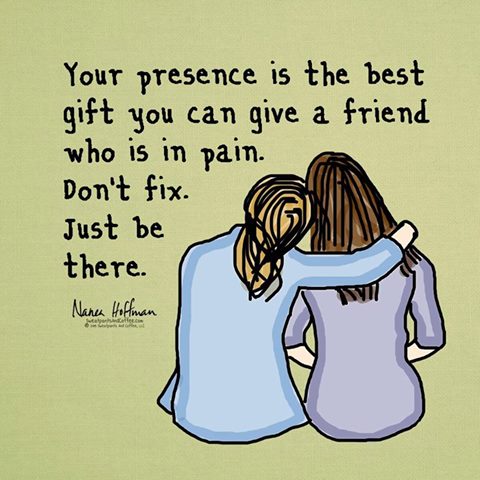
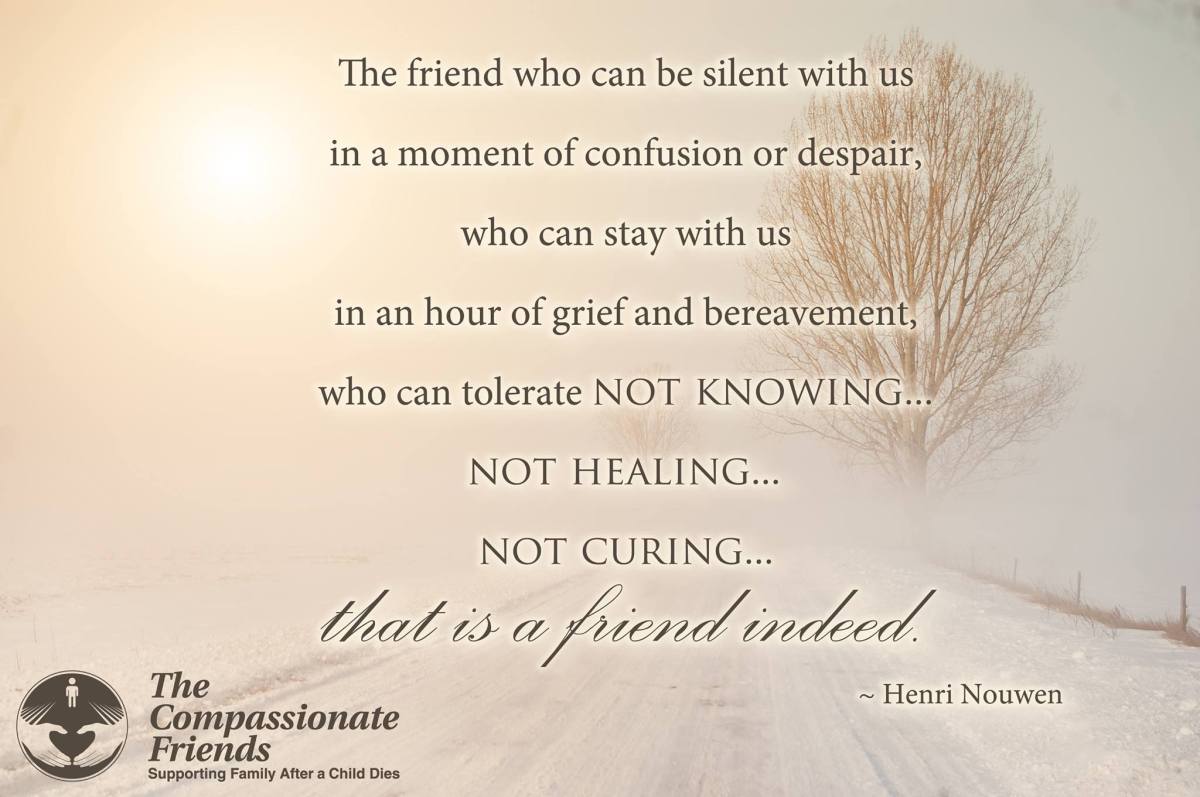
Because sitting with me in my grief, listening to me question my faith, keeping company with uncertainty and loss of control is frightening.  It takes great self-control to simply be present and not try to say something or do something to try to fix the unfixable.

If it could happen to MY family, it could happen to theirs.  And no one wants to think of that unless they have to.

So many leave.

Not immediately and not flamboyantly.  They just drift away like unmoored sailboats caught in the rising winds of life and busyness and school plays and church socials.

My personal tragedy is a footnote to their life journal-and who reads footnotes?

But there are a few who purpose to make my burden their burden.  

A few who call and write and text and message on the important dates like when he died, his birthday, Christmas, Easter.  Even fewer who call and write and text and message just because-just because they heard a song or saw a sunset or remembered for a moment that there is a mama out there who carries this grief 24/7.

I have no idea how Jesus will reward His followers when they make it Home.  But I have a sneaking suspicion that the ones who choose to run in when others run away will receive a crown. Because their faithful love in the dark places brings life and light to hurting hearts.

And isn’t that the essence of the gospel message?

You are not alone.  

You are loved.

There is a way forward.

When you have exhausted all your own resources, God has made a way where there was no way. Even when you can’t take a step on your own-especially when you can’t take a step on your own-Jesus will carry you.

The ones who stay sing the gospel song to my heart.

They remind me that Jesus hasn’t forgotten.

presence best gift

Exploding the Myth: God Doesn’t Give You More Than You Can Handle

blessings-come-through-rain-drops

You know, I don’t expect those outside the Body of Christ to have good theology-that’s like expecting me to be able to explain thermodynamics.  

Ain’t gonna happen-it’s outside my scope of understanding and practice.

I do expect those who have spent a lifetime reading Scripture, studying Sunday School lessons and listening to sermons to know better.

But many don’t.

“God doesn’t give you more than you can handle” is bandied about freely among those who, if they thought about it before they said it, know it isn’t true.

god-doesnt-give-you-more-than-you-can-handle

Usually it’s tossed at someone going through a tough time in an effort to encourage them.

Can I just let you in on a secret?  It is NOT encouraging.  At. all. Not one bit.

Because what’s implied is that I SHOULD be able to handle this.

But I can’t.

And it lets you off the hook.  

It’s like I’m drowning and instead of diving in to rescue me, you’re giving swimming lessons from the safety of the shore.

It’d be much more helpful if you threw me a lifeline.

life-preserver

God routinely gives me more than I can handle.

It’s one tool He uses to turn my heart to Him.  It’s one way He helps me understand (although He knows it already)  that I absolutely cannot handle it by myself.

So instead of sending the message that I should be able to handle this-join me in the dark place, hold my hand as we walk together and help me feel God’s love through you.


presence best gift


It Matters to That One

Talk is cheap.  

So many folks think posting a meme or retweeting a catchy phrase is the same as acting on what they believe

It’s not.

If the only action you take to advance the values you claim to hold dear is a few keystrokes behind the safety of a screen I question your commitment.

Don’t tell me you love your neighbor when you don’t know his name.

Get up off the couch and make a difference.

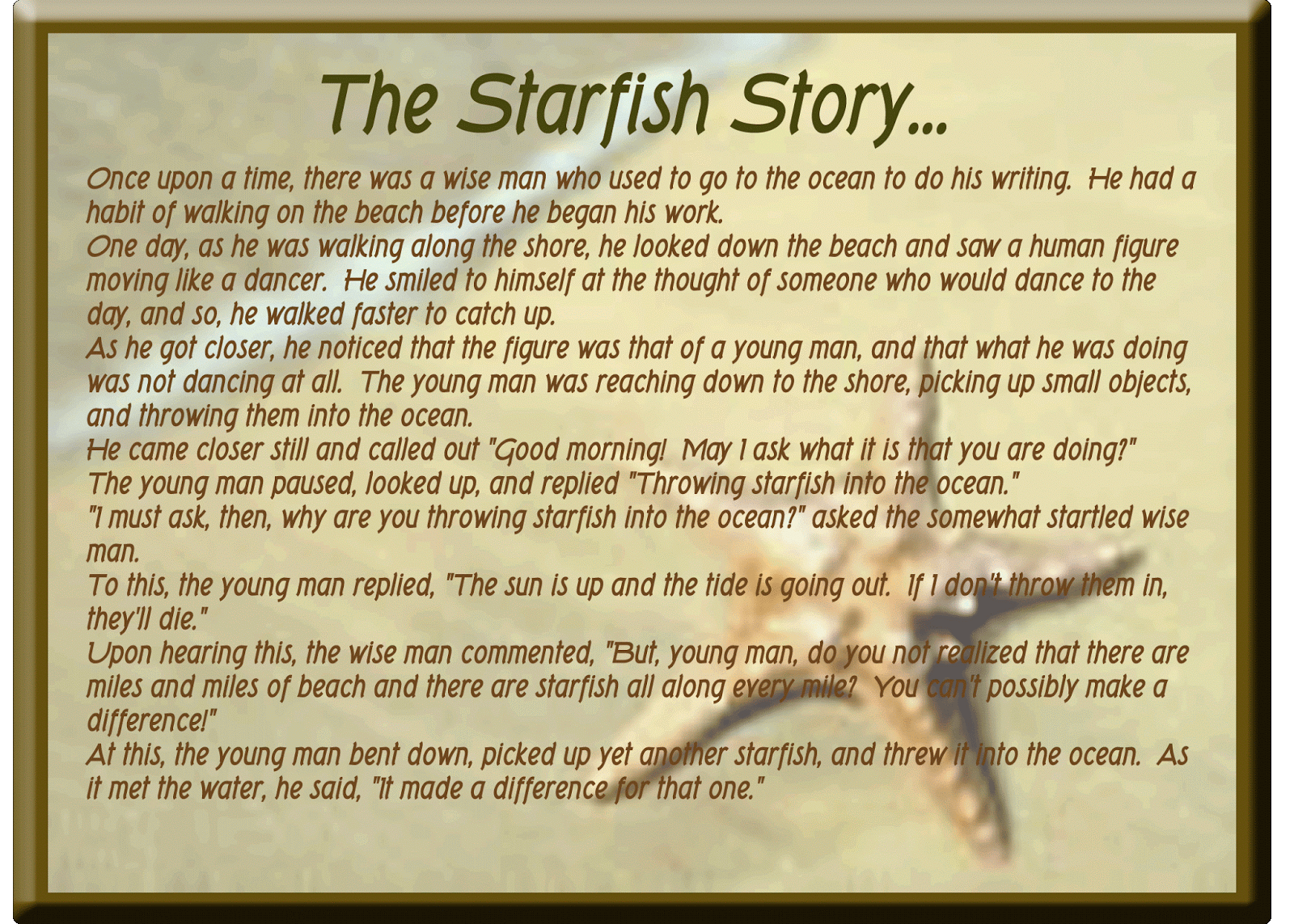
Can I change the world?  Probably not.

But I can change my corner of it.

Can I help everyone?  No.

But I can help someone.

This is an old story, but it’s true:

starfish-story


Shake Off the Shame

shame

Shame is a shackle as sure as any chains forged from iron.  

And it often finds its home in the hearts of those who bury a child.

Bereaved parents may feel shame for lots of reasons:

  • Circumstances surrounding the death of their child-suicide, alcohol, drug abuse;
  • Inability to provide the funeral or burial they want due to financial constraints;
  • Missing signs or symptoms of an illness that may have led to death;
  • Family dynamics that pushed a child away from home or relationship.

The list could be endless-on the other side of child loss our brains pick apart every interaction, every choice, every moment that could have gone one way but went another.

Grief is WORK.

But it is impossible to make my way through the pile of emotions if I’m shackled by shame.  I can’t move freely and effectively if I’m bound hand and foot by things I can’t control and can’t change.

In the midst of all this work, some bereaved parents find they are immobilized by depression and/or anxiety and need medication to help them through.

woman looking through rainiy window.jpg

And they feel ashamed.  

Can I just say this? 

There is NO shame in seeking help.

There is nothing shameful about using whatever tools are available to make this awful journey more manageable.

A wise and kind doctor friend said, “Medication does not make the sorrow and pain go away, but it can calm the mind and create space so you can do the work grief requires.”

You are not a failure if you need medical help to quiet your mind.  You are not weak if you take a pill to keep from feeling like you’re going to come out of your skin.  You have done nothing wrong if you can’t sleep and require a sleep aid to allow your body the rest it needs to carry on.

Don’t compare your journey to anyone else’s.

You are unique.  Your path through this heartache is your own.

Do what you need to- for YOU.  

Shake off the shame.  

grief-is-not-linear


Grieving Parents: What Helps and What Hurts

Last February I ran a series of posts about “loving well” during loss.

Other bereaved parents graciously shared both what helped and what hurt in the first few days, weeks and months after losing a child.

I wanted to share this one again because I’ve been reminded recently that it’s hard to know what to do and what to say when a friend or family member is facing the devastating pain of child loss.

If you long to help someone in meaningful ways when they are struggling in a storm of grief, read this:  Loving Well: Some Things Hurt


The Forgotten Ones: Grieving Siblings

I am always afraid that Dominic will be forgotten.  

I’m afraid that as time passes, things change and lives move forward, his place in hearts will be squeezed smaller and smaller until only a speck remains.

Not in my heart, of course.

Or in the hearts of those closest to him, but in general-he will become less relevant.

But he is not the only one who can be forgotten.  I am just as fearful that my living children will be forgotten.

Not in the same way-they are HERE.

They are participating in life and making new memories, new connections and strengthening old ones.

I’m afraid their grief will be overlooked, unacknowledged-swept under the giant rug of life and busyness that seems to cover everything unpleasant or undervalued.

If the course of a bereaved parent’s grief is marked by initial outpouring of concern, comfort and care followed by the falling away of friends, family and faithful companionship then that of a bereaved sibling is doubly so.

Surviving children often try to lessen a grieving parent’s burden by acting as if “everything is OK”.

But it’s not-it is definitely NOT.

missing them from your side

Their world has been irrevocably altered.  They have come face-to-face with mortality, with deep pain, with an understanding that bad things happen-happen to people they love-without warning and without remedy.

They are forced to rethink their family, their faith and their future without a life-long friend and companion.

Part of their history is gone.

If surviving children are young, it can be so, so easy to mistake the natural enthusiasm and excitement of youth for complete healing.  They are often busy with events, education, work and life and the grief they still feel may go unnoticed-even by themselves.

But they need safe, consistent and compassionate care while they navigate grief and the enduring impacts of sibling loss.  School counselors, grief counselors or mature and emotionally stable adult friends can be very helpful during this process.

It’s important to be alert to danger signals.  Behavioral impacts may present in many ways:

  • Anxiety (situational, tests, generalized)
  • Risk taking
  • Isolation
  • Inability to enjoy previously enjoyable activities
  • Withdrawal from family or friends
  • Depression
  • Self-harming behavior
  • Drug or alcohol abuse
  • Poor grades (may have given up or may not be able to concentrate)
  • Extreme concern for other family members and their safety

If you observe any of these changes, get help.  A grieving parent is rarely able to be the sole source of intensive counsel for a bereaved child-someone outside the grief circle may be a better choice.

Adult children-even those married and with kids of their own-are also changed forever by saying “good-bye” to a brother or sister.  Addiction, depression and physical health issues can surface in the wake of loss.  

It’s not always easy to connect the dots back to grief since life is full of stress and strain and they may need help.

My children have been blessed to have friends and loved ones who give them a safe place to go when grief overwhelms them or when other stressors on top of grief make life really hard.

If you know a bereaved sibling:

  • Reach out.
  • Be an encourager.
  • Don’t assume that because time has gone by, they are all better.
  • They may not want to talk about it and that’s OK.  But if they do, listen.  Without platitudes, without judgement-just be a safe place.
  • And if you notice something that’s just not “quite right” try to get them the help they may need to make it through this hard place.

Bereaved families are often doing the best they can, but they can’t do it alone.  

When you bless my earthly children, you bless me.  When you give them space to grieve, you give me space to breathe. When you encourage them, you encourage my heart too.

Don’t forget them.  

Please.