Child Loss and Self Care: Healthy Choices

My first instinct as a mother and a shepherd is always, “How can I help?”

I routinely set aside my own needs for the needs of others. Not because I’m so selfless but because that’s how I’m made-I’ve always had the heart of a caretaker.

That’s not a bad thing, most of the time.

But if taking care of others means NOT taking care of myself, then in the end, I’m of no use to anyone.  When I allow every bit of energy-emotional, physical, psychological and spiritual-to drain away until there’s nothing left, I am unable to meet my most basic needs, much less the needs of others.

I’ve written before that grief puts a hole in my bucket. It guarantees that no matter how much is poured in, I’m never truly full.

I’ve also written about setting boundaries and trying to preserve margin as I walk this Valley. I have to create space between me and the people around me if I’m going to make it through.

But there are some other steps I can take to help ensure my heart is strong enough for the journey. It’s not always about what I don’t do.

Sometimes it’s about what I choose TO do.

Here are some ideas for self-care in grief (or really ANY hard place in life):

  • Be patient with yourself. There is no time frame for grief.  Each heart is unique.  Extend grace to yourself, just as you would to a friend.  Try not to take on extra responsibilities.  It’s better to allow for some flexibility in obligations during this time (even around holidays!).
  • Listen to your body and your heart: If you need to cry, then cry. If you need to sleep, then do so. If you need to talk to someone, seek out someone who will listen. If you need to reminisce, then take the time. It is important for the grieving process that you go with the flow.
  • Lower expectations for yourself and communicate this new reality to others. You are not able to operate as you did before loss.  Your capacity for interacting with others, managing tasks and being available for the needs of others has been dramatically altered.  Own up to it, and let others know that it will be some time before you can shoulder the responsibilties you once did.
  • Let others know what you need from them. No one is a mind reader.  While we who are bereaved think our needs are obvious, it’s simply not the case.  Communicate to family and friends how they can support you.
  • Accept the help of others. Understand that grief is hard work. It requires a great deal of energy and can be exhausting. Even though we place a high value on self-sufficiency, it is important to ask for, and accept, help from those close to you. Others careand genuinely want to be of assistance, but usually do not know what to specifically offer. In particular, it is vital to know who will listen and be supportive. Sharing your story out loud is one key to healing. And, remember that professional guidance is also available
  • If you need counseling, get it! There is NO shame in asking for help. Get all the support you need. There are many bereavement support groups as well as counselors or spiritual advisors who specialize in bereavement counseling. Don’t hesitate to contact a medical and or mental health specialist if you have feelings of hopelessness or suicidal thoughts.
  • Accept your feelings. Feelings are neither right nor wrong, they just are. Sadness, loneliness, fear, confusion, anger—these are among the many feelings you may experience, and are completely normal. Emotions are often raw early in the grief process, but it is important to express them. Attempting to stifle feelings usually leads to an emotional outburst at an inconvenient time.
  • Face your feelings. The painful emotions associated with grief are a natural and normal response to loss. You can try and suppress them or hide from them all you want but in the end this will only prolong the grieving process. Acknowledging your pain and taking responsibility for your feelings will help you avoid the complications often associated with unresolved grief such as depression, anxiety, substance abuse, and health problems.
  • Express your feelings. The most effective way to do this is through some tangible or creative expression of your emotions such as journalling, writing a letter expressing your apologies, forgiveness and the significant emotional statements you wish you had said, or art projects celebrating the person’s life or what you lost.
  • Keep a journal. Writing down your thoughts and feelings can help you to validate and work through your grief.
  • Feel whatever you feel. It’s okay to be angry, to yell at God, to cry or not to cry. It’s also okay to laugh, to find moments of joy, or to let go when you’re ready. Your grief is your own and no one can tell you when you should be “over it” or when to “move on.”
  • Pay attention to physical needs. It’s easy to ignore your health when all you want to do is give up and give in.  However, it is even more important NOW to take care of yourself.  Eat balanced meals (set an alarm if you have to), try to get adequate rest (get medication if you need to) and make sure to get in some physical activity every day (set a timer if necessary).
    • Get physical exercise. If you exercised prior to your loss, try to maintain the same routine. If you did not exercise prior to your loss visit your doctor before embarking on a physical exercise routine. Physical exercise can improve the way you feel.
  • Eat right and get enough sleep. Maintaining a healthy diet and getting proper sleep is essential for functioning as well as you can. If you are having difficulty with either, visit your doctor.
  • Be aware of short-term relievers – these can be food, alcohol/drugs, anger, exercise, TV, movies, books, isolation, sex, shopping, workaholism, etc. Most of these things are not harmful in moderation but when used to cover-up, hide or suppress our grief they get in the way of the work grief requires.
  • Take the time to do the things you need to do for yourself. When you feel up to it, engage in activities to which you feel drawn. It could be visiting a place you haven’t been to in a while, walks in nature, reading, etc.
  • Pamper yourself. Treat yourself well. Do things for yourself that are helpful like walks, being with people who are nurturing to you, and inexpensive activities

Grief is a lifelong process-a marathon, not a sprint.

Maintaining space to do the work grief requires and engaging in activities and health habits that help me do that work is the only way to endure.

physical mental well being

Child Loss and Self Care: Choosing to Rest

It’s hard sometimes to admit that I’ve reached the end of my physical strength.

I’m much more adept at finding the edges of my emotional limits.  I’m even half-way good at understanding that my brain just isn’t what it used to be.

But giving up on getting up?  That feels like defeat to me.

But it’s not.

I am a fragile human being and just like all human beings have limits.  My body can only take so much.  If I push too far past the boundary of exhaustion it will take more than rest to bring it back to working order.

tired

So today, after months of stress, mental strain and travel, I’m resting.

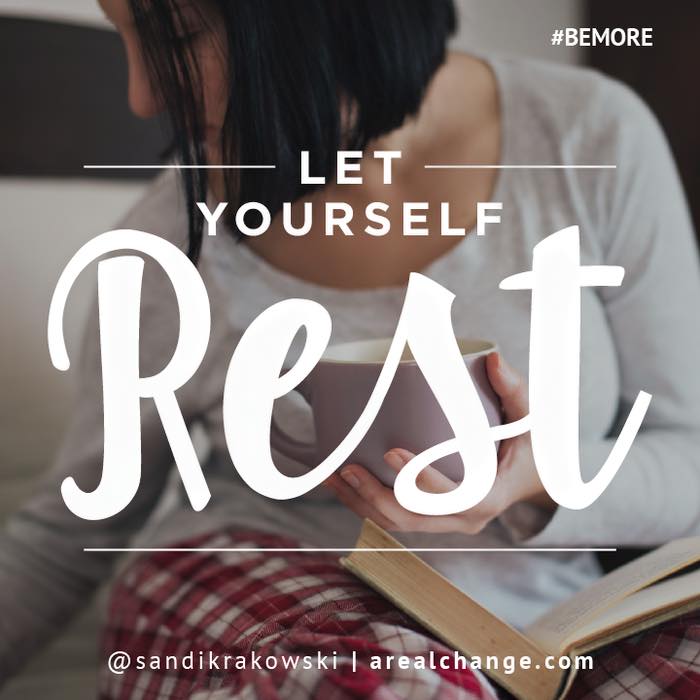
Not just sitting down for a few minutes between chores but curling up with a book and glass of tea and not moving all day.

rest renew and reconnect

At least that’s my plan.

We’ll see how it goes.

I really need to rest.

I hope I can.

we all need a break ordained sabbath

Sometimes Sleep Just Isn’t Enough

Sometimes, no matter how hard I try to “keep my chin up” or “remind myself of redemption”, my soul gets weary.

I’ve recently come off of several months of activity along with emotionally charged interactions and I. am. worn. out.

There’s not really a good or easy way to describe this kind of bone-deep tiredness to someone who has not walked the path we’ve walked so I usually settle for, “I’m tired”. That’s when they typically suggest I get more rest or take a nap.

But I know that won’t really help.

❤ Melanie

When I say to someone, “I’m so very tired!” they nearly always suggest a nap.  Trust me, if a nap would erase this soul weariness, I’d take one every single day.

But it doesn’t, so I don’t.

Instead I go outside and breathe some fresh air, make a cup of hot tea and sit down with a good book, or just sit down and watch the Christmas lights or a candle with my cat in my lap.

Read the rest here: When Sleep Won’t Fix It

Lenten Reflections 2024: Fleeing From Willful Sin

I’ll just be completely honest here-there are some sins I don’t have much trouble avoiding. I’m not tempted to shoplift or physically harm others.

However, like all of us I have some pet sins I not only don’t avoid but I actually feed from time to time.

And like most folks, I justify my sin as “small” compared to the “big” sins of headline worthy wars or crimes or dastardly actions by those in power over those beneath them.

Read the rest here: Lenten Reflections: Fleeing From Willful Sin, Resting In God’s Love

Soul Weary-Sometimes Sleep Isn’t Enough

Sometimes, no matter how hard I try to “keep my chin up” or “remind myself of redemption”, my soul gets weary.

I’ve recently come off of several months of activity along with emotionally charged interactions and I. am. worn. out.

There’s not really a good or easy way to describe this kind of bone-deep tiredness to someone who has not walked the path we’ve walked so I usually settle for, “I’m tired”. That’s when they typically suggest I get more rest or take a nap.

But I know that won’t really help.

❤ Melanie

When I say to someone, “I’m so very tired!” they nearly always suggest a nap.  Trust me, if a nap would erase this soul weariness, I’d take one every single day.

But it doesn’t, so I don’t.

Instead I go outside and breathe some fresh air, make a cup of hot tea and sit down with a good book, or just sit down and watch the Christmas lights or a candle with my cat in my lap.

Read the rest here: When Sleep Won’t Fix It

Thanksgiving 2023: Post Holiday Blues

It’s a paradox really-that grieving hearts can be more anxious and more sorrowful BEFORE and AFTER a milestone day, birthday or holiday than on the day itself.

That’s not true for everyone, but it’s a frequent comment in our closed bereaved parent groups.

Read the rest here: Post Holiday Blues: When The Grief Comes Crashing Down

Self Care Isn’t Selfish

Every family is different. Every loss experience is unique.

Some of us have busy households when one of our children leave for Heaven and some of us are long past full tables and messy teen bedrooms.

Wherever we find ourselves when the unthinkable overtakes us, it’s always hard to continue doing daily tasks bearing a burden of sorrow. So often we settle into a pattern of striving and straining through the deep mire of grief without making time for rest.

I know I did.

Goodness! I still experience seasons when grief waves steal what little breath is left from a breathless and busy life and I can barely function.

It’s then I remind my heart that self care isn’t selfish. It’s necessary.

Absolutely, positively necessary.

❤

Looking back I’m shocked at how much I allowed societal norms and expectations to determine how I grieved Dominic’s death.

I withheld grace from myself that I would have gladly and freely given to another heart who just buried a child. Somehow I thought I had to soldier on in spite of the unbearable sorrow, pain, horror and worldview shattering loss I was enduring.

And the further I got from the date of his accident, the more I expected from myself.

Read the rest here: Self Care in Grief

Season of Unfeeling. Sometimes Grief =Numb.

I’ve thought long and hard about that season of “un-feeling”.

Why did my heart shut down? Why the long silence when no emotion pierced my soul?

I think it was necessary.

I think a body and mind and heart can’t operate for too long at warp speed. I think that just like fainting is a response to the brain needing oxygen, numbness is a response to the soul’s need for respite and time to heal.

So if you are in the season of numb, you’re neither crazy nor alone.

Read the rest here: Why Don’t I Feel A Thing? Sometimes Grief = Numb.

Yay For Naps!

Historically many of the most prolific and influential people (think Winston Churchill) have been proponents of mid-day naps.

But for a Type-A personality whose life experience has amplified internal voices that scream, “Make every moment count!” naps feel like being lazy and wasting time.

I have resisted that after-lunch malaise for most of my life because I was convinced giving up an hour or more to sleeping would rob me of vital productivity and mean my list of “things to do” would languish, undone.

Recently (very, very recently-like only a week) I’ve tried to overcome my personal reluctance to give in to my body’s need to rest and have (gasp!!!) been going upstairs, lying down and taking a nap.

I still wake rather confused, disoriented and feeling like I’ve *wasted* whatever time was spent sleeping. But I have noticed that, contrary to what I anticipated, my night time rest has become more effective and restorative.

Like many of my fellow bereaved parents, my health has deteriorated following my son’s death. I was already diagnosed with Rheumatoid Arthritis and have been through five different treatment regimens trying to address its insidious, progressive nature in the past seven years. I’m trying to come to terms with what amounts to premature aging and the limitations that represents but it’s hard.

I’ve also (ridiculous, I know!) still not adjusted to the FACT that I don’t have as many daily responsibilities as I once had as mama to a brood of four whom I homeschooled and chauffeured around to various extra-curricular activities.

It’s just me and my retired husband.

We can eat sandwiches or skip a meal altogether.

And if something’s not done today, it can most likely be done tomorrow (or next week) with little impact on the outcome.

I’m trying to embrace a lifestyle where there is literally NO ONE keeping score.

It’s a different kind of challenge.

But one I’m working to meet.

Yay! for naps.

The rest and the spell

❤