I’m Listening

I was reminded recently by another bereaved mother that my child loss experience is not universal.

I appreciate her honesty and bravery.

And I would just like to take a moment to say:

“I hear you.  I see you.  I acknowledge that you have a unique perspective that I do not share by experience.”

It’s hard to put myself in someone else’s shoes when I’ve never had to wear them myself.

We are all limited in many ways by the trials, temptations, joys and triumphs we have known in our lives.

But I don’t want to sit satisfied in the silo of my own experience.  

I want to enlarge my understanding of what others are going through, how they are coping, how they are hurting.

So I begin by sharing MY story because it’s the only one I know from the inside.

But it is not the only one I want to know.

Tell me your story.

I promise to listen.

We buy tickets to movies, purchase books and cruise the Internet gobbling up other people’s stories.  Yet we often make it difficult for those we know to tell us theirs.

We jockey for attention at gatherings, or worse, give all our attention to electronic devices. We think we KNOW other people’s stories so we don’t want to bore ourselves with listening again.

The truth is, we know less than we think about the folks we rub shoulders with every day.


Read more here:  Tell Me Your Story


Displaying Our Scars

What if, instead of hiding my pain, I allowed others to see it and offer it as a testimony of the power and grace of God in my life?

What if, instead of pretending that “everything is alright”, I admit that it’s not, but that God is still on the throne?

What if, instead of creating a gulf between myself and others by walling off parts of my life that I deem too messy, I throw open the door and invite folks inside-mess and all?

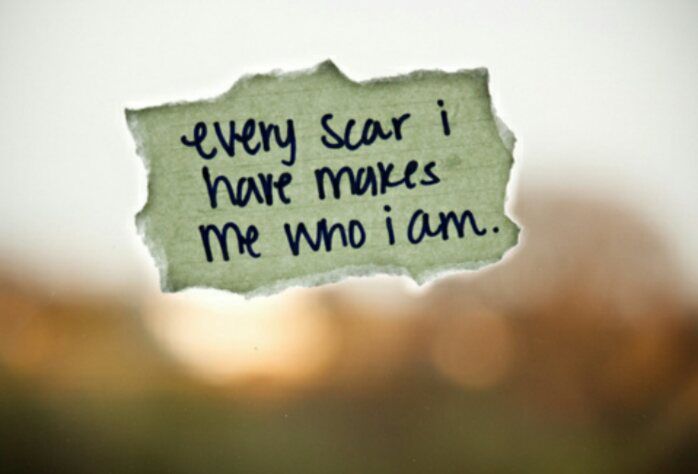
My scars make me who I am.  My struggles are part of who I am becoming.  And my messy life is the only one I’m likely to have this side of Heaven.

As I’ve written before:

If the people I meet think that I have it all together all the time, they are going to be much less likely to admit that they don’t.  And let’s be real, none of us have it all together.

We all have at least one place in our lives that hurts and that needs healing.

Everyone has scars.

Authenticity is the key to opening doors and creating communities where one person can reach out to another and where genuine healing can begin.

You can read more here:  Dropping the Mask


Yes, You are Perfectly Normal

Do you want to know one of the most repeated questions in grief support groups?  

It is, “Am I normal?”

In the midst of great loss,

in the middle of reconstructing a life that includes a giant hole,

while struggling to place one foot in front of the other,

parents who have buried a child are often worried about whether what they feel and how they act is “normal”.

Grieving a child is a complex and life-long process as I wrote about here:

Am I Normal?


The Authority of Compassion

I don’t like pain.

I don’t enjoy suffering.  

But deep pain and suffering have left a lasting impression on my soul.  Experiencing the loss of a child has enlarged my heart and sharpened my senses to the pain and suffering around me.

Choosing transparency in pain is hard and vulnerability is frightening.

But when I let others in, they see that I am just like them. I struggle, I cry out for mercy, I need God’s grace, mercy and strength to carry on.

And that lends authority to my invitation to meet Jesus.

It changes a “sales pitch” into a genuine message backed up by the evidence of His compassion and care in my own broken life.

Even more, they know that I KNOW-I understand pain, I understand struggle and I understand desperation.

Jesus came, in part, to embody the heart of God to the world.  He came to give abundant proof that God loves us.  He walked gently among the wounded and healed the sick and hurting.

Jesus has all authority because He was obedient in suffering.  His love for us kept Him bound to the cross.  His Father’s love raised Him from the dead.

When I choose compassion, when I choose to suffer alongside the suffering, I am most like Him.

And my living example of His eternal one is a powerful testimony of His work in my life and a grace-filled invitation for others to receive forgiveness, grace and mercy in their own time of need.

Seeing that we have a great High Priest who has entered the inmost Heaven, Jesus the Son of God, let us hold firmly to our faith. For we have no superhuman High Priest to whom our weaknesses are unintelligible—he himself has shared fully in all our experience of temptation, except that he never sinned.

Let us therefore approach the throne of grace with fullest confidence, that we may receive mercy for our failures and grace to help in the hour of need.

Hebrews 4:14-16


Being a Friend: Loving Well Series

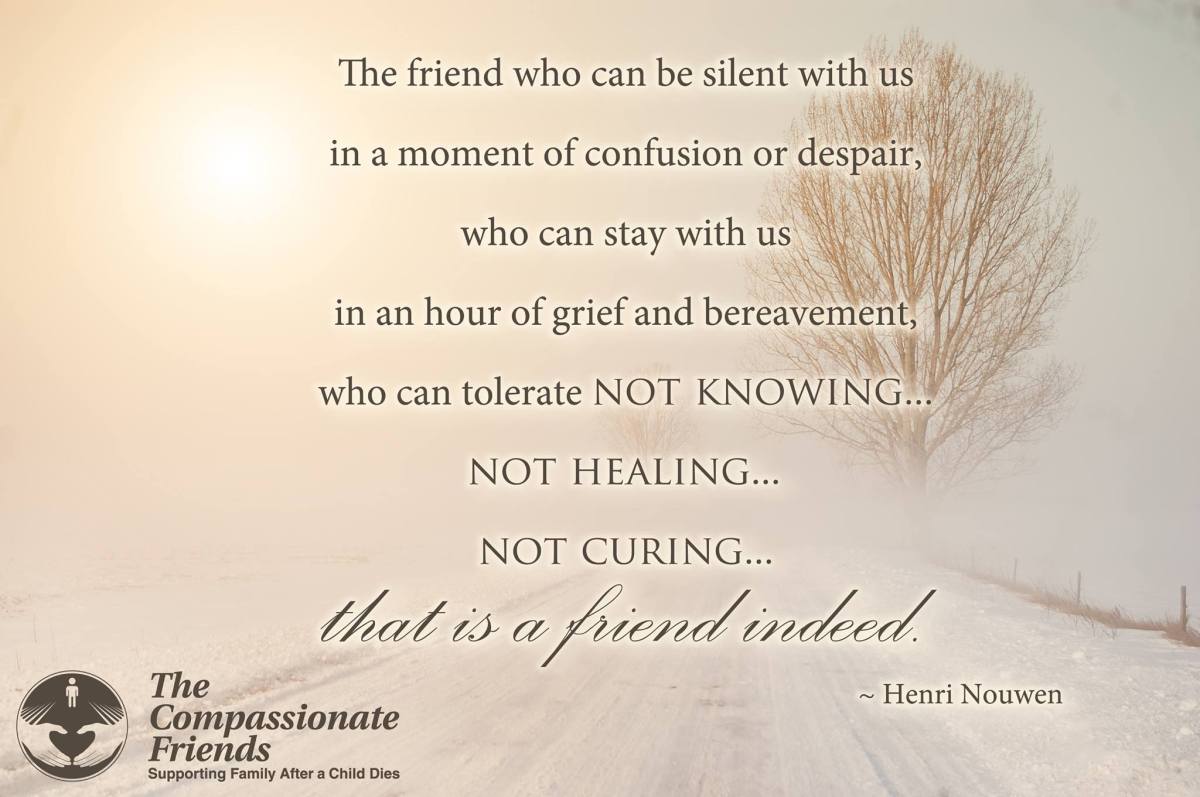
Oh, the blessing of true friendship when your world is full of pain!  There is no substitute for loving companionship when all you see is darkness.

There are those who are brave and reach out to me and offer words or hugs or prayers and their efforts give me strength and comfort.

Read the rest here:  Loving Well: Being a Friend

How the Church Can Serve Grieving Parents and Other Hurting People: Loving Well Series

When I first shared this post,  I received a lot of feedback from readers and much of it went something like this:  “I wish my pastor would read this.” or “I’d love to share this on my own FaceBook page but I’m afraid someone might be offended.”

I didn’t write this post to point fingers but I did write it to drag into the light a hidden place of pain and division within churches.  

There are so many hurting people in our pews and we cannot continue to ignore our responsibility to minister to them.  So to you who are timid, I say, “Be brave!  Share! There is no shame in sharing the truth in love!”

“I am a shepherd.  My goats and sheep depend on me for food, for guidance and for their security.

And every day I am reminded that a shepherd’s heart is revealed by the way he or she cares for the weakest and most vulnerable of the flock.”

Read the rest here:  Loving Well: How the Church Can Serve Grieving Parents and Other Hurting People

Understanding Acceptance: Loving Well Series

There is a lot of misconception around the notion of “acceptance” in the grief community. Sometimes among the very people counseling those walking this valley of loss.

It’s not a once-and-done realization or commitment or decision.  It’s a process…

Sometimes those that walk alongside the bereaved are biding time, waiting for that “final” stage of grief: Acceptance.

And some therapists, counselors and armchair psychiatrists are certain that if the grieving mother can simply accept the death of her child, she can move on–that she can get back to a more “normal’ life.

But this notion is as ridiculous as imagining that welcoming a new baby into a household doesn’t change everything.

Read the rest here:  Loving well: Understanding “Acceptance”

Understanding the Grieving Heart: Loving Well Series

I don’t want pity.

I don’t want people passing me in the street or in the sanctuary secretly shaking their head and thinking, “poor woman”.

I would like to be understood-at least as well as anyone standing on the outside of child loss can understand…

A bereaved parent’s grief doesn’t fit an easy-to-understand narrative. And it flies in the face of the American “pull yourself up by your bootstraps” mentality.

Read the rest here:  Loving Well: Understanding the Grieving Heart

Transitioning from “Good-bye” to Grief: Loving Well Series

I wrote this post in an effort to help the nonbereaved understand that funerals and memorials and other outward symbols of “good-bye” are only the BEGINNING to our sense of loss and sorrow.  And that while everyone else walks away and goes back to the life they had the day before, we stand on the threshold to a different life we are unprepared for, know nothing about and do not want.

“A funeral or memorial service seems like a final chapter.  We close the coffin, close the doors and everyone goes home.

But for bereaved parents and their surviving children, it’s not an end, it is a beginning.

Much like a wedding or birth serves as the threshold to a new way of life, a new commitment, a new understanding of who you are, burying a child does the same.

I walked away from the cemetary overwhelmed by the finality of death–not in a theological sense–I believe firmly that my son lives with Jesus–but with the undeniable fact that he is no longer available to me on this earth.”

Read more: Loving Well: Transitioning From “Good-bye” to Grief

Extravagant Love-Tales of Friendship and Encouragement After Losing a Child: Loving Well Series

I asked other bereaved parents to share from their experience the things that were helpful and not so helpful to them after losing a child.  I was amazed by the answers!

What follows is a combination of their words and mine–blended together to help others in this journey.

If you are a bereaved parent, and have wanted to gently remind amily and friends what is helpful and what isn’t-sharing a post to Facebook can be a non-threatening way to let them know using someone else’s voice.

“When I asked other bereaved parents to share the things people did that blessed them in the wake of losing a child, I didn’t expect so many stories of extravagant love–of acts surpassing anything I could have thought of or imagined.”

Read the rest:  Extravagant Love: Tales of Friendship and Encouragement After Losing a Child