Grief Work 2025: Healthy Boundaries in Grief

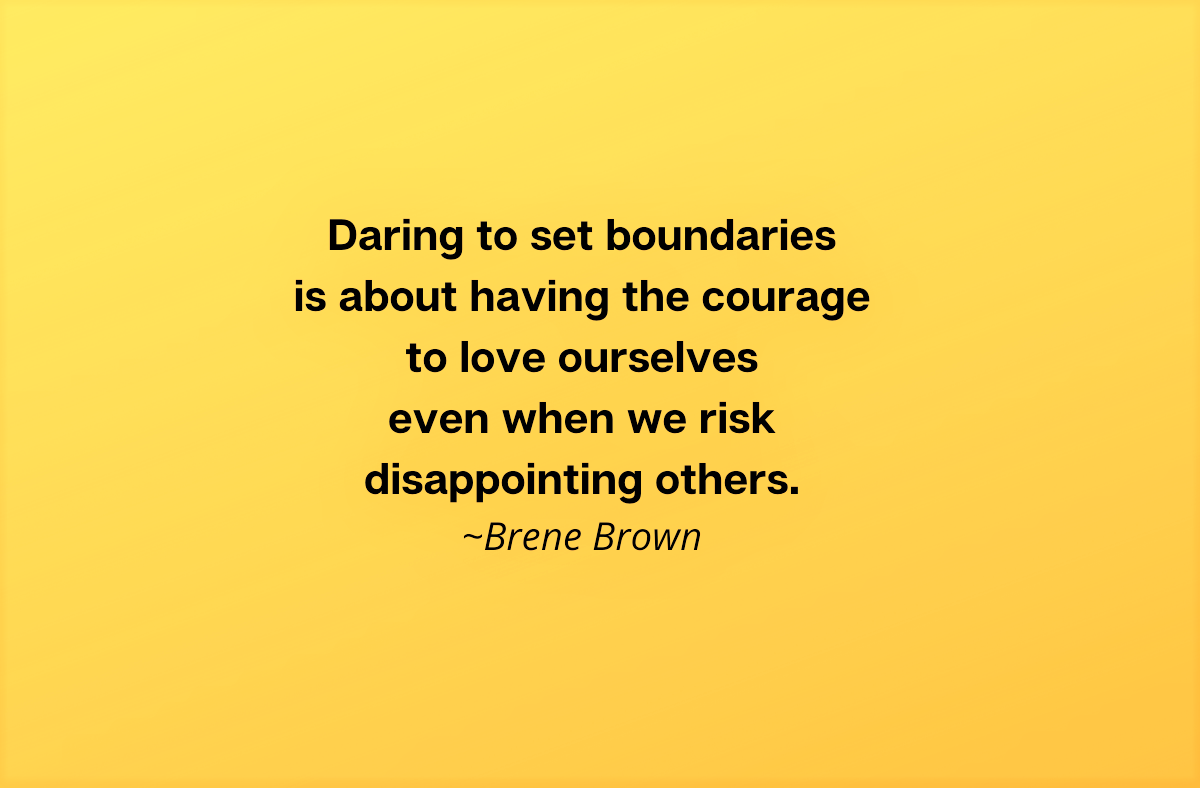
As a people-pleasing first born who hates conflict, giving in has always been  easy for me. It’s only later that I wish I hadn’t.  

So for most of my life, setting personal boundaries has been challenging.

But in the aftermath of child loss, healthy boundaries are no longer optionalthey are necessary for survival.  

So what are healthy boundaries?

  • Saying “no” without guilt
  • Asking for what you want or need
  • Taking care of yourself
  • Saying “yes” because you want to, not out of obligation or to please others
  • Behaving according to your own values and beliefs
  • Feeling safe to express difficult emotions and to have disagreements
  • Feeling supported to pursue your  own goals
  • Being treated as an equal
  • Taking responsibilty for your own emotions
  • Not feeling responsible for someone else’s emotions
  • Being in tune with your own feelings
  • Knowing who you are, what you believe, what you like

~sharonmartincounseling.com

What does this look like in real life?

  • Not being “guilted” into engaging in social/family/church activities before I am ready
  • Letting family and friends know when I need encouragement, companionship, solitude, help or space
  • Keeping or making doctor’s appointments and staying on top of my physical well-being by sleeping/eating/taking medication/exercising as best I can
  • Participating in what is helpful and life-giving to me when I want to and not because I feel like I have to.  
  • Giving myself space and time to figure out how losing a child impacts my beliefs, my sense of self, my understanding of the world-being honest about questions and about struggles.  If I have to take a break from church for awhile, that’s OK.
  • Expecting support from friends and family to do the work grief requires.  If some in my circle can’t do this, then I’ll put those relationships on hold until I feel stronger. I am not required to live up to other people’s standards.
  • Embracing and acknowledging my own emotions.  Not expecting someone else to “make me better”.  No one can take away the sorrow and pain of child loss.  It is excruciating.  There is no way through but THROUGH.  Face the feelings.  Get help from a counselor if necessary.  Join a support group.  Find safe friends.  But I will not be able to distract myself or ignore the heartache forever.
  • Understand that though I share the loss with others-a spouse, my surviving children, my child’s grandparents, etc-I am not responsible for how they are dealing with loss. I may offer help, may arrange counseling (especially for children), should strive toward an environment where feelings can be expressed-but I can’t work through their loss experience for them.  
  • Pay attention to my own feelings and what triggers grief attacks.  When I can, plan around the triggers.  When I can’t, accept the feelings and go with them.  If I need to leave a venue, leave.

What it doesn’t look like:  

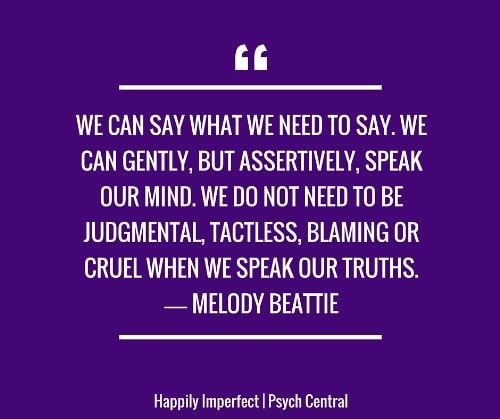
Healthy personal boundaries are not an excuse for bad behavior.  They are not to be used as blunt instruments to bully others into submission or to advance my own agenda against theirs.

My boundaries don’t give me the right to be hateful, hurtful or unkind.  They are not permission to pitch fits, make public displays or belittle others.  
say-what-we-need-to-say-gently

And they are absolutely NOT a reason to plaster hate speech across social media.  If I have a personal relationship issue then it needs to be handled personally and privately not publicly. Vague Facebook statuses that suggest I’ve been offended by half my friend list are off limits.

Establishing healthy personal boundaries is work.  

Already exhausted from grief, the last thing I want is more work.

But if I don’t defend the space and time I need to do the work grief requires I cannot make progress toward healing.

If I don’t limit my interaction with those who are unhelpful or downright hurtful, I will be dragged down further in the mire of sorrow and sadness.

If I don’t purposely pursue physical, emotional and psychological healthgrief will kill me.

Christmas 2024: How Transparent Should I Be When Sharing?

For the most part, I’m pretty transparent.  Because secrets don’t serve anyone well.  

If I pretend to be stronger than I really am, I hide the truth that it is Christ in me that gives me strength.

If I don’t admit that certain words or actions hurt my heart, I enable thoughtless behavior.

If I only parrot “Sunday School” answers when someone asks about my faith in relation to my loss, then I silence other hearts wrestling with questions and pain in light of God’s sovereignty and love.

If I hide my tears, my pain, the missing then I minimize this great loss, And I will not make losing Dominic small.

Read the rest here: How Transparent Should I Be When Sharing?

Grief Journey: It’s Healing to Give Sorrow Words

A couple summers ago, I participated in an online discussion group with others who read ATLAS OF THE HEART* by Brene Brown.

It was a helpful exercise to map, name and explore emotions so that I can create more meaningful connections to myself and others.

I think I’ve been doing some version of this my whole life. Language matters. Being able to give any emotion-especially the deep pain and sorrow of child loss-matters.

Language is our portal to meaning-making, connection, healing, learning, and self-awareness….

Language shows us that naming an experience doesn’t give the experience more power, it gives us the power of understanding and meaning.Brene Brown, ATLAS OF THE HEART, xxi

The morning Dominic ran ahead to Heaven, after I made the awful phone calls I reached for my journal.  

I knew if I didn’t start spilling the grief onto paper my heart would explode with sorrow.  

Since I learned to hold a pencil I’ve been writing. 

It’s how I sort my thoughts, figure out my feelings and express my heart. 

Read the rest here: Give Sorrow Words.

*Warning: ATLAS OF THE HEART contains language that may offend some folks. I just don’t want anyone to be surprised. ❤

Grief Work 2024: Healthy Boundaries in Grief

As a people-pleasing first born who hates conflict, giving in has always been  easy for me. It’s only later that I wish I hadn’t.  

So for most of my life, setting personal boundaries has been challenging.

But in the aftermath of child loss, healthy boundaries are no longer optionalthey are necessary for survival.  

So what are healthy boundaries?

Read the rest here: Healthy Boundaries in Grief

Christmas 2023: How Transparent Should I Be When Sharing?

For the most part, I’m pretty transparent.  Because secrets don’t serve anyone well.  

If I pretend to be stronger than I really am, I hide the truth that it is Christ in me that gives me strength.

If I don’t admit that certain words or actions hurt my heart, I enable thoughtless behavior.

If I only parrot “Sunday School” answers when someone asks about my faith in relation to my loss, then I silence other hearts wrestling with questions and pain in light of God’s sovereignty and love.

If I hide my tears, my pain, the missing then I minimize this great loss, And I will not make losing Dominic small.

Read the rest here: How Transparent Should I Be When Sharing?

It’s SO Important To Speak Truth

I’m here to tell you:  don’t drown your important relationships in unsaid words, unshared feelings, unacknowledged wounds.  

All that does is guarantee distance grows between your hearts.  

If you let the distance become too vast, or the pile of unsaid truth get too high, you might just find you can’t reach that far or that high to reconnect.

It takes a bit of brave to say what’s important and uncomfortable. 

Read the rest here: Speaking Truth

It’s Healing to Give Sorrow Words

Last summer, I participated in an online discussion group with others who read ATLAS OF THE HEART* by Brene Brown.

It was a helpful exercise to map, name and explore emotions so that I can create more meaningful connections to myself and others.

I think I’ve been doing some version of this my whole life. Language matters. Being able to give any emotion-especially the deep pain and sorrow of child loss-matters.

Language is our portal to meaning-making, connection, healing, learning, and self-awareness….

Language shows us that naming an experience doesn’t give the experience more power, it gives us the power of understanding and meaning.

Brene Brown, ATLAS OF THE HEART, xxi

The morning Dominic ran ahead to Heaven, after I made the awful phone calls I reached for my journal.  

I knew if I didn’t start spilling the grief onto paper my heart would explode with sorrow.  

Since I learned to hold a pencil I’ve been writing. 

It’s how I sort my thoughts, figure out my feelings and express my heart. 

Read the rest here: Give Sorrow Words.

*Warning: ATLAS OF THE HEART contains language that may offend some folks. I just don’t want anyone to be surprised. ❤

Dismantling The Past

I’ve spent the last two days rearranging our family room.

Since my husband has retired, we no longer use it as we once did and I realized a few weeks ago that it was ridiculous to have it set up the way it’s been for decades when our needs have drastically changed.

So we decided to tackle the job of sorting/moving/dismantling books, videos (yes, we still have a few!), DVDs, CDs and random other bits and pieces of a life long lived in the same place.

For those of you who have moved often you may have been spared the detritus of papers stuck in cracks and crevices on bookcases with the promise to yourself you’ll “put them where they go when I get a chance”.

Me, not so lucky.

I’ve found treasures-scribbles of younger days from my now (very!) grown children-and sad reminders of projects begun and left hanging because we got too busy to see them through.

The one thing I celebrated in taking apart, digging through and tearing down was this: totally destroying and trashing an old, old, old television stand from back in the day when TVs were far too heavy and far too thick to mount on walls or above fireplaces.

I’d always hated that thing.

We bought it as young marrieds when our budget was tight and floor space was precious in our first small home. It did the job but it was just not my style. And at the time, I wasn’t bold enough or strong enough to speak up and advocate for a different choice.

Oh, there are wonderful memories of my two oldest kids putting on shows dressed up in fun costumes and singing along to our cassette tape playlist. We have more than one photo of that delightful era.

But there were years and years of putting up with something that no longer served our needs (because it was here, bought and paid for, and convenient) instead of ditching it and buying something that would both serve and bring delight.

Closest picture I could find to what we had.

So other than a long march down memory lane, what does this have to do with child loss?

I’ve learned since Dom left us that I’ll no longer stay silent when a habit, a situation, a relationship or a piece of furniture doesn’t serve my current mental, physical, psychological, emotional or spiritual circumstances.

I won’t wait for someone else to notice I’m upset or sad or happy or delighted.

I’ve learned to speak up for myself and ask for things I need. I’m learning (haven’t made the progress I’d like!) to set boundaries and tell others that they may come thus far and no closer. I’m trying harder to rid my life of what is unhelpful and unhealthy.

I’m definitely a work in progress.

And most of the work won’t have such a satisfying and concise conclusion as when I cheerfully watch the pieces of that old TV stand go up in smoke.

But I’m committed to continue dismantling the parts of my past that no longer serve my present.

I Need to Give Sorrow Words

I’m participating in an online discussion group with others who are reading ATLAS OF THE HEART* by Brene Brown.

It’s a helpful exercise to map, name and explore emotions so that I can create more meaningful connections to myself and others.

I think I’ve been doing some version of this my whole life. Language matters. Being able to give any emotion-especially the deep pain and sorrow of child loss-matters.

Language is our portal to meaning-making, connection, healing, learning, and self-awareness….

Language shows us that naming an experience doesn’t give the experience more power, it gives us the power of understanding and meaning.

Brene Brown, ATLAS OF THE HEART, xxi

The morning Dominic ran ahead to Heaven, after I made the awful phone calls I reached for my journal.  

I knew if I didn’t start spilling the grief onto paper my heart would explode with sorrow.  

Since I learned to hold a pencil I’ve been writing. 

It’s how I sort my thoughts, figure out my feelings and express my heart. 

Read the rest here: Give Sorrow Words.

*Warning: ATLAS OF THE HEART contains language that may offend some folks. I just don’t want anyone to be surprised. ❤

The Necessity of Setting Healthy Boundaries in Grief

As a people-pleasing first born who hates conflict, giving in has always been  easy for me. It’s only later that I wish I hadn’t.  

So for most of my life, setting personal boundaries has been challenging.

But in the aftermath of child loss, healthy boundaries are no longer optionalthey are necessary for survival.  

So what are healthy boundaries?

Read the rest here: Healthy Boundaries in Grief