Forgive Us Our Trespasses, As We Forgive Those Who Trespass Against Us

There are lots of opportunities for offense surrounding the death of a child.

Once your heart is broken open wide with great sorrow, there’s no defense against the bumps and bruises that are a natural product of human relationship and interaction.

  • Friends and family that didn’t show up.
  • Friends and family that showed up but said or did the wrong thing.
  • Friends and family that abandoned me as soon as the casket closed.
  • People that make me feel guilty for grieving or question my sanity or my “progress”.

But I’m learning to let go of offense.

Not only because it is too heavy to carry in addition to my grief, but because the Lord has commanded it.

I grew up reciting what’s commonly called, “The Lord’s Prayer” without much thought to the individual phrases or their meaning. It wasn’t until adulthood that I read it in context and continued on to the rest of the chapter.

What I found there was chilling.  

These are some of the hard words of Christ that most lay persons and many theologians prefer to gloss over.

“For if you forgive other people their failures, your Heavenly Father will also forgive you. But if you will not forgive other people, neither will your Heavenly Father forgive you your failures.”

~Jesus (Matthew 6:14-15 PHILLIPS)

WOW!  The plain reading of this text tells me that if I refuse to forgive others, I place myself outside the forgiveness of my Father.

It makes sense though-if my sins were borne by Christ on the cross, then so were yours.  

If His grace covers me, it covers you.  

If I want to be seen through the eyes of mercy, then I must be willing to look through those same eyes at my fellow man.

At first this feels like bondage instead of freedom.  

But the truth is, forgiveness is liberating.  

It sets me free to operate in the fullness of who I am in Christ.  It forces me to trust Him with my pain, with my sorrows, with my offenses and with balancing the scales of justice.

forgiveness-quote-charles-stanley

Forgiveness opens the path to relationship and community.  It testifies to the mercy and grace of God.  

It shines like a beacon of light in a dark world.  

It is the power of Christ in me.

To forgive another person from the heart is an act of liberation. We set that person free from the negative bonds that exist between us. We say, “I no longer hold your offense against you” But there is more. We also free ourselves from the burden of being the “offended one.” As long as we do not forgive those who have wounded us, we carry them with us or, worse, pull them as a heavy load. The great temptation is to cling in anger to our enemies and then define ourselves as being offended and wounded by them. Forgiveness, therefore, liberates not only the other but also ourselves. It is the way to the freedom of the children of God.

~Henri Nouwen

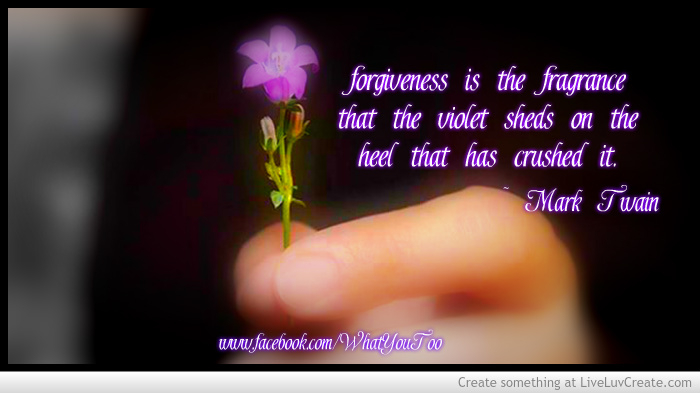
forgiveness_is_the_fragrance_that_the_violet_sheds_on_the_heel_that_has_crushed_it-385646

Bridle your Tongue

In this journey of loss I have been blessed and wounded by words.

I have been encouraged and disheartened by stray comments.  I’ve been thrown a lifeline and pushed under the raging waves of grief by friends, family and acquaintances who often had no clue they were doing either.

Our words matter. 

Our tongues have the power of life and death.

Whoever first wrote “Sticks and stones can break my bones, but words can never hurt me” was either in denial or lived a very sheltered life.

Please, for the love of love, think before you speak.

Choose to listen before you lob a response bomb across whatever divides your heart from another. Count to ten if you have to, take a deep breath, read and re-read your words before you press “post”.

And, if all else fails remember:  if you don’t have something nice to say, maybe it’s better not to say anything at all.

The one you think is invincible may be on the edge of crumbling.  The one you think is strong may be hanging by a thread.

We all make mistakes in all kinds of ways, but the man who can claim that he never says the wrong thing can consider himself perfect, for if he can control his tongue he can control every other part of his personality! Men control the movements of a large animal like the horse with a tiny bit placed in its mouth. Ships too, for all their size and the momentum they have with a strong wind behind them, are controlled by a very small rudder according to the course chosen by the helmsman. The human tongue is physically small, but what tremendous effects it can boast of! A whole forest can be set ablaze by a tiny spark of fire, and the tongue is as dangerous as any fire, with vast potentialities for evil. It can poison the whole body, it can make the whole of life a blazing hell.

James 2-6 PHILLIPS

Every person on this planet bears the image of the God who made him or her.  You can’t disrespect the person without also disrespecting the Lord.

tongue-has-no-bones

Speak Your Peace-You May Not Get Another Chance

Just a couple of days before Dominic left us, I and another one of my kids had a fuss.

He was frustrated and stressed and I was vulnerable and stressed and a few stray words ended up hurting my feelings.

I said, “I can’t talk anymore now”,  and hung up the phone in tears.

He was sorry and I was sorry and we immediately exchanged texts and let the feelings cool so we could resume our conversation the next day.

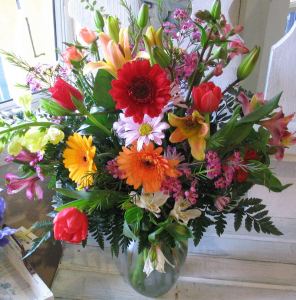
He sent me flowers.

flower-arrangement

They were still beautiful when he came home to bury his brother.

Our family observes a rule:  Don’t part in the heat of anger.

We may not be over our pain and the reason for the dispute may be legitimate, but NOTHING trumps relationship.

I am so very thankful for that rule.  Because one burden I don’t have to carry is that I might have left Dominic wondering if everything was OK between us.

It was.

So I say to you:

  • Speak your peace.
  • Say you’re sorry.
  • Move TOWARD the people you love and not away from them.

I pray every time I hear a siren that the person they are going to rescue will be alright.  I pray that the family that loves that person will get another chance.  I pray that the call that’s made is, “Come to the hospital to see me” and not “Come to the morgue”.

But you never know-you have NO guarantee that the last time you see or speak to someone you care about won’t be the LAST time.

And then you cannot undo the horror of regret that they might have left this world wondering if you loved them.

“I love you.”

“I’m sorry.”

“I don’t want to stay angry with you.  Please forgive me.”

Say it loud, say it often, say it NOW.


Practical Ideas for Dealing with the Holidays after Child Loss

This is the fourth in a series on making plans for the holidays after loss.

Yes, it’s early and no, you might not want to think about them-it’s really hard to imagine Thanksgiving and Christmas without the child you love.  BUT, the days will come whether we want them to or not. Here’s some help to navigate them.

If you missed the first three posts you can find them here:

Grief and Holiday Plans: Working Out the Details

Grief, Holidays and Hard Conversations

Grief and Holidays:What the Bereaved Need From Friends and Family.

It cannot be overstated:  holidays are extremely hard after loss.  Every family gathering highlights the hole where my son SHOULD be, but ISN’T.

There is no “right way” or “wrong way” to handle the holidays after losing a child.

For many, there is only survival-especially the very first year.

These days also stir great internal conflict:  I want to enjoy and celebrate my living children and my family still here while missing my son that isn’t. Emotions run high and are, oh so difficult to manage.

So I’m including some ideas from other bereaved parents on how they’ve handled the holidays.  Many of these suggestions could be adapted for any “special” day of the year.

Not all will appeal to everyone nor will they be appropriate for every family.  But they are a place to start.

If you have decided to make a Holiday Journal,  consider printing these ideas to put inside or copying out the ones that might be helpful for you.

Skip it.  

  • Sounds drastic and it is.  But for some families (especially if there are no small children involved) it is absolutely possible (and sometimes healing) to ignore all traditions and trappings associated with Thanksgiving and Christmas.
  • You might choose to serve others on these days by volunteering with a local organization offering meals to the homeless or disadvantaged in your community.
  • Take a holiday meal to hospital workers, police officers or firemen in your area.  You can do it anonymously or in the name of your child.

Consider traveling for the holidays.

  • On the first Thanksgiving after my son left us, we shared the weekend with our newly married son and his wife in another state.  It was the first time in my life I hadn’t spent the holiday with my parents.  It was still very hard, but helpful in a way.
  • Other families have chosen to rent a cabin or condo and have the same people involved but experience the season in another location.  Most try to choose a place with a natural focus for activity that isn’t all about the holiday-like skiing in the mountains or near a lake or beach.

Change how you do meals.

  • If your family traditions always include the same foods in the same house, you might want to eat the holiday meal in a restaurant instead.
  • You could swap up the timing of a meal-evening instead of noon or vice-versa.
  • Change up the guest list-include a few close friends along with family members (friends that understand your grief).  Sometimes it helps to have others not so affected by the loss in the mix.
  • If you have been the host but don’t feel like you can do it this year-definitely consider passing that to someone else.  And don’t feel guilty about it.
  • Include the missing family members at the table in some way. One bereaved mom wrote:  “My niece includes my  son and mom at events hosted in her home.  She sets a chair aside and places a photo in the seat and a commemorative bow on the chair back.”
  • Don’t make certain foods. I make giant plates of cookies but have not made shortbread cookies since my son left us.  It was his favorite and one of the few things that tempted him from his strict weight-lifting diet
  • Make your child’s favorites and enjoy eating them and sharing memories around the table.

Let others do the planning/cooking/communicating.

  • Explain to your family that you aren’t up to being the one to plan this year’s holidays.  Let someone else do it.  Participate if and when you can.  
  • Be kind, but stand your ground.

Make new traditions. 

  • If you go around the table at Thanksgiving saying, “I’m thankful for…“-it might not be something you can do this year.  That’s OK.
  • Light a candle for the missing child.  You might want to have those present share a favorite memory or you might simply want to have the candle create a silent presence.
  • Some families can’t bring themselves to use the same Christmas tree they used before loss so they get a new and/or different one.  Some don’t want a tree at all.
  • Some families have a separate tree full of ornaments or memorabilia for their missing child and use the main tree as usual for the rest of the family.
  •  “I have a separate tree for Z. . It’s filled with ornaments that remind us of him. They range from glass ornaments with his favorite candy inside to a Thomas the tank engine ornament. Collecting more ornaments for him as I’m out shopping for others helps me during this very painful time.”
  • Some families don’t hang any stockings while others hang them all, including the missing child’s.
  • Another family asks family members and friends to write a note to their son or share a favorite memory of him.  They place them in his stocking to be opened and read on Christmas Day.
  • “We asked everyone to do a random act of kindness in memory of our daughter and our friends’ son and to email it to us. We printed out all of the emails, put them in her stocking and read them as a family on Christmas morning. It was amazing to hear all of the lives touched as a result, and it took our focus off of our loss.”
  • My husband, children (all adults) and myself didn’t want to receive gifts from extended family the first year.  We still gave them, but asked that others refrain or give a donation in our son’s name.
  • Some families buy gifts that would be appropriate for another child the same age as their missing child (or the age they would be) and give them to  another child for Christmas.

Commemorate your child:  

  • Some bereaved parents put a Christmas tree with solar powered or battery powered lights on their child’s resting place.
  • Some parents take family photos and include a large photo of their missing child or a special family memento (like a stuffed animal or symbol on a shirt) to represent that child in the pictures.
  • Some families give donations in their child’s name to organizations that purchase Christmas gifts for needy families or food for families at Thanksgiving.
  • In some communities there is a “Blue Christmas” ceremony on December 21st each year in which families gather to remember lost loved ones with music, candles and sometimes a devotional message. Some are sponsored by local chapters of The Compassionate Friends.  If there is not one in your area, your church may be willing to host one.

Keep the same traditions:

  • For some families, keeping everything the same is the most comforting choice. Especially if there are young children involved, it may be the easiest way to go.
  • But feel free to ask for help.  If you are not up to shopping for children in the family, make a list, let someone else do it and wrap the presents for you. Or use an online shopping service (many offer gift wrap).
  • Same goes for holiday outings-maybe a good family friend or an extended family member could take the children this year and document it with photos.

Whatever you choose to do or not do, know that there’s no wrong way or right way.  

Be gentle with yourself-this is a hard road.  And a long one. 

Photo credit: State Farm via Visual hunt

The Forgotten Ones: Grieving Siblings

I am always afraid that Dominic will be forgotten.  

I’m afraid that as time passes, things change and lives move forward, his place in hearts will be squeezed smaller and smaller until only a speck remains.

Not in my heart, of course.

Or in the hearts of those closest to him, but in general-he will become less relevant.

But he is not the only one who can be forgotten.  I am just as fearful that my living children will be forgotten.

Not in the same way-they are HERE.

They are participating in life and making new memories, new connections and strengthening old ones.

I’m afraid their grief will be overlooked, unacknowledged-swept under the giant rug of life and busyness that seems to cover everything unpleasant or undervalued.

If the course of a bereaved parent’s grief is marked by initial outpouring of concern, comfort and care followed by the falling away of friends, family and faithful companionship then that of a bereaved sibling is doubly so.

Surviving children often try to lessen a grieving parent’s burden by acting as if “everything is OK”.

But it’s not-it is definitely NOT.

missing them from your side

Their world has been irrevocably altered.  They have come face-to-face with mortality, with deep pain, with an understanding that bad things happen-happen to people they love-without warning and without remedy.

They are forced to rethink their family, their faith and their future without a life-long friend and companion.

Part of their history is gone.

If surviving children are young, it can be so, so easy to mistake the natural enthusiasm and excitement of youth for complete healing.  They are often busy with events, education, work and life and the grief they still feel may go unnoticed-even by themselves.

But they need safe, consistent and compassionate care while they navigate grief and the enduring impacts of sibling loss.  School counselors, grief counselors or mature and emotionally stable adult friends can be very helpful during this process.

It’s important to be alert to danger signals.  Behavioral impacts may present in many ways:

  • Anxiety (situational, tests, generalized)
  • Risk taking
  • Isolation
  • Inability to enjoy previously enjoyable activities
  • Withdrawal from family or friends
  • Depression
  • Self-harming behavior
  • Drug or alcohol abuse
  • Poor grades (may have given up or may not be able to concentrate)
  • Extreme concern for other family members and their safety

If you observe any of these changes, get help.  A grieving parent is rarely able to be the sole source of intensive counsel for a bereaved child-someone outside the grief circle may be a better choice.

Adult children-even those married and with kids of their own-are also changed forever by saying “good-bye” to a brother or sister.  Addiction, depression and physical health issues can surface in the wake of loss.  

It’s not always easy to connect the dots back to grief since life is full of stress and strain and they may need help.

My children have been blessed to have friends and loved ones who give them a safe place to go when grief overwhelms them or when other stressors on top of grief make life really hard.

If you know a bereaved sibling:

  • Reach out.
  • Be an encourager.
  • Don’t assume that because time has gone by, they are all better.
  • They may not want to talk about it and that’s OK.  But if they do, listen.  Without platitudes, without judgement-just be a safe place.
  • And if you notice something that’s just not “quite right” try to get them the help they may need to make it through this hard place.

Bereaved families are often doing the best they can, but they can’t do it alone.  

When you bless my earthly children, you bless me.  When you give them space to grieve, you give me space to breathe. When you encourage them, you encourage my heart too.

Don’t forget them.  

Please.  

Move On Already!

How long has it been?  A year, two, eighteen or twenty-five?

When. are. you. going. to. move on?  

Aren’t you over talking about their birth story, their childhood, their school years, their spouse, children, moves and career?  How many funny stories or sad recollections do I have to listen to?????

I mean, really-it’s been soooooooooo00 long since they were BORN!

Sound’s ridiculous, doesn’t it? It IS ridiculous.

We don’t expect parents to “move on” or “get over” their living children.

Why, why, why do we expect parents to move on or get over the ones they’ve had to bury?

My love for each of my children, on earth or in heaven, is life-long.  

I wrote about it here: Love: The Reason I Grieve

What Helps and What Hurts

I am committed to continue to trust Jesus and to look to the Word of God for my hope and direction in this life and in the one to come.

I speak truth to my heart through Scripture, worship songs, testimonies of others who have gone before and remaining in community with other believers.

But I’ve yet to reach the place where I can plan on most days being better days rather than hard ones.

I’m trying.

And I’m working to tease out the influences that make a difference-both the ones that help and the ones that hurt.

So here’s the list so far:

WHAT HELPS

  • Starting the day with Bible reading
  • Writing out a verse or two that speaks hope to my heart
  • Listening to worship music
  • Feeling well-less physical pain translates to an overall sense of well-being
  • Having a plan for the day-even if it is simple and created in broad strokes, knowing what I plan to do gives me a reason to get up and get going
  • Seeking companionship with other believers either via Facebook groups, telephone calls, in person get togethers or messaging.
  • Allowing myself a set time to grieve-cry, pray, lament, or whatever-then moving on with the day
  • Mixing up physical activity with rest-changing my body position often reorients my attitude.
  • Striving to get proper sleep, eating good food (not junk and not mindlessly), exercising and stretching.
  • Crying-if I need to cry I’ve found allowing the tears to fall is much better than fighting them off all day.
  • Retreating when necessary-if I find a situation is too much for me to handle, I give myself permission to retreat.  Most things can be done another day.  Sometimes just granting myself permission means I have the courage to press on and face it.
  • Planning for hard things.  If I know I’m going to have to face a hard thing, then I try to plan it.  I prepare myself by thinking through (as much as possible) various outcomes.  I’m more prepared and usually it goes better than I anticpated.
  • Not overscheduling my days/weeks-it is harder than it used to be to get going in the mornings so I take that into consideration when making appointments.  If I have a busy day on Monday, I will try to make Tuesday open and relaxed.  Having space between commitments gives me time to recoup and minimizes anxiety.
  • Doing as many things via Internet and telephone as possible-I can do needful things even if I’m having a bad day if I don’t have to get dressed and go out to do them.

WHAT HURTS

  • Neglecting my spiritual life-if I don’t read Scripture, don’t engage with other believers and refuse to acknowledge and thank God for the blessings He still bestows-I can quickly succumb to the dark whispers of the enemy of my soul.
  • Ignoring physical needs-when I don’t prioritize sleep, good nutrition, adequate exercise and appropriate pain control (for my RA) then sadness is multiplied and it is so much harder to climb out of the pit of despair.
  • Carrying unnecessary burdens-I cannot MAKE anyone understand the pain and ongoing challenge of child loss.  So when people outside my immediate grief circle question my feelings or try to make me conform to their expectations of what grief should look like and how long it should last, I have to shake it off. If it’s an important and ongoing relationship, I try to help them understand but if they choose not to or if it is a tangential relationship, I let it go.  I refuse to carry the burden of others’ expectations in addition to the burden of burying my child.
  • Being ignored-it hurts to be ignored.  It hurts when someone asks how I am yet doesn’t allow the space and time for me to answer.  It hurts when I answer and they ignore my pain or dismiss it with a story or platitude or Bible verse or just don’t say anything.
  • Being shamed-it hurts for others to shame me by implying that I am not strong in my faith or not trusting Jesus or not hoping hard enough for heaven when I admit I still struggle in grief and still miss my son.
  • Disregarding my triggers:  There are certain situations that I know will guarantee a breakdown, panic or a crying fit.  I avoid them when I can.  If I can’t-then I make a plan of escape (just in case).
  • Being “on display” for others-I am one woman doing the best I can to walk faithfully with Jesus through an unbelievably painful experience.  I am not the Author and Finisher of your faith-Jesus is.  It hurts when I feel like others are watching to see if I’ll make it, if I’ll say the “wrong” thing, if I’ll admit that I doubt.  I want the same freedom others have to grow in my faith and to make mistakes and learn from them.  I don’t want to be a “poster child” for anything.
  • Friends staying away.  I know it is hard to be my friend right now.  You never know what you might get when you call.  But if you ARE my friend, please don’t stay away.  Please reach out even when it makes you uncomfortable.  A good word at the right moment is often the difference between a very bad and very lonely day and a pretty good and generally hopeful one.
  • Hiding my sorrow-when I try to pretend I am stronger than I really am or when I try to hide my tears it takes so much energy and makes me so less capable to do the other things life requires.

These are just some of the things that help/hurt me in my journey.  I would love to have others share what helps/hurts them in theirs.  There’s strength in community.

Leave your thoughts in the COMMENTS below!


It Changes Everything

Part of the reason I share my story is to provide insight for people who haven’t lost a child into the hearts and lives of those who have.

But mainly it is to be a voice for and to encourage other parents walking this valley by letting them know they aren’t alone, their feelings and experiences are perfectly normal and that just as welcoming a child into your family is a life-altering event, saying good-bye to a child is a life-altering event. 

We do not expect a mom to “get over” the changes having a baby brings to her everyday experience, and we should not expect a  bereaved mom to “get over” the changes burying one brings either.

Want to help?  Read:  Loving the Grieving Heart

Wow! Just. Wow!

I’m always a little frightened to expose my vulnerable underbelly to the sometimes vicious wilderness of the worldwide web.

So when I clicked “send” for yesterday’s post I had immediate regrets-was it too personal? too negative? too self-focused?

I am overwhelmed by the comments both on the blog and on Facebook-comments of encouragement, understanding and hope-not condemnation or condescension.

All I can say is,  “Thank you!”

And I was reminded that isolation is a powerful weapon in the hands of the enemy of our souls.

But godly community disarms it.

So I want to make sure that everyone who reads this blog knows about two online Facebook sites that offer hope and healing through the truth of Scripture and the Good News of Jesus Christ.

Each has a public page visible to anyone on Facebook and features posts of interest to bereaved parents and those walking with them.

While We’re Waiting is a large, well established non-profit organization.  In addition to the online presence, it offers in-person support to bereaved parents through retreats and support groups.  I am very grateful to the Sullivans and Browns who founded the group after experiencing child loss-their obedience has been a blessing in my life and in the lives of many other grieving parents. 

Heartache and Hope is the name of a page I created as an additional resource, along with the blog, for those who are grieving a child.

To receive posts in your newsfeed, simply “like” the public page and benefit from the encouragement.

From each group’s public page, bereaved parents and grandparents can request admission to a closed discussion group.

The private discussion groups are just that-private. Only bereaved parents and grandparents may participate.  It’s a safe space where everyone understands and shares your pain.

As I read and was encouraged by each comment on yesterday’s post, I thought of an image many of us have seen-a defensive circle of elephants facing outward-the vulnerable calves safely tucked in the middle.

circle of elephants

A lion can prowl around the edges but knows it is already defeated.  Nothing can penetrate the powerful perimeter that protects the potential prey.

Peter warned early believers:

Most importantly, be disciplined and stay on guard. Your enemy the devil is prowling around outside like a roaring lion, just waiting and hoping for the chance to devour someone.

I Peter 5:8 VOICE

That’s what community feels like.  

I’m surrounded and protected.  

That old lion-the enemy-can roar all he wants to.  He can’t touch me.

For God did not choose us to condemn us, but that we might secure his salvation through Jesus Christ our Lord. He died for us, so that whether we are “awake” or “asleep” we share his life. So go on cheering and strengthening each other with thoughts like these, as I have no doubt you have been doing.

I Thessalonians 5:9-12 PHILLIPS


Loving the Wounded

God bless the inventor of Band Aids!

That little tacky plaster has soothed more fears and tears than almost any other invention in the world.

Skinned knee?  Put a BandAid on it.

Bee sting?  BandAid.

Tiny bump that no one can even see?  Oh, sweetie, let me give you a BandAid.

Simply acknowledging pain and woundedness is so often all that is needed to encourage a heart and point it toward healing.

It’s the same in the world of emotional, psychological and spiritual wounds.

But we have yet to invent the BandAid for those.

band aid and heart

Instead, frequently we ignore, refute, minimize and pass over the one in our midst who holds out a hand or a heart saying, “I have a boo boo.”

Believe me, I understand-so many of these wounds are incurable, they are uncomfortable to think about, hard to look at.compassion and stay with you

But often the only thing the hurting heart wants is acknowledgement, a moment of time, a face turned full into theirs, eye-to-eye and unafraid to remain alongside through the pain.

Just as a BandAid bears witness to the wound underneath, our compassionate presence can bear witness to the deeper wounds no one can see.

When we choose to lean in and love, to listen and learn, to walk with the wounded we give a great gift.

compassion is a choice