Bereaved Parents Month 2026: Importance of Grace AND Space

It didn’t take long after Dominic’s leaving for life to ramp up and obligations to pour in. We had two graduations and a wedding within two months of his funeral.

Then there were thank-you notes to write, dishes to return and every day chores necessary to manage a home and family.

No escaping what must be done.

It took me a little while to realize that if I was going to survive this lifelong journey I had to make some changes in how and when I responded to requests to do something, be somewhere or participate in outside events.   Because no matter how worthy the request, there was only so much of me to go around and I was forced to spend nearly all my energy and time and effort on figuring out how this great wound was impacting me and my family.

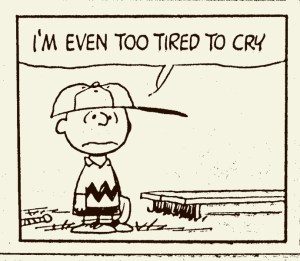
I cannot overemphasize how much strength and energy is needed to do the work grief requires.

At first, turning down a request or asking someone to reschedule was relatively easy-the loss was fresh in their minds and they were gracious and understanding.  As the weeks and months and now YEARS have passed, it is harder.  Not always because they don’t understand but because I sometimes hold myself to an untenable standard that says I should be better by now.   I should be able to do all that I could once do.  I shouldn’t be so sensitive to the date on the calendar or the place we might meet for lunch or the rainy weather that brings my mood down.

But I’m not able to ignore all those things and sometimes I just can’t do what someone else would like me to be able to do.

So I keep repeating the mantra, “grace and space” to myself.

I need grace-from my own heart FOR my own heart– I must cut myself the slack I would be happy to extend to others.

I need grace from friends and family. I cannot help you understand exactly what it’s like to be me.  You can never know all the ways I ache for the life I had before Dominic ran ahead to heaven.  You could never imagine all the daily pinpricks my soul must suffer as I walk in this world and am reminded of what I’ve lost.

So you will have to take it on faith when I say, “I just can’t do that”.

I need space.

I need space between me and the noise of the world and the shouting urgency of “to do” lists and project deadlines.  So much of the work I must do is silent, solitary work. It takes hours and hours of thinking, talking to God, reading Scripture, journaling and just being alone to sort this all out.

I’m not rejecting YOU-I’m trying to preserve ME.

It isn’t selfishness, it’s love for my family.  I refuse to add to their burden by running myself into the ground.  I won’t choose to make life harder for them by creating an unecessary crisis.

I don’t know when I might (or IF I might) return to the busy bee I once was.  Right now I can’t even imagine it.

I think I will need grace and space for a very, very long time.

fine not fine

Bereaved Parents Month 2026: But I Had All That BEFORE!

I absolutely understand that when people say things like, “Just think of all the wonderful memories you have” or “He brought you so much joy” they mean well.

Because it’s true-I have beautiful memories of Dominic.  And he DID bring me great joy.

But I had those things BEFORE he was beyond my reach.

Childhood memories, photographs, mementoes from school and athletic teams-they were already displayed on the walls and shelves of my home.

But there were things I had then that I don’t have now:

  • his physical presence;
  • his laughter ringing down the hallway;
  • his text messages telling his absent-minded mama that there were storms headed her way;
  • his level-headed relationship advice;
  • and his tech-savvy, “I can fix it” help when I crashed my computer or other electronic device.

I don’t have a hundred different uniquely Dominic parts of my life anymore.

And I miss every one of them.  

missing from me

Bereaved Parents Month 2026: Embracing Chaos-I Just Can’t Keep Things Clean!

Twelve years later and I’m still on the struggle bus with this one. Of course my dad’s stroke has been an additional set back, but still…

I used to be able to keep clutter manageable, clothes put away and counters and carpets clean.

Now I sometimes come downstairs and wonder what tornado has blown through the family room only to realize it’s an accumulation of several days’ chores left undone.

Sigh.

I freely admit I was never a housecleaning fanatic.

With a busy family, a small farm and mountains of paper, pencils and books scattered around I was content if the most obvious dirt was swept up and the sink free of dishes.

But, I DID have a routine.  I DID clean my bathrooms and wash clothes and make beds and vacuum the rugs on a regular basis.

Not anymore.

Even all this time after Dominic ran ahead to heaven, I have not reestablished any kind of rhythm to keeping house, making meals or doing the most basic, necessary chores.

And I don’t really know why.

I’m not overly busy.  I’m not doing other things that keep me away from the necessary things.  

In fact, sometimes I actually sit down for what I think will be a few minutes only to find a couple hours have raced by while I was doing nothing.  That NEVER happened before.

Literally, never.

I was a dynamo from the time I woke in the morning until evening-moving, moving, moving.  I certainly still have plenty I COULD do, but not so much that I WANT to do.

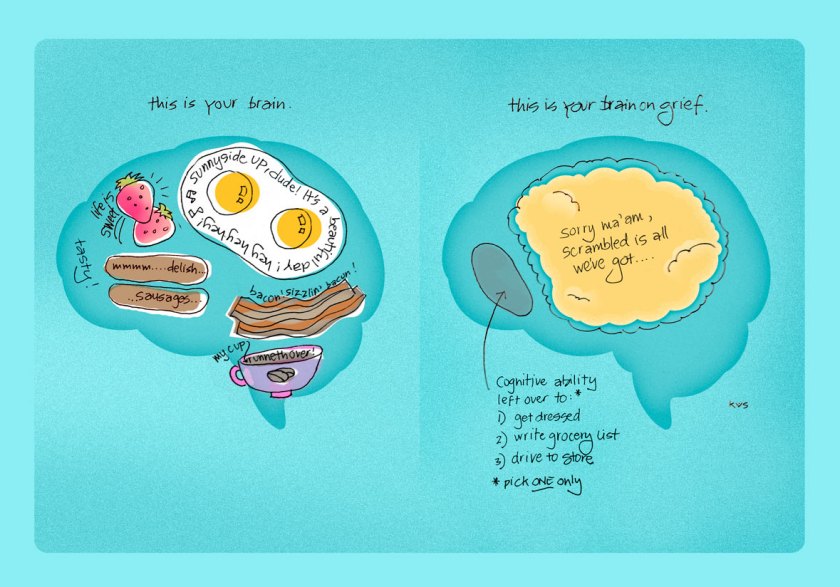
I’ve pondered, “Why?” and only been able to come up with a single answer: Grief is WORK.  And apparently I only have so much energy to divide between what I need to do (grief work) and what I’d like to do (clean my house, etc.).

The hours I spend “doing nothing” are actually hours spent working through feelings, thoughts, spiritual conundrums and rediscovering who I am in light of what has happened.

So I’m learning to cut corners and give myself a break.  Because it doesn’t appear that my get-up-and-go is coming back anytime soon.

Here are some practical things I’ve been doing to make daily life work:

I’ve adjusted my standards.  I have a minimal acceptable standard and apply that to my home and myself instead of trying to live up to “what others want me to do/be”. For me, it means no germy surfaces, clutter free places to sit and eat, wiped down bathrooms and clean clothes for the day.  

Anything over that is a bonus!

I take shortcuts.  Paper goods for meals to cut down on dishes.  Easy menus for dinners (lots of crockpot recipes).  I keep paper towels and cleaner in each bathroom and wipe down when I’m in there for something else instead of making “clean the bathrooms” a separate chore.  

I have baskets to catch wayward items and carry them upstairs all at once or just leave them in the baskets.  I wash clothes but don’t worry if I get them folded.  I bought more underwear and socks so washing isn’t an emergency.

I don’t apologize when someone stops by and things aren’t as tidy as they used to be or I wish they were. 

I won’t waste emotional energy on worrying about what they think.  

And when I find that I’m sitting down, pondering some aspect of loss or life or love, I lean in and do it.  I grab my computer or a journal and write out what’s running through my head.  

Because that’s the more important work right now.  

Bereaved Parents Month 2026: Objects, Memories, Holding On to What’s Left Behind

I was surprised at myself.

When we cleaned out Dominic’s apartment two weeks after he left us, I couldn’t throw away a thing.

Just as Dominic left things when he went out that evening.

Even though it meant boxing it up, carting it down the stairs and loading and unloading it onto our trailer, I DIDN’T CARE.

If it was his, if his hands had touched it, his body worn it or he had placed it in the cabinet or fridge, it was coming with me.

The only thing I left in that space was the empty echo of his fading presence.

I brought all the rest home.

Because these things aren’t just things. They represent some portion of my son-his personality, his preferences, his history and his hopes.

Many are the minutiae that make up a life:

  • scraps of paper tucked inside his briefcase as reminders
  • a dry cleaning ticket in his wallet
  • a legal pad on the table where he was taking notes to study for an exam
  • receipts from recent purchases strewn on the kitchen counter
  • shaving cream, hair products, favorite soap
  • clothes and ties and shoes
  • a fridge full of food he’d chosen for himself
  • the good coffee
  • containers saved from food I’d sent home with him

Of course there were the larger items most folks would think of bringing home if not keeping-furniture, computers, his car, television and stereo.

We put the delicate and temperature sensitive things inside the house.

The rest was placed in a storage building on our property. Every time I opened the door to the building for several years it smelled of Dominic.

I loved it and hated it in one breath.

I’m using his furniture in our living room. His television set is downstairs in the family room. Some of his other things live in his siblings’ homes.

We’ve all found ways to touch what he touched last.

I am slowly getting better at getting rid of some of Dominic’s things.

Just yesterday my husband replaced faucets in the bathroom my boys used growing up. In the process we pulled out stuff from under the deep cabinets.

Tucked in the back were some old bottles of hair gel and other half-used, dried up products that once belonged to my fashion conscious son who was always trying to tame his curly hair.

I grabbed them and tossed them into a plastic trash bag as we prepared to put replace things underneath. I almost pulled them back out.

Sighing, I tied up the bag and took it straight to the big curbside garbage can before I could change my mind.

These things aren’t *just* things.

Every time I get rid of something that was Dominic’s I feel like I’m erasing a little bit more of HIMI feel like I’m losing one more touchstone to help my mind hold onto memories that might slip away without it.

They are a tangible connection that I can see, smell and touch to a child with whom I can no longer do any of those things.

I suspect I will always keep at least a tiny stash to pull out on heavy days or birthdays or just days when my heart needs reminding.

And I’m OK with that.

Grief Work 2026: Coping With Child Loss as a Couple

For some of us life’s twists and turns include unfathomable pain, sorrow and loss. Broken hearts beating side by side in the dark often find it difficult to reach out across a chasm of grief.

Marriage is hard work under the best of circumstances. Child loss makes it harder.

But there are ways to create space for one another and to extend grace even in this Valley.

❤ Melanie

It’s no secret that men and women are different.

It’s the subject of everything from romantic comedies to hundreds of books.

“Men are from Mars, women are from Venus” and all that.

So it shouldn’t surprise those of us walking this Valley that our spouse may be grieving very differently than we do. But it often does. Because everything is amplified when it echoes off the high mountains on either side.

And just when we need it most-for ourselves and for extending to others-grace is often in short supply.

So differences become offenses and offenses stack like bricks to build a wall between us and the one person as intimately connected to our missing child as we are.

Image result for image brick wall

Instead of holding each other up, we sometimes tear each other down. Instead of leaning in, we pull away. Instead of talking, we tune out.

Instead of crying together, we cry alone.

Even when we open up and try to address these differences it often ends in disagreement or is met with silence.

That’s discouraging.

I firmly believe that grief doesn’t really change the fundamentals in a relationship but it magnifies them. We all have cracks in our marriages. Two imperfect people do not make a perfect couple regardless of how lovely the photos might be.

Child loss makes the cracks more evident. What might be ignored otherwise, becomes unavoidable. Add gender differences to the load of grief and it’s no wonder many of us struggle.

So how can a marriage survive?

Here are a few pointers:

  • Admit that you and your spouse are different people. Your life experiences, gender and personality affect how each of you grieve. Different isn’t better or worse, it’s just different.
  • Purpose to assume the best and not the worst of your spouse. When he or she makes a comment or shoots you a “look” don’t immediately ascribe dark motives. It may be she’s having an especially bad day or he is tired or distracted.
  • Look for common ground. When you are both in a neutral environment and rested, ask your spouse what they need from you. Then listen without being defensive. It could be that seeing you cry upsets him so that’s why he tries to shut you down. She might long to hear him say their child’s name aloud. Even if nothing changes, sometimes being heard makes a difference.
  • Consider couples’ counseling. Having someone outside your immediate grief circle listen to and guide you through feelings, concerns and problems is almost always helpful. It might only take a few sessions to give you both the tools necessary to walk yourselves through the rough patches.
  • Talk TO your spouse instead of ABOUT him or her. This can be a hard one! I think we all need a safe friend or two who will let us vent. That’s healthy. But it’s not healthy to talk about our spouse to others in what amounts to a bid for support of our own opinions and prejudices. Gathering wood for the fire of offense is easy. Putting out the blaze (even if you want to) is hard.
  • Remember that when feelings fluctuate, commitment carries you through. Grief isn’t just one emotion, it’s a tangled ball of emotions. On a given day you might feel sad, disoriented, angry, anxious and despondent. All that emotional weight is added to whatever else you may be feeling about your spouse. Sometimes it’s just too much to bear and running away seems like the most logical answer. But it’s not. We can never run far enough or fast enough to get away.

There’s no magic to marriage before or after child loss.

It’s mostly work.

We can choose to do that work together in spite of our differences.

We can choose to grow stronger instead of growing apart.

Still standing. 

****FULL DISCLOSURE****

My husband and I do not do this perfectly or even close to perfectly. But we are still trying. At different points in this long (almost) six years, we’ve been better or worse at all of it. So don’t think if you are struggling it means you can’t hang on. Sometimes it’s by the tips of your fingernails, but if you refuse to let go, you can make it.

❤ Melanie

Grief Work 2026: Importance of Boundaries After Child Loss

As a people-pleasing first born who hates conflict, giving in has always been  easy for me. It’s only later that I wish I hadn’t.  

So for most of my life, setting personal boundaries has been challenging.

But in the aftermath of child loss, healthy boundaries are no longer optionalthey are necessary for survival.  

So what are healthy boundaries?

  • Saying “no” without guilt
  • Asking for what you want or need
  • Taking care of yourself
  • Saying “yes” because you want to, not out of obligation or to please others
  • Behaving according to your own values and beliefs
  • Feeling safe to express difficult emotions and to have disagreements
  • Feeling supported to pursue your  own goals
  • Being treated as an equal
  • Taking responsibilty for your own emotions
  • Not feeling responsible for someone else’s emotions
  • Being in tune with your own feelings
  • Knowing who you are, what you believe, what you like

~sharonmartincounseling.com

What does this look like in real life?

  • Not being “guilted” into engaging in social/family/church activities before I am ready
  • Letting family and friends know when I need encouragement, companionship, solitude, help or space
  • Keeping or making doctor’s appointments and staying on top of my physical well-being by sleeping/eating/taking medication/exercising as best I can
  • Participating in what is helpful and life-giving to me when I want to and not because I feel like I have to.  
  • Giving myself space and time to figure out how losing a child impacts my beliefs, my sense of self, my understanding of the world-being honest about questions and about struggles.  If I have to take a break from church for awhile, that’s OK.
  • Expecting support from friends and family to do the work grief requires.  If some in my circle can’t do this, then I’ll put those relationships on hold until I feel stronger. I am not required to live up to other people’s standards.
  • Embracing and acknowledging my own emotions.  Not expecting someone else to “make me better”.  No one can take away the sorrow and pain of child loss.  It is excruciating.  There is no way through but THROUGH.  Face the feelings.  Get help from a counselor if necessary.  Join a support group.  Find safe friends.  But I will not be able to distract myself or ignore the heartache forever.
  • Understand that though I share the loss with others-a spouse, my surviving children, my child’s grandparents, etc-I am not responsible for how they are dealing with loss. I may offer help, may arrange counseling (especially for children), should strive toward an environment where feelings can be expressed-but I can’t work through their loss experience for them.  
  • Pay attention to my own feelings and what triggers grief attacks.  When I can, plan around the triggers.  When I can’t, accept the feelings and go with them.  If I need to leave a venue, leave.

What it doesn’t look like:  

Healthy personal boundaries are not an excuse for bad behavior.  They are not to be used as blunt instruments to bully others into submission or to advance my own agenda against theirs.

My boundaries don’t give me the right to be hateful, hurtful or unkind.  They are not permission to pitch fits, make public displays or belittle others.  

say-what-we-need-to-say-gently

And they are absolutely NOT a reason to plaster hate speech across social media.  If I have a personal relationship issue then it needs to be handled personally and privately not publicly. Vague Facebook statuses that suggest I’ve been offended by half my friend list are off limits.

Establishing healthy personal boundaries is work.  

Already exhausted from grief, the last thing I want is more work.

But if I don’t defend the space and time I need to do the work grief requires I cannot make progress toward healing.

If I don’t limit my interaction with those who are unhelpful or downright hurtful, I will be dragged down further in the mire of sorrow and sadness.

If I don’t purposely pursue physical, emotional and psychological healthgrief will kill me.

Grief Work 2026: Child Loss and Summer Celebrations

Summer time has its own way of highlighting Dominic’s absence.

Warm days and extra daylight can sometimes slow things down so that every moment hangs heavy with longing.

When we gather with family for cookouts or reunions or Fourth of July in this mama’s heart there is always an empty chair even when every available seat is full.

Most people realize that the “big” holidays are painful for bereaved parents-Christmas, Thanksgiving, Mother’s Day, Father’s Day-that makes sense.  

But what most people don’t know is that every single red-letter day-even the obscure ones-can be hard on parents missing a child.

Because any day that marks a departure from routine leaves gaps where I can dwell a little longer on the fact that Dominic is NOT here.

Any day off that lends itself to a family BBQ or celebration or just extra time around the table because we aren’t in a rush highlights that empty chair.  

ask me about the empty chair

Grief Work 2026: Making Space for Siblings to Grieve

Child loss is also often sibling loss.  

In addition to their own heartache, bereaved parents carry the heartache of their surviving children.  

The family everyone once knew is now a family no one recognizes.  Hurting hearts huddle together-or run and hide-and it is so, so hard to find a way to talk about that pain. 

There is definitely a time and place for professional counseling.  Many, many families benefit from having a trained individual, outside the immediate grief circle, guide them in exploring feelings, developing coping strategies and learning to live life this side of loss.

But there is also something to be said for arranging casual open-ended activities with surviving siblings, parents and even grandparents where space and a more relaxed atmosphere often leads to honest sharing.

This graphic has lots of excellent suggestions for how to craft such a space.

Not all will be suitable for every family, but every family should be able to find a few that fit.

I’ll add these guidelines that may help your family make the best choice for YOU:

  • Don’t force it.  If you make an offer of an activity and it drops with a thud to the ground, let it go.  You might be able to do it another time.
  • Don’t make it (what my kids like to say!) a “mandatory option”.  There must be no guilt or coercion invading this space.  If one or more of your family members consistently refuse to join in, consider asking a close family friend to take that individual out alone and see what might be going on.
  • If you choose a movie or other story-themed activity, LOOK UP THE PLOT!  I can’t tell you how many times we were sideswiped by a death scene or some other heavy emotional plot twist.  There may be a time when your family is prepared to experience those things together (we can now) but it may not be yet.
  • Mix and match more structured activities with open-ended ones like walks outside, watching the sunset, sitting on the beach, hanging at the pool, playing a game (not too competitive-that will sometimes bring out hidden anger).
  • If you have a family with a broad range of ages you might have to do some things with the littles and some with the older kids.  You can always add one or two activities a month or quarter where everyone (or as many as are available) gets together.
  • If your children, spouse, parent or other close griever begins to talk-let them.  If tears flow-that’s progress!  If ugly feelings are expressed, listen.  Try not to be defensive.  Try to hear the hurt behind the words.  It’s OK to set ground rules like using “I” statements and not blaming.  But don’t shut them out or shut them down.  

These are just ideas.  

Google is your friend and your phone is probably already in your hand or pocket-use it.

Find things that fit YOUR family. 

The only way through is through.  

You have to feel and deal to heal.  

selfcare for families

Grief Work 2026: How Trauma Affects Relationships and Healing

No matter how a child leaves this earth, it’s traumatic.

And trauma rewires our brains.

The “fight or flight” response that had previously been reserved for truly life-threatening situations gets woven in with memories and feelings and our bodies remain on high alert.

So before we know it, all kinds of ordinary, daily, and definitely not life-threatening situations evoke rapid heartbeat, shortness of breath, anxiety and fear. And the absolutely reasonable response is to get away from those things that make us feel that way.

So we do (or try to!).

We find ourselves running away from people who love us, who want to help us but who just might not understand why we’re running. We cocoon in our homes, in our own bodies and try to find that one safe space where fear and anxiety can’t find us.

But there is no such absolutely safe space.

Trauma rewires our brains, it’s true.

They can be rewired again.

So many good therapies are available for those of us who suffer in silence. Many are based on using physical cues to help a brain learn to distinguish between truly dangerous and only the memory of dangerous.

PTSD treatments and therapies

It is possible to venture out in the world again, to reach for and sustain connection, to lean into company instead of shying away.

Don’t stay hidden, afraid and alone.

Find a trained trauma counselor

Ask for help.

Grief Work 2026: Loss is Relentless

My family has opened our eyes to thousands of mornings knowing the one thing we would change if we could is outside our control.

When the world faced the pandemic several years ago, it was a new and disturbing feeling for millions (billions?). We are still reaping the consequences of decisions taken during that time.

Eventually, though, most people’s lives returned to a semblance of normal that makes allowances for the changes.

But some of us emerged on the other side of that season carrying the new and unrelenting burden of loss.

And nothing will ever be normal again.

re·lent·less

adjective

opressively constant; incessant.

Synonyms:  persistent, continuing, nonstop, never-ending, unabating, interminable, incessant, unceasing, endless, unremitting, unrelenting, unrelieved.

please be aware i am trying