Thankful for Support

My grandmother had two sisters who didn’t have any children.  

They were often tapped as babysitters when someone in the family needed to leave their kids home for an extended period of time.  And while my aunts meant well, and certainly were never hateful or cruel, there was a giant gap between what they THOUGHT they knew about children and what they ACTUALLY knew.

So many sentences began with, “If you were my child….”  But I wasn’t.  And the boundaries set between me and my parents had been hashed out through trial and error in real time in real life-not some hypothetical perfect world.

It’s like that in my grief journey as well.  

There have been many well-meaning but woefully uninformed people who offered advice.  Some of it was helpful but most of it was predicated on misinformation and lack of real-life experience.

The MOST helpful advice has come from fellow bereaved parents.

They share their hearts and their hopes, their failures and their victories, their fears and their faith.  They don’t have to-they could simply focus on their own pain and refuse to offer aid.  

But moms and dads a few steps ahead of me in the Valley turn back and hold out a hand and say, “This way.  I’m right here with you.  You can make it!”

And for that I am oh. so. thankful.


buckets to put out flames

Healing? Curing? Same Thing?

Healing and curing are not the same thing.

Healing is a process that takes as long as it takes and may never be complete this side of eternity.  It’s a folding in of the hard parts of my story, an acknowledgement of the way I am changed because of the wounds I’ve received.  It involves scar tissue and sore spots and ongoing pain.

healing is not the absence of pain silhouette of sorrow

To be cured is to be free of the effects of disease or injury.  

And there is no cure for child loss.

I will never be free of the effects of burying a child this side of Heaven.

I did not understand the difference until it was my heart bearing an incurable wound.

The thing about healing, as opposed to curing, is that it is relational. It takes time. It is inefficient, like a meandering river. Rarely does healing follow a straight or well-lit path. Rarely does it conform to our expectations or resolve in a timely manner. Walking with someone through grief or through the process of reconciliation requires patience, presence, and a willingness to wander, to take the scenic route.

~Rachel Held Evans, Searching for Sunday

It really IS all about relationship.

Relationship first with the Living God through His Son, Jesus.

The ongoing life-giving ministry of His Spirit calls courage to me as I travel this Valley and sings hope to my heart when I cannot hear anything else.  

He will not leave me in my distress.

He does not abandon me in my darkest hour.

flesh-and-heart-may-fail

But it is also about relationship with others.

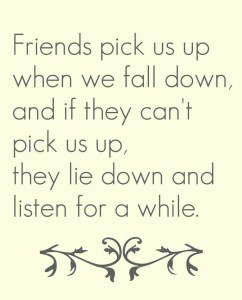
Relationship with those willing to meander with me along this unlit and winding path.  They are the ones who give me courage to carry on. They are the ones who lift me up when I am unable to lift myself and who lie down with me when even their best pep talk is not enough to get me off the floor.

friends pick us up

They have listened to me tell and retell my story.

The first time I told it, I didn’t have a clue what to say or how to say it-what to leave in, what to leave out.  How do you condense a life-sized earthquake to a novel, much less a few sentences?

But I find as I practice telling my story, it is healing.

Sometimes it’s as if I speak without my mind being engaged and listening,  I have an “aha” moment-suddenly recognizing a new insight and another place that needs work or has received healing.

I’ve learned that there is no substitute for companionship on this journey.  

My healing depends on the faithful Presence of my Shepherd

AND

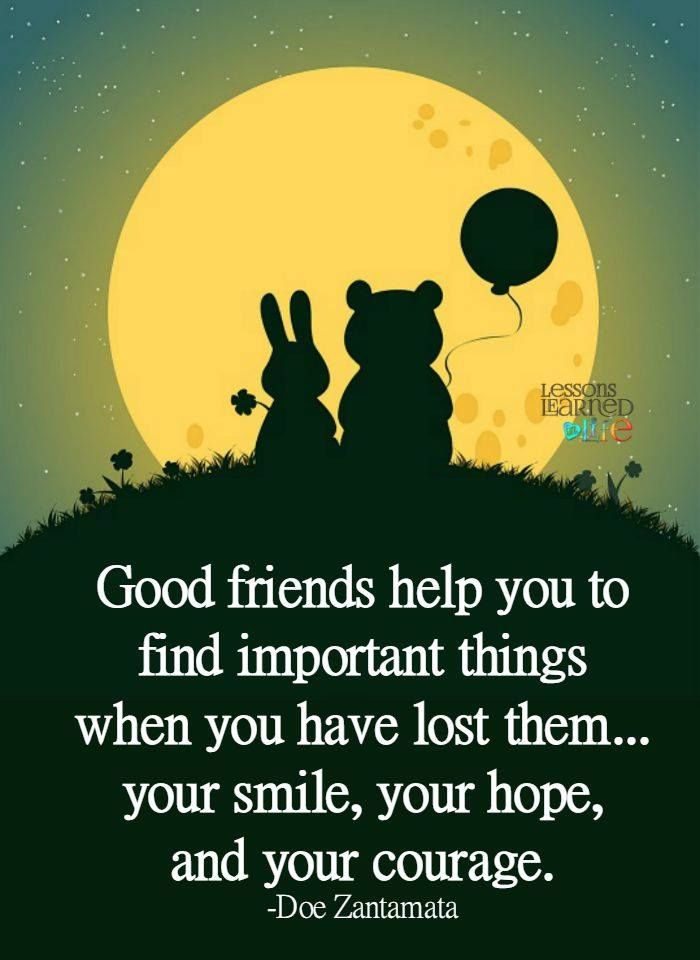
the faithful presence of friends who refuse to leave even when it seems we are lost in the wilderness of grief together,

relationshipmatters-pic


Repost: Subtitles

My husband is the child of immigrants.  And even thirty years after coming to America, my in-laws preferred their native Italian to English.

So when we would be in a crowded room, comments flying, I struggled to keep up with what was being said because I didn’t speak the same language.

Sometimes feelings got hurt because what one of us thought we were saying was not what the other person heard.

Read the rest here:  Subtitles

Healthy Boundaries in Grief

As a people-pleasing first born who hates conflict, giving in has always been  easy for me. It’s only later that I wish I hadn’t.  

So for most of my life, setting personal boundaries has been challenging.

But in the aftermath of child loss, healthy boundaries are no longer optional, they are necessary for survival.  

So what are healthy boundaries?

  • Saying “no” without guilt
  • Asking for what you want or need
  • Taking care of yourself
  • Saying “yes” because you want to, not out of obligation or to please others
  • Behaving according to your own values and beliefs
  • Feeling safe to express difficult emotions and to have disagreements
  • Feeling supported to pursue your  own goals
  • Being treated as an equal
  • Taking responsibilty for your own emotions
  • Not feeling responsible for someone else’s emotions
  • Being in tune with your own feelings
  • Knowing who you are, what you believe, what you like

~sharonmartincounseling.com

What does this look like in real life?

  • Not being “guilted” into engaging in social/family/church activities before I am ready
  • Letting family and friends know when I need encouragement, companionship, solitude, help or space
  • Keeping or making doctor’s appointments and staying on top of my physical well-being by sleeping/eating/taking medication/exercising as best I can
  • Participating in what is helpful and life-giving to me when I want to and not because I feel like I have to.  
  • Giving myself space and time to figure out how losing a child impacts my beliefs, my sense of self, my understanding of the world-being honest about questions and about struggles.  If I have to take a break from church for awhile, that’s OK.
  • Expecting support from friends and family to do the work grief requires.  If some in my circle can’t do this, then I’ll put those relationships on hold until I feel stronger. I am not required to live up to other people’s standards.
  • Embracing and acknowledging my own emotions.  Not expecting someone else to “make me better”.  No one can take away the sorrow and pain of child loss.  It is excruciating.  There is no way through but THROUGH.  Face the feelings.  Get help from a counselor if necessary.  Join a support group.  Find safe friends.  But I will not be able to distract myself or ignore the heartache forever.
  • Understand that though I share the loss with others-a spouse, my surviving children, my child’s grandparents, etc-I am not responsible for how they are dealing with loss. I may offer help, may arrange counseling (especially for children), should strive toward an environment where feelings can be expressed-but I can’t work through their loss experience for them.  
  • Pay attention to my own feelings and what triggers grief attacks.  When I can, plan around the triggers.  When I can’t, accept the feelings and go with them.  If I need to leave a venue, leave.

What it doesn’t look like:  

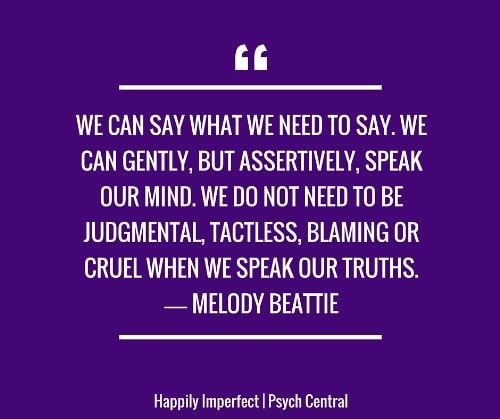
Healthy personal boundaries are not an excuse for bad behavior.  They are not to be used as blunt instruments to bully others into submission or to advance my own agenda against theirs.

My boundaries don’t give me the right to be hateful, hurtful or unkind.  They are not permission to pitch fits, make public displays or belittle others.  

say-what-we-need-to-say-gently

And they are absolutely NOT a reason to plaster hate speech across social media.  If I have a personal relationship issue then it needs to be handled personally and privately not publicly. Vague Facebook statuses that suggest I’ve been offended by half my friend list are off limits.

Establishing healthy personal boundaries is work.  

Already exhausted from grief, the last thing I want is more work.

But if I don’t defend the space and time I need to do the work grief requires I cannot make progress toward healing.

If I don’t limit my interaction with those who are unhelpful or downright hurtful, I will be dragged down further in the mire of sorrow and sadness.

If I don’t purposely pursue physical, emotional and psychological health, grief will kill me.

Shake Off the Shame

shame

Shame is a shackle as sure as any chains forged from iron.  

And it often finds its home in the hearts of those who bury a child.

Bereaved parents may feel shame for lots of reasons:

  • Circumstances surrounding the death of their child-suicide, alcohol, drug abuse;
  • Inability to provide the funeral or burial they want due to financial constraints;
  • Missing signs or symptoms of an illness that may have led to death;
  • Family dynamics that pushed a child away from home or relationship.

The list could be endless-on the other side of child loss our brains pick apart every interaction, every choice, every moment that could have gone one way but went another.

Grief is WORK.

But it is impossible to make my way through the pile of emotions if I’m shackled by shame.  I can’t move freely and effectively if I’m bound hand and foot by things I can’t control and can’t change.

In the midst of all this work, some bereaved parents find they are immobilized by depression and/or anxiety and need medication to help them through.

woman looking through rainiy window.jpg

And they feel ashamed.  

Can I just say this? 

There is NO shame in seeking help.

There is nothing shameful about using whatever tools are available to make this awful journey more manageable.

A wise and kind doctor friend said, “Medication does not make the sorrow and pain go away, but it can calm the mind and create space so you can do the work grief requires.”

You are not a failure if you need medical help to quiet your mind.  You are not weak if you take a pill to keep from feeling like you’re going to come out of your skin.  You have done nothing wrong if you can’t sleep and require a sleep aid to allow your body the rest it needs to carry on.

Don’t compare your journey to anyone else’s.

You are unique.  Your path through this heartache is your own.

Do what you need to- for YOU.  

Shake off the shame.  

grief-is-not-linear


Grief and Grace:What I Need from Friends and Family

You cannot possibly know that scented soap takes me back to my son’s apartment in an instant.

You weren’t there when I cleaned it for the last time, boxed up the contents under the sink and wiped the beautiful, greasy hand prints off the shower wall.  He had worked on a friend’s car that night, jumped in to clean up and was off.

He never made it home.

So when I come out of the room red-eyed, teary and quiet, please don’t look at me like I’m a freak.

Please don’t corner me and ask, “What’s wrong?” Or worse-please, please, please don’t suggest I should be “over it by now”.

If you were reading a novel or watching a movie, you’d show more grace.

You would nod in understanding as the main character made choices that reflected the pain of his past.  You would find his behavior perfectly predictable in the context of a life lived with a broken heart.

I can’t control what makes me cry.  I can’t stop the memories flooding my mind or the pain seizing my heart.

I might be OK one minute and the next a blubbering mess. Grief doesn’t mind a schedule.

But there are some things you can do to help:

  • If you are aware of the circumstances around my child’s death, be thoughtful when highlighting similar situations in conversation, in movie choice, in recommending books or news stories.  I bump into reminders all the time, I don’t need to have them forced upon me.
  • It can be particularly hard to celebrate milestones in another child’s life when that child is about the same age as the one I buried.  Feel free to invite me, but give grace if I choose not to attend a birthday, graduation or wedding.  I’m doing the best I can and I don’t want to detract from the celebration so sometimes I bow out.
  • Ask me if, or how,  I would like my missing child included in family gatherings. Sometimes I want his memory highlighted and sometimes I want to hold it close like a personal treasure.  It might be different one year to the next. Just ask.
  • Be sensitive to the calendar.  Make a note of my child’s birthday, heaven day, date of the funeral or memorial service-these are important dates for me and they will be as long as I live.  In the first months, maybe for years, each month is a reminder that I am that much further from the last time I heard his voice, hugged his neck or saw his living face.  Those days are especially hard.
  • Don’t pressure me to move faster in my grief journey.  And don’t interpret a single encounter as the measure of how I’m doing.  Be aware that it is often a two-steps-forward-one-step-back kind of experience.  It is MY experience and will go as fast or as slow as it does.  I can’t even hurry it along even though sometimes I am desperate to do so.
  • Understand that the things I may share don’t paint a total picture.  There are pains too deep, thoughts too tortuous, experiences surrounding my son’s death and burial too hurtful for me to speak aloud.

I admit that I never thought of any of these things until it was MY son missing.

But now I think about them all the timenot only for my sake, but for the sake of others like me. I try to walk gently and kindly, extending grace and love.

And honestly, that’s really all I want from anyone else-grace, abundant grace.

I will be weepy when it’s inconvenient.  I will react when you can’t fathom why.  I will stay away when you want me to come near.  I will make choices you don’t understand.

I am truly sorry.

But child loss is not something I chose for myself, it was thrust upon me.

I am walking this path the best I know how.

When you extend grace and love me through the roughest places it makes all the difference.

heart and wood

Thanks for Listening!

One year ago today I began sharing my grief journey publicly on this blog.

IMG_1790


You can read that first post here.


It was (and still is) scary to expose my thoughts and feelings to a wider audience than just the pages of my personal journal.

I’m never certain that what is helpful for me is necessarily helpful for anyone else.  But in writing it down I find that I am able to sort through things better than when I leave it bouncing around in my own head space.

I decided upfront that I would be as honest as possible about what I felt and how I was coping.  I wasn’t sure if I would post only a few times or a lot, if it would turn into a day-by-day diary or a more sweeping revelation of deeper things.

I think it’s kind of been both at times.

And here we are, 366 days (it was a leap year) and  355 posts later and I’m still here and you’re still listening.

I don’t claim to have any special gifting or knowledge or ability.  I am simply one mama whose love for both her child in heaven and her children still here demands that I speak out.

My heart is full of  love and pain.

thank you

And my heart has been blessed beyond measure by those who read and share what I have written.  I’ve met-in person and virtually-many bereaved parents who are helping me as I continue down this road.

I am so very thankful for each one.

I pray that for those who read these words and know the pain of burying a child, I am speaking things you may think or feel but are not willing or able to express.

And I pray that in hearing them spoken aloud, you are affirmed and encouraged that you. are. not. alone.

Dominic matters.  

Your child matters.  

It’s not only OK but absolutely necessary to admit that life after child loss is a struggle.  It is also just fine to take your time working through the pain and sorrow and overwhelming changes child loss brings.

For those who read my posts and do not share this pain, I pray you gain insight into what bereaved parents feel and how burying a child changes EVERYTHING.

I hope you are better equipped to offer the ongoing support we need and crave.  I hope you learn that this is not something we have chosen, it is something that happened to us. 

And I pray that all of us will be more willing to extend grace, mercy and love to one another.

Words are not neutral.  

They bring life or death.

They wound or heal.

May each of us be an instrument of healing for someone’s hurting heart.   

its hurting again


What Helps and What Hurts

I am committed to continue to trust Jesus and to look to the Word of God for my hope and direction in this life and in the one to come.

I speak truth to my heart through Scripture, worship songs, testimonies of others who have gone before and remaining in community with other believers.

But I’ve yet to reach the place where I can plan on most days being better days rather than hard ones.

I’m trying.

And I’m working to tease out the influences that make a difference-both the ones that help and the ones that hurt.

So here’s the list so far:

WHAT HELPS

  • Starting the day with Bible reading
  • Writing out a verse or two that speaks hope to my heart
  • Listening to worship music
  • Feeling well-less physical pain translates to an overall sense of well-being
  • Having a plan for the day-even if it is simple and created in broad strokes, knowing what I plan to do gives me a reason to get up and get going
  • Seeking companionship with other believers either via Facebook groups, telephone calls, in person get togethers or messaging.
  • Allowing myself a set time to grieve-cry, pray, lament, or whatever-then moving on with the day
  • Mixing up physical activity with rest-changing my body position often reorients my attitude.
  • Striving to get proper sleep, eating good food (not junk and not mindlessly), exercising and stretching.
  • Crying-if I need to cry I’ve found allowing the tears to fall is much better than fighting them off all day.
  • Retreating when necessary-if I find a situation is too much for me to handle, I give myself permission to retreat.  Most things can be done another day.  Sometimes just granting myself permission means I have the courage to press on and face it.
  • Planning for hard things.  If I know I’m going to have to face a hard thing, then I try to plan it.  I prepare myself by thinking through (as much as possible) various outcomes.  I’m more prepared and usually it goes better than I anticpated.
  • Not overscheduling my days/weeks-it is harder than it used to be to get going in the mornings so I take that into consideration when making appointments.  If I have a busy day on Monday, I will try to make Tuesday open and relaxed.  Having space between commitments gives me time to recoup and minimizes anxiety.
  • Doing as many things via Internet and telephone as possible-I can do needful things even if I’m having a bad day if I don’t have to get dressed and go out to do them.

WHAT HURTS

  • Neglecting my spiritual life-if I don’t read Scripture, don’t engage with other believers and refuse to acknowledge and thank God for the blessings He still bestows-I can quickly succumb to the dark whispers of the enemy of my soul.
  • Ignoring physical needs-when I don’t prioritize sleep, good nutrition, adequate exercise and appropriate pain control (for my RA) then sadness is multiplied and it is so much harder to climb out of the pit of despair.
  • Carrying unnecessary burdens-I cannot MAKE anyone understand the pain and ongoing challenge of child loss.  So when people outside my immediate grief circle question my feelings or try to make me conform to their expectations of what grief should look like and how long it should last, I have to shake it off. If it’s an important and ongoing relationship, I try to help them understand but if they choose not to or if it is a tangential relationship, I let it go.  I refuse to carry the burden of others’ expectations in addition to the burden of burying my child.
  • Being ignored-it hurts to be ignored.  It hurts when someone asks how I am yet doesn’t allow the space and time for me to answer.  It hurts when I answer and they ignore my pain or dismiss it with a story or platitude or Bible verse or just don’t say anything.
  • Being shamed-it hurts for others to shame me by implying that I am not strong in my faith or not trusting Jesus or not hoping hard enough for heaven when I admit I still struggle in grief and still miss my son.
  • Disregarding my triggers:  There are certain situations that I know will guarantee a breakdown, panic or a crying fit.  I avoid them when I can.  If I can’t-then I make a plan of escape (just in case).
  • Being “on display” for others-I am one woman doing the best I can to walk faithfully with Jesus through an unbelievably painful experience.  I am not the Author and Finisher of your faith-Jesus is.  It hurts when I feel like others are watching to see if I’ll make it, if I’ll say the “wrong” thing, if I’ll admit that I doubt.  I want the same freedom others have to grow in my faith and to make mistakes and learn from them.  I don’t want to be a “poster child” for anything.
  • Friends staying away.  I know it is hard to be my friend right now.  You never know what you might get when you call.  But if you ARE my friend, please don’t stay away.  Please reach out even when it makes you uncomfortable.  A good word at the right moment is often the difference between a very bad and very lonely day and a pretty good and generally hopeful one.
  • Hiding my sorrow-when I try to pretend I am stronger than I really am or when I try to hide my tears it takes so much energy and makes me so less capable to do the other things life requires.

These are just some of the things that help/hurt me in my journey.  I would love to have others share what helps/hurts them in theirs.  There’s strength in community.

Leave your thoughts in the COMMENTS below!


No Substitute for TIME

Healing can’t be hurried.

Read the rest:  No Rush

June Challenge: Eight Legs and Eternity

Day Eight of Kathleen Duncan’s  June 1-30 challenge.

The prompt:  Write a story with eight legs or turn the eight sideways and use “infinity” (eternity) as your prompt.

Eternity is a long time.

Just try and wrap your mind around it.

But when you bury a child, that’s what you think about-the forever that comes when he left his earthly body and entered the Presence of Jesus.

So many hard days followed, so many tears, so much pain.  I wanted to escape to eternity with Dominic.

I would be there eventually anyway, why not now?

But it’s not up to me to determine when I go. So I remain, and try to find a way to make the days count, be useful and stay hope-filled.

And eight legs have helped me stay rooted in the “now” when my heart longs to be in “forever”.

That first Thanksgiving after losing Dominic in April, we  visited our oldest son and his wife in West Virginia where she was a vet.

Touring Lillie’s office, we were introduced to two fluffy, orange kittens that had been abandoned by the road and brought there in hopes of finding a home.
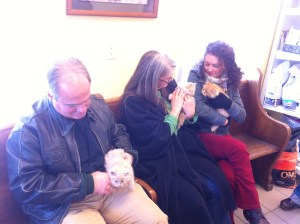
 

IMG_2425

One look and I was smitten.

IMG_2422


It took less than five minutes to decide to take them back with us to Alabama.

Who could resist those faces?


At dinner that night, we brainstormed possible names.  I still have the list in my notes on my phone:  Kit Kat, Pumpkin, Scratch and Sniff, Cheetos, Doritos, Tostito.

We decided on names that reflected their roots- Moonshine and White Lightning.

After all, West Virginia is home to as many stills as hills.

Once we got back, their needs became part of my morning routine-a constant and undeniable reminder that I HAD to get out of bed.  And they made me laugh!

IMG_2509

Here is Lightning soaking up the sun in front of the picture window.
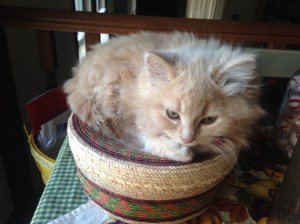


IMG_2439


Moonshine’s personality is more relaxed-why sit when you can lay down?


I used to be able to pick up both of them with one hand, now it takes two hands to pick up one of them!

DSC_0328

They have grown into good companions, great mousers, soft lap warmers and serious purr machines.

I’m very glad these eight legs live in my house.  

They’ve been excellent therapy for my hurting heart.

Benefits of Pet Therapy:

  • lowers blood pressure
  • improves cardiovascular health
  • releases endorphins (oxytocin) that have a calming effect
  • diminishes overall physical pain
  • the act of petting produces an automatic relaxation response, reducing the amount of medication some folks need
  • lifts spirits and lessens depression
  • decreases feelings of isolation and alienation
  • encourages communcation
  • provides comfort
  • lowers anxiety
  • creates motivation for the client to recover faster
  • reduces loneliness